
Predictive analytics marketing uses historical data, machine learning, and statistical modelling to forecast which prospects are most likely to convert, which channels deliver the strongest return, and when a customer is ready to buy. For an Alberta contractor or industrial supplier spending $2,000 to $10,000 a month, this concentrates budget on high-probability opportunities and sharpens customer targeting before a competitor reaches the prospect.
This guide covers what predictive analytics marketing actually means, the data foundations it needs, and real predictive marketing examples spanning lead scoring, churn prediction, and lifetime value modelling. It also covers platform-specific applications, including Klaviyo predictive analytics for e-commerce-adjacent brands, B2B predictive analytics for long sales cycles, and real estate predictive analytics for demand forecasting. Cutting Edge Digital Marketing works with construction, trades, and industrial companies across Western Canada to build the tracking and data systems predictive models depend on. Keep reading to see exactly how this fits your growth strategy in 2026, and contact us when you’re ready to put it into practice.
Key Takeaways
Predictive analytics marketing turns marketing from reactive guesswork into forecast-driven decision-making that directly targets high-probability revenue.
Clean, integrated data from your CRM, website, and email platform is the non-negotiable foundation for accurate predictions.
Core applications span lead scoring, churn prediction, customer lifetime value, and demand forecasting across every funnel stage.
Industry context, whether B2B, real estate, or e-commerce, determines which predictive models and tools actually matter.
A strategic partner speeds up implementation without requiring an in-house data science team.
Table of Contents
- What Is Predictive Analytics Marketing?
- Why Does Predictive Analytics Matter For Digital Marketing Performance?
- Examples Of Predictive Analytics In Marketing
- How Does Klaviyo Predictive Analytics Fit Into Ecommerce And Email Marketing?
- Predictive Analytics In B2B Marketing And Real Estate
- Which Predictive Marketing Tools Should You Use?
- How Cutting Edge Digital Marketing Builds Predictive-Ready Marketing Systems
- How Do You Measure Predictive Marketing Success?
- The Takeaway
- Frequently Asked Questions
What Is Predictive Analytics Marketing?
Predictive analytics marketing is the practice of using historical customer data, machine learning, and statistical modelling to forecast which prospects will convert, which channels deliver the strongest return, and when a customer is ready to buy. It turns marketing campaign ROI and customer targeting into forecastable outcomes rather than after-the-fact reports, which is what separates this approach from ordinary marketing analytics. Descriptive analytics tells you what happened last quarter, and diagnostic analytics explains why a campaign underperformed, but neither one tells you what happens next.
Predictive analytics goes further by applying models to patterns inside your CRM, your website behaviour, and your email engagement data, then projecting those patterns onto current prospects. Marketing predictive modeling works by training an algorithm on outcomes you already know, such as which leads became paying customers, then scoring new leads against that profile. The output is a probability, a score, or a forecasted value a marketing team can act on immediately rather than debate in a meeting.
For a construction company or an industrial supplier, this might mean a model flags a prospect as an eighty percent likely close before a salesperson has even picked up the phone. By 2026, predictive analytics marketing capability has moved well beyond enterprise software budgets and now sits inside everyday platforms that Alberta and Western Canadian businesses already use for email, advertising, and customer relationship management.
How Predictive Analytics And Marketing Work Together
Predictive analytics and marketing work together when a model’s output, such as a lead score, a churn probability, or a demand forecast, feeds directly into a campaign, budget, or sales decision instead of sitting unused in a dashboard. A sales team using lead scores prioritizes outreach toward the highest-probability accounts first, while a marketing team reallocates budget away from channels the model shows are attracting low-propensity traffic. This connection only works when the tracking and attribution behind it is accurate, because a model trained on incomplete or mislabeled conversion data produces confident-sounding predictions that are simply wrong. Reliable predictive analytics marketing depends on the quality of the plumbing underneath it, not just the sophistication of the algorithm sitting on top.
Why Does Predictive Analytics Matter For Digital Marketing Performance?
Predictive analytics matters for digital marketing performance because it redirects budget and sales effort toward the prospects, channels, and moments most likely to generate revenue, which directly raises marketing campaign ROI. Instead of spreading effort evenly across every lead, a business using predictive analytics digital marketing techniques can identify the smaller share of prospects likely to generate most of its closed revenue and concentrate resources there. Lead quality improves first and fastest, since a scoring model flags high-propensity prospects the moment they enter a CRM, letting sales teams respond within hours instead of days.
Conversion rates follow closely, because nurturing campaigns built around predicted intent send the right message at the right stage rather than a generic sequence for every contact. customer lifetime value becomes far more predictable too, which matters for a construction company deciding which commercial accounts deserve a dedicated account manager versus standard service. Marketing attribution sharpens as well, since predictive models trace which touchpoints, whether a trade show, a LinkedIn ad, or an email sequence, actually influenced a conversion rather than simply crediting the last click.
For a business spending $2,000 to $10,000 a month on marketing, these gains compound directly into budget efficiency, because every dollar moved away from low-probability audiences becomes available for channels a model confirms are working. Digital marketing predictive analytics closes the gap between marketing activity and revenue outcome, giving owners and general managers a clearer line of sight into which investments actually pay off. If you want a clear picture of where your budget is leaking today, explore our ROI calculator as a starting point.
Key Data Sources Powering Predictive Models

Every predictive model is only as reliable as the data feeding it, and five sources typically matter most for service-based businesses:
CRM data reveals how long prospects sit in the pipeline and which segments close at the highest rates
Website behaviour repeat visits to a pricing page signal real purchase intent
Email engagement metrics show which prospects are actually responsive
Purchase history uncovers timing and seasonal patterns among repeat customers
Firmographic data company size, industry, and location help separate residential clients from commercial accounts and build sharper segments
None of these sources produce reliable predictions in isolation, since data integration across every system a business uses is what actually determines model accuracy.
Examples Of Predictive Analytics In Marketing
The clearest examples of predictive analytics in marketing show up at each each stage of the funnel, starting with lookalike modelling at the awareness stage, where a platform analyzes traits of your best existing customers and finds new prospects sharing similar firmographics and buying signals. Lead scoring is probably the most widely adopted of all predictive marketing examples, assigning a probability to every new contact based on patterns among leads that previously converted, so a renovation contractor revisiting a pricing page scores differently than a one-time website visitor.
At the consideration stage, next-best-action models determine what each prospect should see next, whether a case study, a spec sheet, or a consultation offer, based on what similar prospects responded to before. Predictive models also forecast which proposals or offer structures a prospect is likely to accept once they reach the decision stage, letting sales teams invest time in negotiations most likely to close. Once a customer is onboarded, customer lifetime value segmentation identifies which accounts justify a dedicated account manager and which are served through a standardized model, while churn prediction flags customers showing early warning signs such as declining engagement or delayed payments.
A construction company might use churn prediction to notice a commercial client hasn’t requested a new quote in longer than its historical pattern suggests, prompting a check-in before a competitor gets the next project. An industrial equipment supplier might apply lookalike modelling to identify manufacturing operations resembling its most profitable existing accounts, then direct ad spend specifically toward that audience instead of a broad industry category.
This aligns with recent academic work on a predictive and segmentation-based marketing framework that models customer acquisition, engagement, and retention as interconnected stages rather than isolated tactics, reinforcing that predictive analytics marketing isn’t a single tool but a set of connected techniques addressing a different moment in the customer relationship.
Predictive Personalization And Campaign Optimization
Predictive personalization applies these same forecasts to the practical mechanics of a campaign, adjusting send time, message, and offer for each prospect rather than an entire segment at once. A model might determine one contact responds best to an early Tuesday email while another engages only with weekend retargeting ads, adjusting delivery automatically rather than requiring manual configuration for every variation.
Major advertising platforms including Google, Meta, and LinkedIn already embed predictive bidding and audience modelling directly into their algorithms, similar to how Google’s own predictive audiences documentation describes forecasting which users are likely to convert or churn based on existing customer signals, shifting impressions toward users most likely to convert based on signals from your own customer data. This built-in capability means many service businesses are already running predictive analytics marketing whether they realize it or not.
How Does Klaviyo Predictive Analytics Fit Into Ecommerce And Email Marketing?
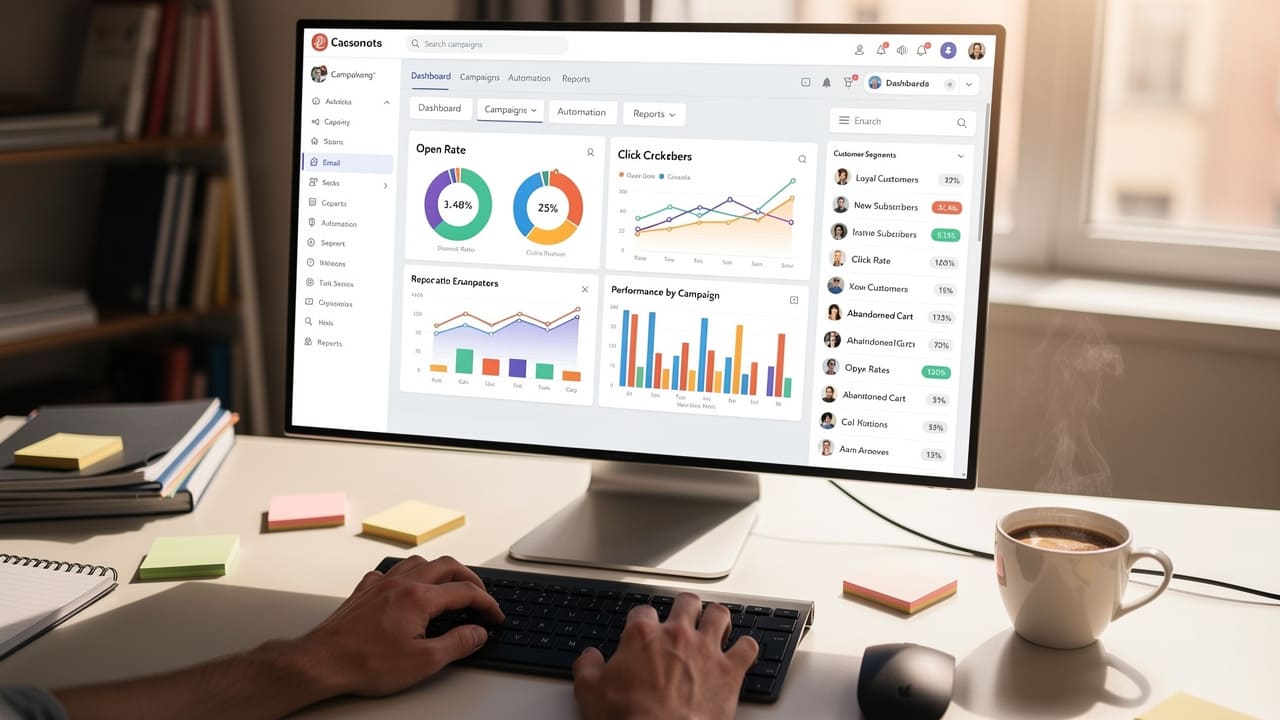
Klaviyo predictive analytics fits into e-commerce and email marketing as a built-in feature set that forecasts customer lifetime value, churn risk, and next order date directly inside the email platform most online retailers already use. Rather than requiring a separate data science team, Klaviyo applies machine learning to a store’s existing purchase and engagement history, a technique consistent with recent research on predicting repurchase behavior using genetic algorithms and deep learning to forecast which e-commerce customers are likely to buy again, automatically segmenting customers into predicted value tiers and flagging those showing early signs of disengagement. A retailer can then trigger a win-back email the moment a customer’s predicted next order date passes without a purchase, or route a high-value customer into a dedicated nurture flow instead of a generic newsletter. This is a practical, accessible example of predictive analytics marketing because the modelling happens automatically in the background of a tool marketers already operate daily.
Where Klaviyo predictive analytics fits less naturally is with B2B, industrial, and trades businesses that don’t run a high-volume storefront, since its models are built around repeat retail purchase patterns rather than long consultative sales cycles involving multiple stakeholders. A construction company selling commercial services or an oil and gas equipment supplier typically needs predictive tools built around a CRM and a sales pipeline instead, where the relevant predictions involve proposal timing and account expansion rather than next order date. Understanding this distinction matters, because applying an e-commerce style predictive marketing tool to a project-based sales cycle produces forecasts that don’t match how those customers actually buy.
Predictive Analytics In B2B Marketing And Real Estate

Predictive analytics in B2B marketing and real estate applies the same underlying techniques to very different sales cycles, which is why the tools and metrics involved look quite different from a retail context. B2B predictive analytics typically centres on account scoring, where a model evaluates an entire company rather than a single contact, weighing signals such as company size, recent facility expansion, and engagement across multiple stakeholders, an approach reflected in a 2025 SaaS benchmarks report drawing on real data from firms generating over $1 million in annual recurring revenue, to forecast how likely that account is to move through a long sales cycle.
For industrial and oil and gas buyers, procurement cycles often stretch across many months and involve capital budgeting decisions, so b2b predictive marketing applications focus heavily on timing, flagging accounts that have historically initiated purchases within a predictable window after an expansion or an equipment refresh. This timing signal lets a sales team engage a prospect during the exact planning window rather than after a competitor has already secured the project.
Real estate predictive analytics, by contrast, generally applies to demand forecasting, buyer propensity, and pricing optimization within a specific market. A brokerage or developer might forecast which listings will attract the strongest buyer interest based on historical absorption rates, or identify which browsing prospects show behaviour matching past closers, allowing the sales team to prioritize outreach accordingly.
Pricing optimization models in real estate analyze historical sale prices against property characteristics to recommend a listing price likely to both sell quickly and maximize value, a technique conceptually similar to the value-based pricing models industrial suppliers use for commercial contracts. Whether the application is B2B or real estate, the underlying discipline behind predictive analytics marketing is the same: using historical patterns to forecast which opportunity, and which timing, deserves attention right now.
Applying Predictive Models To Construction, Trades, And Industrial Sectors
Construction, trades, and industrial businesses can apply these same predictive models directly to commercial client retention and demand planning. Churn prediction identifies which commercial accounts have gone quiet longer than their historical project cadence suggests, prompting a relationship check-in before that client awards its next contract elsewhere, while customer lifetime value modelling helps decide which accounts warrant dedicated account management versus standard service.
Seasonal and cyclical demand forecasting matters just as much for oil and gas service companies and equipment rental businesses, where predictive models analyze historical booking patterns alongside commodity price trends. This lets a business anticipate staffing and inventory needs before a busy season arrives rather than reacting once it’s already underway.
Which Predictive Marketing Tools Should You Use?
Choosing the right predictive analytics marketing tools starts with recognizing that predictive capability now exists across three distinct categories rather than one specialized software purchase. CRM platforms such as HubSpot and Salesforce include native lead scoring and pipeline forecasting features that work directly with data your sales team already enters, making them a practical starting point for most B2B service businesses.
Platform-embedded tools, including Klaviyo’s predicted lifetime value features and the predictive bidding built into Google, Meta, and LinkedIn advertising accounts, apply machine learning automatically without requiring a separate implementation project. Dedicated predictive analytics software sits at the more advanced end of the spectrum, offering deeper customization for businesses with large, clean datasets and a specific modelling need off-the-shelf tools can’t address, a category illustrated by enterprise platforms such as the Oracle Marketing User Guide’s approach to optimizing audience lists with predictive analytics through custom model building and scoring runs.
The right choice depends far more on data maturity and industry fit than on which platform has the longest feature list. A trades business just beginning to track leads consistently gains more from cleaning up its CRM and turning on native scoring than from purchasing a dedicated analytics platform it doesn’t yet have the data to feed. Many established companies find it more efficient to work with a strategic partner like Cutting Edge Digital Marketing to evaluate which category fits their current data and sales process, rather than buying sophisticated software and discovering months later the underlying data wasn’t ready to support it.
| Tool Category | Primary Use Case | Best-Fit Business Type |
|---|---|---|
| CRM-native scoring (HubSpot, Salesforce) | Lead scoring and pipeline forecasting | B2B and industrial service businesses with an active sales team |
| Platform-embedded tools (Klaviyo, Google Ads, Meta, LinkedIn) | Predicted lifetime value, churn risk, predictive bidding | E-commerce brands and businesses running paid advertising |
| Dedicated predictive analytics software | Custom modelling and advanced segmentation | Larger organizations with mature, high-volume, clean data |
How Cutting Edge Digital Marketing Builds Predictive-Ready Marketing Systems

Cutting Edge Digital Marketing builds predictive-ready marketing systems by establishing tracking and attribution first, because no predictive model can be trusted until the data feeding it is accurate. Many established service businesses across Alberta and Western Canada have historically under-invested in marketing measurement, meaning their CRM, website analytics, and advertising accounts each hold a different fragment of the customer story without ever being connected.
Before any predictive work begins, the focus stays on proper conversion tracking, clean lead source attribution, and a website built with analytics integrated from the ground up, so whatever predictive model comes next learns from reliable information rather than guesswork. This reflects a broader role as a strategic marketing partner rather than a vendor selling one isolated service, combining website design, search engine optimization, paid advertising management, branding, and content creation into one connected system built around measurable revenue outcomes.
Deep experience working specifically with construction, electrical, mechanical, oil and gas services, fabrication, equipment rental, and professional services businesses means the team understands seasonal cycles, long procurement timelines, and multi-stakeholder buying committees in ways a generalist national agency typically does not. That industry context matters enormously for predictive work, because a model that ignores the seasonal swings common in construction or the cycles affecting oil and gas procurement generates confident forecasts that simply don’t match how these businesses actually buy.
Rather than selling predictive analytics as a standalone technology purchase, the goal is making forward-looking, data-driven decisions a practical part of how an established business plans its budget, its staffing, and its growth strategy heading toward 2026 and beyond.
Overcoming Common Implementation Challenges
Most implementation barriers come down to three recurring issues: a lack of internal data expertise, data foundations too messy to model reliably, and lingering skepticism about whether predictive work will pay for itself.
Lack of internal expertise addressed by having a strategic partner handle the technical and analytical work, so an owner or general manager can stay focused on running the business rather than learning data science
Messy data foundations addressed by investing in tracking and attribution before ever discussing predictive modelling, since no algorithm fixes bad inputs
Skepticism about ROI addressed through a long-term partnership rather than a one-off project, because predictive accuracy genuinely improves as more clean data accumulates over successive quarters
How Do You Measure Predictive Marketing Success?
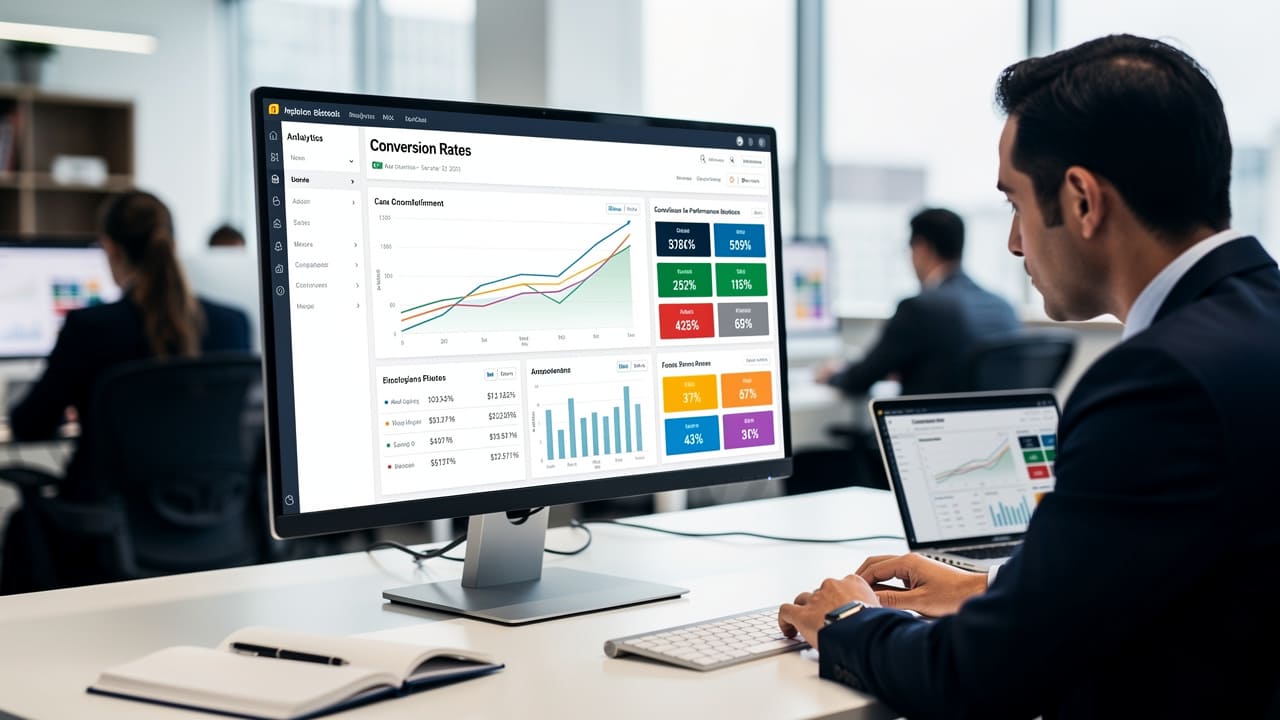
You measure predictive marketing success by tracking whether the specific metrics a model claims to improve actually move in the right direction after implementation.
cost per qualified lead should decline as predictive targeting focuses advertising spend on higher-propensity audiences instead of a broad, generic audience.
conversion rate should climb specifically among leads a scoring model rated highest, and that rate should be meaningfully higher than the rate among lower-scored leads, confirming the model actually distinguishes quality rather than assigning scores at random.
Churn rate reduction among customers flagged as at-risk and given a retention intervention is another key measure, since the entire value of churn prediction depends on whether those interventions actually prevent the defection the model anticipated.
Overall marketing ROI, meaning revenue generated per dollar of marketing spend, ties these individual metrics together into a single number leadership can track quarter over quarter.
None of these measurements mean much without a documented baseline captured before implementation begins, including current cost per lead, current conversion rates by channel, and current retention figures. Skipping this step is the most common reason businesses struggle to prove predictive analytics marketing is working, because without a clear before-and-after comparison, any improvement could plausibly be attributed to seasonal factors or market conditions instead of the predictive system itself.
Establishing this baseline typically takes a single reporting quarter and should be treated as a mandatory first step rather than an optional formality, since it becomes the reference point every later measurement gets compared against.
The Takeaway
Predictive analytics marketing has moved from a competitive advantage available only to well-funded technology companies into a practical necessity for any established service business heading toward 2026, since competitors already using forecasted lead scores, churn predictions, and demand forecasting keep winning the deals intuition-based marketing misses. The businesses that benefit most are the ones building strong data foundations first and applying industry context second, rather than chasing whichever tool promises the most sophisticated algorithm.
If your construction, trades, or industrial business is ready to build the tracking, attribution, and marketing systems that make predictive analytics trustworthy, get started with Cutting Edge Digital Marketing as a long-term strategic partner focused on measurable revenue growth.
Frequently Asked Questions
What Is the Difference Between Predictive Marketing and Predictive Analytics?
Predictive analytics is the underlying method, the statistical models and machine learning that forecast outcomes from historical data. Predictive marketing is the applied use of those forecasts inside real campaigns, lead scoring, and customer communications. In short, predictive analytics generates the insight, while predictive marketing puts that insight to work generating leads and revenue.
How Much Data Do You Need Before Predictive Analytics Becomes Reliable?
There’s no fixed number, but reliable models generally need at least 12 to 18 months of consistent CRM and email data covering a meaningful sample of both converted and lost opportunities. You don’t need perfect historical records to start. Existing CRM and email data is usually enough to build an initial lead scoring model and refine it over time.
Can Small or Mid-Sized Businesses Afford Predictive Analytics Marketing?
Yes, the barrier to entry has dropped considerably because predictive features are now built directly into platforms like Klaviyo, HubSpot, and major advertising accounts rather than requiring custom software. Businesses spending $2,000 to $10,000 monthly on marketing can access predictive analytics marketing through these platforms or through an experienced agency partner.
Does Predictive Analytics Replace the Need for a Marketing Strategy?
No, predictive analytics sharpens a strategy rather than replacing it. Forecasts and lead scores only create value when guided by clear business objectives, defined target segments, and a positioning strategy that determines what message reaches each audience. Predictive tools improve execution of a strategy; they don’t decide what that strategy should be.
How Long Does It Take to See Results From Predictive Marketing?
Most businesses see initial signals, such as improved lead scoring accuracy, within a single quarter, while deeper gains from churn prediction and demand forecasting typically compound over several quarters. Some established organizations report their most significant efficiency gains, often in the 20 to 40 percent range, closer to the third year of consistent implementation.
What Privacy Regulations Affect Predictive Analytics in Canada?
The federal Personal Information Protection and Electronic Documents Act governs how Canadian businesses collect, use, and disclose customer data for predictive modelling, alongside equivalent provincial legislation in some regions. Businesses must secure proper consent and communicate transparently about how customer data feeds predictive marketing systems before building models on it.
Is Predictive Analytics Only Useful for E-commerce Businesses?
No, that’s a common misconception. B2B, industrial, real estate, and service businesses all apply predictive analytics successfully, often through account scoring, procurement-cycle forecasting, and demand planning rather than the next-order-date models common in e-commerce. construction, trades, and industrial use these same techniques for lead scoring and churn prediction covered earlier in this guide.