
Many service businesses pour money into ads, website tweaks, and social posts, only to watch leads disappear before they ever become customers. The problem usually isn’t a lack of effort. It’s a lack of structure that connects every marketing action to where a prospect actually sits in their buying journey.
Sales funnel stages solve this by mapping the exact path a potential customer travels, from the moment they first notice your business to the day they sign a contract, and later, when they refer a friend. This article breaks down each stage, awareness, consideration, decision, and retention, explaining what a buyer needs at each point and what your marketing should deliver in return. We’ll also look at how a strategic partner like Cutting Edge Digital Marketing connects these stages into one system instead of a set of disconnected tactics.
Let’s start by defining what these stages actually are and why they matter so much for businesses with longer, relationship-driven sales cycles. If you want a partner to map this out with you, contact us to discuss your funnel.
Key Takeaways
Sales funnel stages each require distinct messaging, moving from broad awareness content to relationship-driven, trust-heavy conversations at close.
The awareness stage generates volume and reach, while the decision stage relies on trust and proof to close deals.
Proper tracking and CRM data are what separate a real funnel from a pile of disconnected marketing tactics.
Retention and referrals often deliver the cheapest, highest-quality new leads a business can generate.
B2B and industrial sales cycles need longer, more patient nurturing than typical consumer purchases, often stretching from 2 to 3 months or more.
Table of Contents
- What Are Sales Funnel Stages and Why Do They Matter?
- Stage One: The Awareness Stage of the Marketing Funnel
- Stage Two: The Consideration Stage – Educating Your Prospects
- Stage Three: The Decision Stage – Turning Leads Into Customers
- How Cutting Edge Digital Marketing Connects Every Funnel Stage
- Stage Four: Retention – Why the Funnel Doesn’t End at Close
- How to Measure and Improve Your Sales Funnel Steps
- The Takeaway
- Frequently Asked Questions
What Are Sales Funnel Stages and Why Do They Matter?
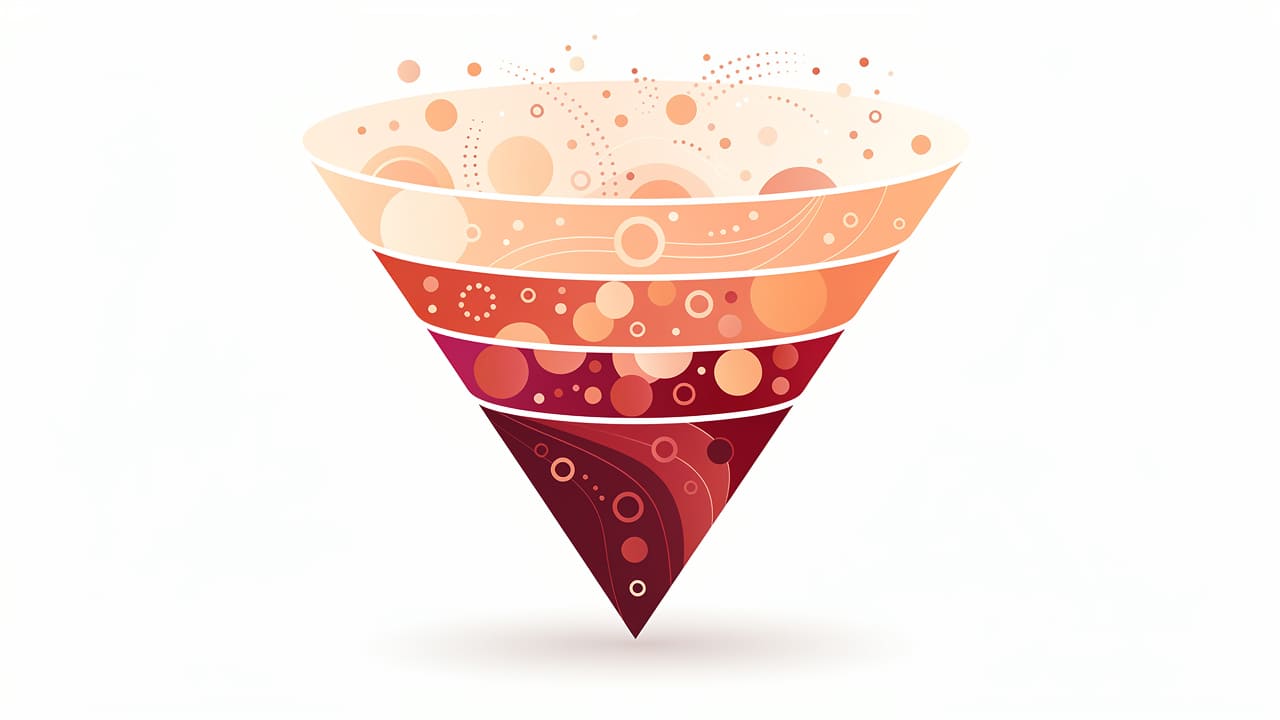
Sales funnel stages are the distinct phases a prospect passes through on the way from first hearing about your business to becoming a paying customer, usually labelled awareness, consideration, decision, and retention a structure explained in detail in this complete sales funnel guide (some frameworks also call this progression the stages of the marketing funnel). Each stage narrows the pool of prospects, since not everyone who notices your brand actually needs your service, and that narrowing is what gives the funnel its shape.
For service, trades, and industrial businesses across Alberta and Western Canada, these sales funnel stages matter more than they do for a quick retail purchase. A homeowner might buy a product in minutes, but a construction company evaluating a contractor, or an oil and gas operator vetting an equipment supplier, moves through weeks or months of research, comparison, and internal approval before signing anything. It’s common for these industrial buying cycles to run 60 to 120 days from first inquiry to signed contract.
Stage One: The Awareness Stage of the Marketing Funnel

The awareness stage is the first of the sales funnel stages and marks the widest point of the funnel, the moment a prospect first realizes they have a problem, whether that’s aging equipment on a job site, an approaching compliance deadline, or rising energy costs at a facility. At this point, most prospects don’t know your company exists, so the marketing goal here is visibility rather than conversion.
Search engine optimization plays a major role in awareness marketing funnel activity, since prospects searching phrases like “industrial equipment supplier Edmonton” or “commercial electrician Calgary” are actively looking for information, even before they’re ready to buy. Paid advertising across Google Ads, Meta Ads, and LinkedIn Ads extends reach further, putting your business in front of decision-makers who match your ideal customer profile.
Educational content, blog articles, short videos, and industry guides that address common pain points build trust simply by being useful, and prospects remember businesses that helped them understand a problem long before they remember a sales pitch. For Alberta-based industrial and trades companies, content addressing regulatory changes, safety standards, or seasonal project planning tends to perform especially well.
The metrics that matter here look different from lower-funnel numbers, focusing on website traffic, impressions, and content downloads rather than closed deals, because the goal is building a pool of aware prospects large enough to fill every stage that follows. Many businesses find that only around 2% to 5% of top-of-funnel visitors convert into a qualified lead within the first visit, which is exactly why volume matters so much at this stage.
How to Build Awareness Without Wasting Ad Spend
Scaling ad spend before proper tracking exists is one of the fastest ways to waste a marketing budget, since you can’t tell which channel actually produced a qualified lead. Pairing organic SEO with paid campaigns across Google, Meta, and LinkedIn spreads awareness across both free and paid channels at once. Cutting Edge Digital Marketing builds website foundations and tracking infrastructure first, then scales awareness campaigns, so every dollar spent can actually be measured. Learn more about how a paid and organic mix works together for Alberta trades and industrial businesses.
Stage Two: The Consideration Stage – Educating Your Prospects

The consideration stage begins once a prospect has named their problem and starts actively researching solutions, comparing providers and approaches rather than just reading about the challenge itself. Marketing funnel awareness content gave prospects an initial nudge, but consideration content needs to go deeper, addressing specific solution types and showing why one approach beats another for their exact situation.
Case studies carry serious weight here, since a construction company evaluating contractors wants proof, not promises, and a project gallery showing similar work completed on time and on budget convinces far better than any tagline. Comparison guides, ROI calculators, and detailed service breakdowns help prospects evaluate options without feeling pressured, which builds trust because the content feels like advice rather than a pitch.
Gated resources, whitepapers, assessments, or detailed guides requiring an email address, serve two purposes at once:
They give prospects real value while they’re still researching.
They identify which leads are serious enough to hand over contact information.
Once that information is captured, email nurture sequences carry the relationship forward, especially for buyers moving through b2b sales funnel stages, whose cycles often stretch across weeks or months rather than days, a pattern examined in research modelling multistage purchase intentions in influencer-driven and consideration-heavy markets. A well-built sequence answers objections gradually, shares relevant case studies, and reintroduces your expertise at intervals, so by the time a prospect reaches decision, they already feel familiar with your business. Tracking engagement, opens, downloads, and time spent on a page reveals which leads are genuinely warming up and which need more time before sales should get involved, and a well-run nurture sequence can lift lead-to-opportunity conversion by 20% or more.
Lead Qualification Tactics That Actually Work
Gated content works best when it solves a real problem, so whitepapers, self-assessment tools, and consultation request forms should feel like genuine resources rather than a hurdle. Watching engagement signals, email opens, repeat visits, and time spent on a page tells you which leads are warming toward a decision. Content creation that answers specific objections builds the case for choosing your business before a sales conversation even starts. To see how this looks in practice, explore real examples of consideration-stage content that moved leads forward.
Stage Three: The Decision Stage – Turning Leads Into Customers

The decision stage is the narrowest and most valuable of the sales funnel stages, the point where a prospect has already researched their options and is now choosing between a shortlist of providers rather than deciding whether to buy at all. Trust becomes the deciding factor here, and testimonials from real clients, especially those in a similar industry facing a similar challenge, tend to carry more weight than any feature list.
Video testimonials often outperform written ones because they show genuine satisfaction, and for industrial or equipment companies, case studies citing specific results, an efficiency gain or a measurable cost saving, give buyers concrete proof rather than vague reassurance. Professional credentials matter considerably too, since licenses, insurance documents, safety records, and relevant certifications reassure a buyer your business can be trusted with a significant contract.
Pricing needs careful handling:
Jumping straight to a number before understanding a prospect’s specific needs often undersells your value.
A custom proposal referencing their exact situation and showing how your service solves it closes far more deals.
Risk-reduction tools such as service guarantees, phased implementation, or performance-based pricing help nervous buyers take the final step, particularly when the project timeline stretches over months.
Convenience also plays a role that’s easy to overlook, since a clunky proposal process or a slow reply to questions can push a nearly-closed prospect toward a competitor who simply made the next step easier to take. As the buying funnel stages narrow further, tracking proposal acceptance rates, average sales cycle length, and cost per acquisition reveals exactly where deals stall. A delay of even 24 to 48 hours in responding to a decision-stage inquiry can be enough to lose a deal to a faster competitor.
What Makes B2B Sales Funnel Stages Different at Decision Time
B2B and industrial deals rarely involve a single decision-maker, so a purchase that looks simple on paper might need sign-off from a project manager, a finance lead, and an operations director before it closes. Relationship-driven sales support and genuine technical expertise carry real weight, since buyers need confidence your team understands their industry. Strong branding and consistent positioning reinforce that credibility throughout every one of these decision-stage conversations.
How Cutting Edge Digital Marketing Connects Every Funnel Stage
Cutting Edge Digital Marketing approaches the sales funnel stages as one connected system rather than a set of separate campaigns running independently of each other. Website design and development anchor the consideration and decision stages, giving prospects a professional place to land once SEO and paid advertising have already built awareness. Branding and positioning strengthen trust throughout the entire process, while content creation supports the education prospects need before they’re ready to talk to sales.
This integrated model matters because a business generating leads through Google Ads or Meta Ads without a website built to convert, or without tracking in place, ends up with plenty of traffic and very few actual customers. The team prioritizes proper tracking infrastructure from day one, so every stage of the funnel, from a first click to a signed contract, can be measured and tied back to revenue.
Foundations and tracking, built before ad spend scales, are what separate a real funnel from a set of disconnected marketing tactics.
Deep experience with construction, industrial, and trades businesses across Alberta and Western Canada means these funnel strategies are built around real sales cycles rather than generic templates. These sectors often involve longer consideration periods and relationship-driven closes, and a full-funnel system designed with that reality in mind tends to outperform disconnected, one-off marketing tactics. If you’re ready to see this approach applied to your business, get started with a conversation about your current funnel.
Stage Four: Retention – Why the Funnel Doesn’t End at Close

The sales funnel stages don’t end the moment a contract gets signed, since retention determines whether that customer becomes a one-time transaction or a long-term revenue source. Exceptional service delivery, meeting deadlines, communicating clearly, and delivering promised results, forms the foundation everything else builds on, and no amount of marketing can make up for a project that disappoints.
Post-purchase communication keeps that relationship alive long after the invoice gets paid. Simple check-ins after a project wraps up, requests for honest feedback, and reminders about seasonal maintenance or follow-up services all show a customer they’re valued beyond the sale. Upsell and cross-sell opportunities, a maintenance contract following a completed installation, or an equipment upgrade recommendation, expand revenue from a relationship you’ve already invested in building, often at a fraction of the cost of acquiring a brand new customer.
Referrals from satisfied customers often become the highest-quality, lowest-cost lead source available to a service business, since a recommendation from a trusted contact skips straight past the earlier lead funnel stages entirely. Loyalty incentives, referral rewards, and simple appreciation gestures encourage that word-of-mouth to keep flowing, turning past customers into an ongoing source of qualified leads.
How to Measure and Improve Your Sales Funnel Steps
Improving your sales funnel steps starts with measuring performance at each stage separately, since a single overall conversion number hides exactly where prospects are dropping off. Cost per lead reveals how efficiently your awareness activities are working, while conversion rate from lead to customer shows whether your consideration and decision content is actually persuading anyone.
Sales cycle length matters just as much, especially across b2b sales funnel stages involving industrial or construction buyers, since understanding how long deals typically take helps set realistic expectations and flags stalled prospects before they go cold. Customer lifetime value rounds out the picture, showing whether the cost of acquiring a customer is worth it once repeat business and referrals get factored in.
None of these numbers mean much without proper tracking infrastructure behind them, which is why configuring sales funnel tracking correctly within your ad and CRM platforms matters so much for attribution accuracy. A CRM system that records every interaction, combined with attribution tracking that shows which channels actually produced closed deals, turns guesswork into a provable return on marketing investment across every stage of the funnel.
| Funnel Stage | Primary Goal | Key Metric To Track |
|---|---|---|
| Awareness | Visibility and reach | Website traffic, impressions, social reach |
| Consideration | Lead qualification | Email opens, downloads, engagement time |
| Decision | Conversion | Proposal acceptance rate, sales cycle length |
| Retention | Lifetime value | Repeat purchase rate, referral rate |
The Takeaway
Sales funnel stages each demand a different message, a different type of content, and a different measure of success, and treating awareness, consideration, decision, and retention as one identical marketing push is exactly why so many businesses waste budget on leads that never close. A homeowner ready to buy today needs different information than an industrial buyer still comparing three vendors months out, and your marketing has to reflect that difference at every stage.
Foundations, tracking, and an integrated system consistently outperform scattered, disconnected tactics, which is exactly the gap Cutting Edge Digital Marketing exists to close for growth-focused service and industrial businesses across Alberta. If your business is ready to build a full-funnel marketing system instead of running one-off campaigns, partnering with an experienced marketing team gives every stage, from first click to closed deal, a clear and measurable path forward.
Frequently Asked Questions
How Many Stages Are in a Typical Sales Funnel?
Most frameworks describe three to five stages in a sales funnel, typically awareness, consideration, decision, and often retention or advocacy as a fifth stage. The exact number varies depending on your business model, service complexity, and how long your sales cycle usually runs.
What Is the Difference Between a Sales Funnel and a Marketing Funnel?
A marketing funnel typically ends once a prospect becomes a qualified lead, focusing on awareness and consideration, while a sales funnel extends further to include decision and close. Since these processes overlap heavily, sales and marketing teams need shared definitions to hand off leads smoothly.
How Long Should a B2B Sales Funnel Take From Lead to Close?
B2B sales funnels in construction, industrial, and trades sectors often take anywhere from a few weeks to several months to close. Multiple decision-makers, budget approvals, and technical evaluations all extend the timeline compared to simpler consumer purchases.
What’s the Best Way to Move a Lead From Consideration to Decision?
Personalized proposals referencing a prospect’s exact situation, testimonials from similar clients facing similar challenges, and direct follow-up from a knowledgeable sales contact all help move a lead toward a decision. Removing friction from the next step, like scheduling a call, matters just as much.
Can a Small Business Run a Full Sales Funnel Strategy on a Limited Budget?
Yes, though it works best when foundations come first, meaning a strong strong website and proper tracking before scaling ad spend. Many established service businesses start seeing solid results once they’re investing $2,000 to $10,000 a month with those foundations in place.
What Tools Help Track Leads Through Sales Funnel Stages?
CRM systems, marketing automation platforms, and ROI tracking dashboards all help follow a lead’s progress from first contact through close. Setting up this tracking before scaling top-of-funnel spend ensures you know which channels are actually generating paying customers. If you’d like help setting this up correctly, contact us today.