
Established service and industrial businesses often spend thousands of dollars a month on marketing without a clear answer to where their best leads actually come from. Cold calls go unreturned, mass emails land in spam folders, and paid ads generate clicks that rarely convert into signed contracts or service calls. This happens because outbound tactics interrupt people who aren’t ready to buy, while modern buyers research contractors, suppliers, and vendors long before picking up the phone. Inbound marketing services fix this by building a system of content, search visibility, and automated nurturing that pulls qualified prospects toward your business instead of pushing a generic message at an unqualified audience. Alberta contractors, fabricators, and equipment companies feel this gap constantly, watching smaller competitors win projects simply because they rank first when a prospect searches online.
Inbound marketing services attract qualified leads by building content, search visibility, and automated nurturing that pulls prospects toward your business instead of interrupting them. This approach consistently produces more qualified leads than outbound marketing for considered B2B purchases, where buyers research extensively before contacting a vendor.
This article breaks down how the inbound marketing funnel moves a stranger into a loyal customer, which components a complete inbound marketing strategy needs, and how Cutting Edge Digital Marketing structures these systems for Alberta trades, construction, and industrial clients. Read on to see what actually separates real strategy from scattered tactics, and contact us if you want to discuss what this looks like for your business.
Key Takeaways
Inbound marketing services attract qualified leads rather than chasing unqualified ones through cold outreach or rented contact lists.
The inbound funnel, covering attract, engage, and delight, needs integrated systems working together, not standalone tactics running in isolation.
Industry-specific strategy matters more than generic templates for trades, construction, and industrial sectors with long sales cycles.
Lead quality, cost per lead, and sales cycle length matter more than raw traffic or lead volume when judging results.
A strategic marketing partner outperforms a transactional vendor over the long run, especially for multi-year revenue growth.
Table of Contents
- What Are Inbound Marketing Services?
- How Does the Inbound Marketing Funnel Work?
- What Core Components Make Up an Effective Inbound Marketing Strategy?
- How Cutting Edge Digital Marketing Builds Inbound Systems That Convert
- Which Inbound Marketing Agencies Are Right for Canadian Service Businesses?
- How Does Inbound Marketing Apply to SaaS and B2B Industries?
- What Does An Inbound Sales Strategy Look Like Once Leads Convert?
- How Do You Measure ROI From Inbound Marketing Services?
- Is HubSpot Certification Important When Choosing An Inbound Partner?
- The Takeaway
- Frequently Asked Questions
What Are Inbound Marketing Services?

Inbound marketing services are the coordinated content, search optimization, and lead-nurturing programs that pull prospects toward your business because they’re already searching for a solution, rather than interrupting them the way cold calls, mass mailers, and untargeted display ads do. That’s the fundamental difference between inbound and outbound marketing: outbound broadcasts a message to everyone within reach and hopes a fraction respond, while inbound positions your company exactly where a motivated buyer is already looking. This might be a Google search for industrial fabrication services or a LinkedIn post about equipment maintenance costs.
For Alberta trades, construction, and industrial companies, this distinction shapes lead quality more than almost any other marketing decision. Inbound lead generation attracts buyers who have already identified a need, while outbound tactics such as cold outreach and purchased contact lists generate volume without genuine intent. This aligns with research on digital marketing’s effectiveness in shaping customer satisfaction and engagement, since qualified prospects convert faster, ask fewer basic questions, and cost less to close than names pulled from a rented list. This is why a well-built inbound marketing strategy consistently outperforms outbound-heavy approaches for considered B2B purchases involving long research cycles and multiple decision-makers, sometimes spanning 6 to 12 months from first contact to signed contract.
Inbound vs Outbound and Why the Distinction Matters for B2B Growth
Outbound marketing interrupts prospects through cold calls, mass ads, and rented email lists, hoping enough people respond regardless of timing or interest. Inbound marketing attracts prospects who are already researching a purchase, which means B2B inbound marketing consistently shortens sales cycles because buyers arrive pre-educated and further along their own decision process, a pattern confirmed by research on digital marketing campaign strategies and buying intention. A procurement manager who has already read your case studies and pricing page needs less convincing than a cold contact fielding an unsolicited call.
None of this means paid channels disappear entirely from a complete inbound marketing services program. A blended approach using paid ads to amplify inbound-generated visibility often outperforms either tactic alone.
How Does the Inbound Marketing Funnel Work?

The inbound marketing funnel works by moving a prospect through 3 connected stages, awareness, consideration, and decision, with each stage requiring different content and messaging aligned to what that prospect actually needs at that moment. In the awareness stage, someone has identified a problem, such as an aging piece of equipment or a compliance deadline, but hasn’t yet settled on a specific fix. Educational blog posts and guides earn their attention through organic search rather than a sales pitch.
As they move into consideration, prospects actively compare options, which means they need case studies, comparison content, and detailed service pages that explain how your approach differs from competitors and what outcomes similar clients achieved. By the decision stage, a prospect has narrowed their choices to a shortlist and wants pricing clarity, testimonials, and a low-pressure way to start a conversation, whether that’s a consultation request or a project quote.
Marketing automation and lead nurturing bridge the gaps between these stages, because most prospects don’t move from stranger to customer in a single visit, especially in industrial and construction sectors where purchase decisions involve multiple stakeholders and extended evaluation periods. An automated email sequence that delivers the right resource at the right time keeps your company visible without requiring a salesperson to manually follow up with every contact, which matters for businesses juggling active projects alongside new business development. Without this structure, even good content generates traffic that never converts, because visitors arrive, read one article, and leave without a clear next step toward becoming a qualified inbound lead.
Mapping Content to Each Funnel Stage
Mapping content to each stage of inbound marketing services starts with awareness-level material that answers broad questions prospects search for before they’ve defined a solution. This includes blog posts explaining what drives equipment failure or guides outlining regulatory requirements for a specific trade. As interest narrows into consideration, content needs to get more specific, offering case studies that document measurable results and comparison guides that address how your services differ from alternatives.
Detailed service pages should speak directly to the technical or logistical questions a serious buyer is asking. Each piece should answer one clear question rather than trying to cover everything a prospect might eventually want to know.
At the decision stage, prospects want confirmation, not persuasion, so pricing transparency, detailed testimonials, and a straightforward path to a consultation matter more than additional educational content. Direct sales handoff should happen smoothly here, with sales teams able to see what content a prospect already consumed so conversations pick up where the marketing left off. Skipping this stage, or forcing every visitor straight into a sales pitch, undermines the trust inbound content already built earlier in the process.
What Core Components Make Up an Effective Inbound Marketing Strategy?
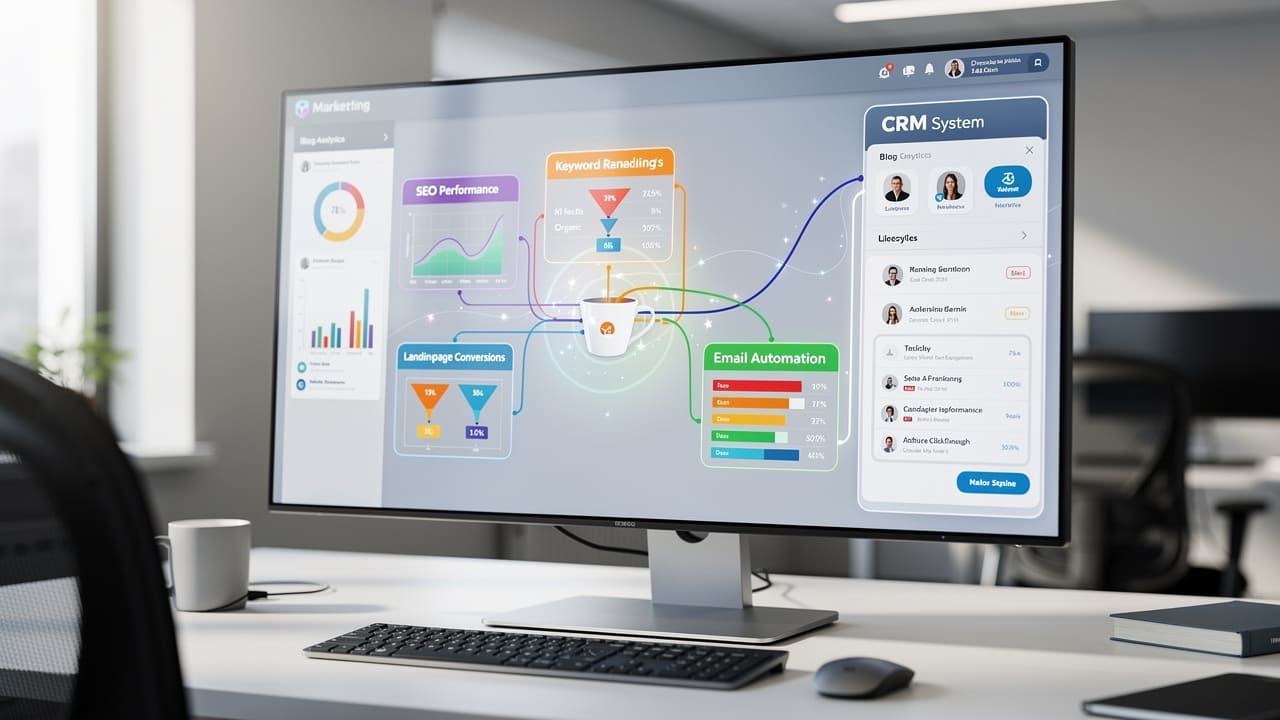
The core components of inbound marketing services work as one connected system rather than a checklist of independent tactics performed in isolation. Inbound content marketing establishes the questions and topics your ideal customers are searching for, while SEO is what makes that content actually surface when those searches happen, covering technical elements like site speed and mobile responsiveness alongside on-page optimization and local search visibility for service areas. Conversion-optimized landing pages then turn that traffic into identifiable leads by pairing a specific offer, such as a free assessment or a detailed guide, with a short form that doesn’t create unnecessary friction.
Marketing automation carries those leads forward through segmented email sequences, lead scoring, and CRM integration, an approach supported by recent research on data-driven marketing process adoption, so that a prospect who downloaded a compliance checklist receives different follow-up than one who requested a project quote. The problem most service and industrial businesses run into isn’t a lack of individual tactics, since many have a website, a Google Business profile, and maybe an email list already, but a lack of connection between them.
A blog that never links to a relevant offer, a landing page disconnected from the keywords driving traffic to it, or an email list that only receives sporadic newsletters all represent broken links in what should be one continuous chain. Disconnected tactics might generate a trickle of leads, but they consistently fail to convert prospects into the kind of loyal, repeat customers that drive long-term revenue growth for construction, trades, and industrial companies. Building each piece with the others in mind, from the keyword strategy behind a blog post to the specific email sequence a form submission triggers, is what separates a genuine strategy from a collection of marketing activities that happen to exist on the same website.
Core components include:
Content marketing: blog posts, guides, and resources built around real search behaviour
SEO: technical, on-page, and local optimization that makes content findable
Conversion-optimized landing pages: focused offers paired with low-friction forms
Marketing automation: segmented email sequences and lead scoring
CRM integration: connecting nurtured leads directly to sales follow-up
Inbound Content Marketing and SEO Foundations
Digital inbound marketing depends on content built around the specific questions your target customers are typing into Google, not generic industry topics that sound impressive but attract the wrong audience, a principle outlined in guidance on what is inbound marketing and how it grows a business organically. A fabrication shop benefits more from a detailed guide on material selection for a specific application than from a broad post about manufacturing trends, because the narrower topic attracts prospects already evaluating a real project. Keyword research grounded in actual search behaviour, rather than assumptions about what sounds professional, is what connects this content to people with genuine purchase intent.
Local SEO and technical SEO work alongside content to make sure that visibility translates into actual traffic from the right geography. For construction, trades, and industrial businesses serving specific Alberta regions, this means optimizing Google Business profiles, building consistent local citations, and creating location-specific pages that address the service areas prospects actually search for. Technical fixes like faster page load times and proper mobile display matter just as much, since a slow or broken site loses visitors before they ever read the content built to attract them.
Inbound Marketing Automation and Lead Nurturing
Inbound marketing automation allows a single marketing team to nurture hundreds of prospects with the kind of personalized follow-up that would be impossible to deliver manually. Automated email sequences, triggered by specific actions like a form submission or a resource download, keep prospects responsive throughout the longer sales cycles typical of industrial equipment purchases, commercial construction projects, or specialized trades services. Lead scoring assigns value to these interactions, so a prospect who has read three case studies and visited the pricing page ranks differently than one who downloaded a single guide and never returned.
CRM integration connects these automated workflows directly to the sales team, so that when a prospect reaches key sales funnel stages, the right person receives a notification with full context about what that prospect has already viewed. Behavioural triggers replace generic monthly newsletters with relevant, timely follow-up, which matters because a prospect who just downloaded a safety compliance checklist responds better to a related case study than to an unrelated promotional blast.
How Cutting Edge Digital Marketing Builds Inbound Systems That Convert

Cutting Edge Digital Marketing builds inbound marketing services that combine website design, SEO, paid advertising, branding, and content creation into one cohesive structure instead of selling these pieces as disconnected line items. Rather than starting with a templated package, the process begins with a strong foundation: a website built specifically to support conversions, proper analytics tracking, and a content plan grounded in the actual questions Alberta trades, construction, and industrial prospects are asking during their research. From there, SEO and content work together to build organic visibility, while targeted advertising through Google Ads, Meta Ads, and LinkedIn Ads fills in gaps and speeds up lead flow while the organic foundation matures.
This integrated approach matters because industrial and trades buyers rarely make quick decisions, so a fabrication company, electrical contractor, or oil and gas service provider needs a marketing partner who understands procurement cycles, safety considerations, and the technical vocabulary decision-makers actually use. Deep sector experience across construction, industrial, oil and gas, and service-based businesses means messaging connects faster and builds trust earlier in the buying process than generic marketing language ever could.
Every piece, from a blog post to a paid ad to an email nurture sequence, is built with proper tracking in place, so clients can see exactly how activity connects to actual revenue growth rather than vanity metrics like impressions or page views. This is what separates a strategic marketing partner from a vendor selling isolated services, and it’s the structure behind turning inbound prospects into the kind of loyal, long-term customers that support sustained business growth. Learn more about how this structure applies to your specific industry.
Why a Strategic Partner Outperforms a Templated Agency
A templated agency applies the same package to every client regardless of industry, while a strategic partner customizes strategy around a business’s specific goals, competitive position, and growth stage. Built-in ROI tracking confirms that inbound efforts tie directly to revenue rather than surface-level metrics that look good in a report but don’t reflect actual sales impact. Acting as a long-term marketing leader also frees owners and operations leaders to focus on running projects and managing crews instead of managing campaigns, ad accounts, and content calendars themselves.
Which Inbound Marketing Agencies Are Right for Canadian Service Businesses?
The right inbound marketing agency for a Canadian service business has proven industry experience, transparent reporting, realistic timelines, and a service scope broad enough to cover strategy, content, SEO, and automation under one roof. Inbound marketing agencies across Canada vary enormously in specialization, and a firm that excels at e-commerce campaigns won’t necessarily understand the procurement cycles, safety documentation, or seasonal demand patterns that shape marketing for construction, trades, and industrial companies.
Sector fit matters just as much as the list of services offered, since an inbound marketing consultant who has never worked with a fabrication shop or an electrical contractor will need time to learn an industry that an experienced partner already understands. Businesses evaluating agencies should ask for examples of work with genuinely comparable companies, request a clear explanation of how leads will be tracked and reported, and confirm that pricing and timelines reflect realistic expectations rather than aggressive promises designed to win the contract.
Cutting Edge Digital Marketing fits this evaluation criteria directly for Alberta and Western Canadian service, trades, and industrial businesses, given its focus on construction, oil and gas, fabrication, and equipment sectors and its focus on measurable ROI over vanity metrics. Businesses spending $2,000 to $10,000 a month on marketing should treat this evaluation seriously, since the gap between a generic provider and a genuine sector specialist compounds over a multi-year partnership.
A useful test before signing with any provider: ask how leads will be tracked from first click to closed deal, and expect a specific answer, not a general promise.
Red Flags When Choosing an Inbound Marketing Consultant
Guaranteed rankings or a specific number of leads within a set timeframe, offered without any explanation of methodology, should raise immediate concern, since no legitimate provider of inbound marketing services controls search engine algorithms or buyer behaviour that precisely. A consultant with no case studies from trades, construction, or industrial clients likely lacks the sector understanding needed to build messaging that connects with those buyers. Vague reporting that highlights website traffic or social followers without addressing lead quality or conversion rates suggests a focus on activity over actual business results.
Watch for these warning signs specifically:
Guaranteed rankings or lead counts with no explanation of method
No case studies from comparable trades, construction, or industrial clients
Reporting built around traffic or followers instead of lead quality or conversions
Pricing or timelines that sound too aggressive to be realistic
How Does Inbound Marketing Apply to SaaS and B2B Industries?
Inbound marketing for SaaS and B2B industries works by using free trials, product demonstrations, and educational content that let prospects experience a platform’s value before committing to a purchase, which shortens what would otherwise be a lengthy, feature-comparison-driven sales cycle. A software company selling to operations managers, for example, benefits from detailed onboarding guides, comparison pages against competing platforms, and case studies quantifying time saved or costs reduced, since technical buyers want evidence before they’ll advocate internally for a purchase.
B2B inbound marketing more broadly requires content addressing multiple stakeholders at once, since a single purchase decision often involves a technical evaluator assessing capability, a procurement team assessing cost, and an executive approving budget. Content built for only one of these audiences, such as a highly technical spec sheet with no executive summary, leaves gaps that slow decision-making or stall deals entirely. Effective B2B inbound programs create distinct content paths for each stakeholder type while keeping core messaging consistent across all of them.
What Does An Inbound Sales Strategy Look Like Once Leads Convert?
An inbound sales strategy picks up where marketing leaves off, using lead scoring and a defined handoff process to make sure inbound leads get contacted at the right moment with a message that reflects what they’ve already researched. A prospect who requested a project quote after reading three case studies needs a very different unique selling proposition than one who just downloaded an introductory guide, and treating both the same wastes the trust inbound content already built.
Consultative, low-pressure selling matches what self-educated inbound prospects expect, since these buyers have typically compared options, reviewed pricing information, and formed initial opinions before ever speaking with a salesperson. Sales conversations work better when they focus on confirming fit, answering specific questions, and addressing any remaining objections rather than repeating information the prospect already found on the website. This alignment between marketing and inbound sales strategy is what actually converts qualified inbound leads into signed contracts and, over time, into loyal repeat customers.
How Do You Measure ROI From Inbound Marketing Services?

Measuring ROI from inbound marketing services starts with tracking lead quality, cost per lead, sales cycle length, and customer lifetime value rather than fixating on traffic volume alone, since a website generating 10,000 visitors and zero qualified leads delivers no actual business result. Proper attribution connects specific marketing activities, whether that’s an organic blog post, a paid ad, or an email nurture sequence, to the revenue those activities eventually generate, which requires CRM integration and consistent tracking from first touch to closed deal.
Businesses evaluating an inbound marketing strategy should review these numbers regularly rather than waiting for an annual report, since monthly trends reveal whether lead quality is improving even before overall volume grows. The table below outlines core metrics worth tracking and why each one matters for a service, trades, or industrial business.
| Metric | What It Measures | Why It Matters |
|---|---|---|
| Organic Traffic | Visitors arriving through unpaid search | Shows growing visibility for target keywords without added ad spend |
| Lead-to-Customer Rate | Percentage of leads that become paying customers | Reveals whether marketing is attracting the right audience, not just volume |
| CAC vs LTV | Cost to acquire a customer versus their lifetime value | Confirms marketing spend generates profitable, sustainable growth |
| Sales Cycle Length | Time from first contact to closed deal | Shows how well-nurtured and pre-qualified inbound leads actually are |
Is HubSpot Certification Important When Choosing An Inbound Partner?
HubSpot inbound marketing certified status signals that a marketer or agency understands core inbound methodology, automation platform functionality, and best practices for aligning marketing and sales, since the certification program covers content strategy, lead nurturing, and CRM fundamentals in real depth. For a business evaluating potential partners for inbound marketing services, this certification offers a reasonable baseline indicator that the provider has studied the framework rather than applying inbound terminology loosely without understanding how the pieces connect.
Certification alone shouldn’t be the deciding factor, though, since it demonstrates platform knowledge rather than proven results with businesses like yours. A provider with HubSpot credentials but no experience in construction, trades, or industrial sectors may still misjudge buyer behaviour, technical vocabulary, or seasonal demand patterns specific to those industries. The strongest combination pairs recognized certification with a genuine track record of generating qualified inbound leads for comparable businesses, since credentials and industry results work best together rather than as substitutes for one another.
The Takeaway
Inbound marketing services succeed when content, SEO, automation, and sales alignment work together as one connected system rather than a set of isolated tactics competing for budget and attention. Service, trades, and industrial businesses that treat inbound as a genuine strategy, not a checklist, see qualified leads convert faster and stay loyal longer, because every touchpoint reinforces the trust built by the last one. Cutting Edge Digital Marketing works with Alberta and Western Canadian businesses to build exactly this kind of integrated system, grounded in sector experience and measurable results rather than templated packages.
If your current marketing feels disconnected, a strategy consultation is a logical next step toward turning more prospects into customers who stay. Get started with a conversation about what an integrated inbound system could look like for your business.
Frequently Asked Questions
How Long Does It Take For Inbound Marketing Services To Generate Results?
Most businesses see quick wins within 4 to 8 weeks, such as optimized pages ranking for specific keywords, while compounding organic results typically take 3 to 6 months to build. Unlike paid advertising’s immediate but short-lived impact, inbound requires sustained investment for lasting returns.
What Is The Difference Between Inbound Marketing And Content Marketing?
Content marketing is one component within the broader inbound marketing system, covering blogs, guides, and videos. Inbound marketing also includes SEO, marketing automation, lead nurturing, and conversion optimization, connecting that content to a system that actually converts visitors into customers.
How Much Should A Service-Based Business Budget For Inbound Marketing?
Established Alberta and Western Canadian businesses typically invest $2,000 to $10,000 monthly in inbound marketing services, depending on growth stage, competition, and current marketing maturity. Newer or highly competitive markets generally need budgets toward the higher end to see real traction.
Can Inbound Marketing Work Alongside Paid Advertising?
Yes, paid ads amplify inbound visibility and speed up lead flow while organic efforts build momentum over time. Google Ads management, Meta Ads, and LinkedIn Ads complement inbound content rather than replacing it, often targeting the same keywords already driving organic traffic.
What Industries Benefit Most From Inbound Marketing Services?
Construction, trades, industrial, oil and gas, and industrial website development with considered purchase decisions benefit most, particularly where buyers research extensively before contacting a vendor. Longer sales cycles and multiple stakeholders make inbound’s trust-building approach especially effective.
Do I Need An In-House Marketing Team If I Hire An Inbound Marketing Agency?
Not necessarily. Agencies like Cutting Edge Digital Marketing act as an external marketing leader, handling strategy and execution so businesses avoid building a large internal team. An internal point of contact still adds value for feedback and business context.