

Every month, service, trades, and industrial businesses across Alberta pour thousands of dollars into Google Ads without a clear picture of where that spend actually goes. Campaigns drift, keywords lose relevance, and cost-per-click creeps upward while lead volume stays flat or declines. The result is a marketing line item that feels expensive and uncertain rather than a dependable source of qualified leads.
A PPC audit for Google Ads solves this by systematically reviewing account structure, keyword selection, ad copy, landing pages, conversion tracking, and bid strategy against your actual business goals, then flagging exactly where budget is wasted and where opportunity is being missed. This guide from Cutting Edge Digital Marketing walks through every pillar of a proper Google Ads audit, from campaign organization through to building a prioritized action plan you can actually implement. Read on to find where your account is bleeding budget and how to redirect it toward growth. If you’d rather have a team run this process for you, contact us and we’ll walk through your account together.
Key Takeaways
A PPC audit examines seven pillars, structure, keywords, ad copy, landing pages, tracking, bidding, and audience targeting, each hiding its own wasted spend.
Quality Score lowers cost-per-click and improves ad position, making it one of the fastest places to recover budget.
Optimization is only as reliable as your conversion tracking, so accuracy must be confirmed first.
Audit findings should build a phased, prioritized action plan, not a scattered list of one-off fixes.
Quarterly reviews keep campaigns aligned with shifting markets, competitors, and business goals, rather than relying on a single audit.
Table of Contents
- What Is a PPC Audit for Google Ads and Why Does It Matter?
- How Is Your Account Structure Organized?
- Are Your Keywords and Negative Keywords Working For You?
- Does Your Ad Copy and Quality Score Need Improvement?
- Is Your Landing Page Experience Costing You Conversions?
- Is Your Conversion Tracking Accurate and Complete?
- How Should You Evaluate Bid Strategy and Budget Management?
- Who Are You Targeting, and Who Should You Exclude?
- What Should a Complete Audit Action Plan Look Like?
- The Takeaway
- Frequently Asked Questions
What Is a PPC Audit for Google Ads and Why Does It Matter?
A PPC audit for Google Ads is a structured, line-by-line review of every element inside your account, covering campaign structure, keyword selection, ad copy, landing pages, conversion tracking, and bid strategy, measured against your actual lead generation goals. For established service and PPC management for industrial spending $2,000 to $10,000 or more each month, this kind of Google Ads account audit is what separates a marketing budget that quietly leaks money from one that compounds into predictable, qualified lead flow. This concern is well documented: a systematic literature review of cost-effectiveness and ROI in digital marketing found that paid search performance depends heavily on how closely spend is tied to real business outcomes rather than surface-level metrics. Because Google’s ad auction and algorithm shift constantly, an account that performed well eighteen months ago can quietly underperform today without anyone noticing the decline.
Skipping regular audits carries a real cost that compounds quietly over time. Budget allocation set months ago rarely reflects current performance, Quality Scores drift downward as ad relevance fades, and negative keyword lists fall behind as search behaviour changes. Left unchecked, these small inefficiencies stack up into meaningful cost-per-lead increases and fewer qualified leads reaching your sales team, even while total spend stays the same or grows. A PPC campaign audit conducted on a automation in digital advertising catches this drift early, before it erodes a full quarter of marketing return. For an account spending $5,000 a month, even a 20% waste rate means $1,000 disappearing every month with nothing to show for it.
How Is Your Account Structure Organized?

Your Google Ads account structure is organized well when campaigns and ad groups mirror how customers actually search for your services, not how your business is organized internally on an org chart. This means building separate campaigns around service lines, geographic markets, or customer types rather than lumping every keyword into one broad campaign labeled with your company name. A industrial website design, for example, gains far more control by running distinct campaigns for residential framing, commercial builds, and renovation work, since each service line has its own search intent, competition level, and value per lead.
Within each campaign, ad groups should hold tightly themed keyword clusters. Splitting “emergency electrical repair” from “electrical panel upgrades” into separate ad groups, each with its own ad copy, keeps messaging relevant to the exact search that triggered the click and protects Quality Score from the drag that comes with mismatched intent. Naming conventions matter more than most business owners assume, since a campaign labeled “Campaign 1” tells you nothing six months later, while “ElectricalCalgaryEmergency_Leads” instantly communicates service, region, and purpose when you’re scanning performance reports.
Most well-run accounts land somewhere between 5 and 15 ad groups per campaign, though the right number depends on how many distinct services or intents that campaign needs to cover. This kind of structural drift is one of the most frequently cited issues in a working research index that catalogs common paid ads scaling problems observed across growth-stage accounts, where blended ad groups and poor segmentation routinely inflate cost-per-click.
Is Your Budget Allocated to the Right Campaigns?
Budget allocation deserves its own line of questioning during any PPC budget audit, since spend distribution often reflects decisions made months or years ago rather than current performance. Check whether your best-converting campaigns are hitting their daily budget cap and losing eligible impression share as a result, while weaker campaigns continue absorbing spend without matching returns. A quarterly reallocation, guided by cost-per-lead and return on ad spend data rather than gut instinct, moves budget toward what’s actually converting and away from what’s merely spending. Left on autopilot, budget settles into whatever pattern was convenient at launch, not whatever pattern earns the best return today.
Are Your Keywords and Negative Keywords Working For You?

Your keywords and negative keywords are working for you when every term you bid on reflects genuine buying intent and every irrelevant search is actively blocked from triggering your ads, and confirming this is the core of any PPC campaign audit. Start by reviewing match types across your account, since exact match keywords give you tight control and typically the strongest conversion rates, phrase match balances reach with relevance, and broad match can uncover new high-intent searches but also opens the door to wasted clicks if left unmonitored. Each keyword should genuinely belong to the theme of its ad group; when a term drifts into unrelated territory, it forces Google to serve a less relevant ad, which quietly damages Quality Score and inflates cost-per-click across that entire group.
Negative keywords deserve just as much scrutiny as the keywords you’re actively bidding on. Terms like “free,” “DIY,” “how to,” “training,” or “course” signal someone isn’t ready to hire a professional, and without a maintained negative list, your budget keeps paying for clicks that were never going to convert. Many established accounts carry negative lists that haven’t been touched in over a year, even as search behaviour and seasonal patterns continue shifting underneath them.
Long-tail keywords are frequently underused in this kind of PPC optimization audit; phrases like “emergency water heater replacement Edmonton” attract lower search volume than a broad term like “plumber,” but they convert at a meaningfully higher rate because the searcher’s need is specific and immediate. Geographic modifiers matter just as much for regional service businesses, since terms that specify a city or service area filter out searchers outside your actual coverage zone before they ever click. A balanced keyword strategy funds both competitive short-tail terms and the quieter long-tail phrases that convert efficiently, with budget weighted toward whichever group is actually producing qualified leads rather than whichever group has the highest search volume on paper.
Which Keyword Metrics Reveal Hidden Waste?
Certain keyword metrics flag hidden waste faster than others during a Google Ads spend analysis. Keywords generating plenty of impressions but very few clicks usually point to a relevance problem, either the ad copy doesn’t match what the searcher wants or the keyword doesn’t belong in that ad group at all. Keywords that generate clicks but rarely convert point somewhere else entirely, typically toward a landing page or offer mismatch rather than a targeting problem. For local service businesses, geographic modifiers such as “near Calgary” or “serving Alberta” often reveal an easy win, since these terms tend to convert at a higher rate while facing less competitive pressure than broader, unmodified searches.
Does Your Ad Copy and Quality Score Need Improvement?
Your ad copy best practices and Quality Score need attention whenever cost-per-click climbs while conversion volume stays flat, since Quality Score is Google’s rating of how relevant your ads, keywords, and landing pages are to a given search, scored from 1 to 10. Three components drive this score: expected click-through rate compares your historical performance to Google’s benchmark for similar ads, ad relevance measures how closely your copy matches search intent, and landing page experience evaluates whether the destination page satisfies what the searcher was looking for.
A weak score in any single component drags down your ad rank and raises what you pay for the same position, so a proper Google Ads quality score audit works through each driver individually rather than treating the overall number as one abstract problem. A jump from a Quality Score of 5 to a Quality Score of 8, for example, can cut cost-per-click by 30% or more for the same ad position, which is why this single metric deserves early attention in any audit.
On the copy side, headlines should speak directly to the value proposition that separates your business from competitors, whether that’s a licensed and insured guarantee, 24-hour emergency availability, or a specific warranty term, rather than leaning on generic phrases that could belong to any company in the trades or construction space. A clear call-to-action matters just as much as the headline; searchers should know exactly what happens next, whether that’s requesting a quote, booking a site visit, or calling directly from their phone. Extensions round out a strong ad and are frequently underused across accounts we review, since call extensions let mobile users dial straight from the search result, location extensions display your address and proximity, sitelinks direct traffic to specific service pages, and promotion extensions highlight seasonal offers, each adding visible real estate and information that improves click-through rate and the ad relevance component of Quality Score at the same time.
Are You Testing Enough Ad Variations?
Running only one static ad per ad group is one of the most common findings during a PPC audit checklist review, a complete pay-per-click audit guide covering 56 checks across 12 sections flags this exact gap as a frequent source of missed testing opportunity. Google recommends at least 3 responsive search ads per ad group, each offering different headline and description combinations for the algorithm to test against real searchers. Ad copy that hasn’t changed in over a year is a reliable warning sign that testing has stalled entirely, and it usually means better-performing alternatives have gone undiscovered simply because nobody has tried them.
Is Your Landing Page Experience Costing You Conversions?

Your landing page experience is costing you conversions whenever the page a visitor lands on fails to confirm the exact promise made in the ad that got them there. Someone who clicks an ad for emergency plumbing service should land on a page that immediately confirms emergency availability and makes requesting service straightforward, not a generic homepage that requires further digging to find relevant information. This kind of message mismatch increases bounce rate and drags down conversion rate even when the ad itself performed well, and it’s one of the most common gaps found during a PPC performance analysis. Page load speed compounds the problem further, since a slow-loading page causes a meaningful share of mobile visitors to abandon before the content even finishes rendering, wasting the click you already paid for.
Mobile responsiveness deserves particular attention given how much Google Ads traffic now arrives from smartphones, especially for trades and service businesses where customers are often searching while dealing with an urgent problem in real time. Forms should ask for only the information genuinely needed to follow up, since every additional field reduces completion rate, and buttons or click-to-call links need to be reachable without excessive scrolling on a small screen. Reviewing landing page optimization tips against these standards, message match, speed, mobile rendering, and form friction, typically surfaces conversion rate improvements worth far more than any single bid adjustment.
Is Your Conversion Tracking Accurate and Complete?
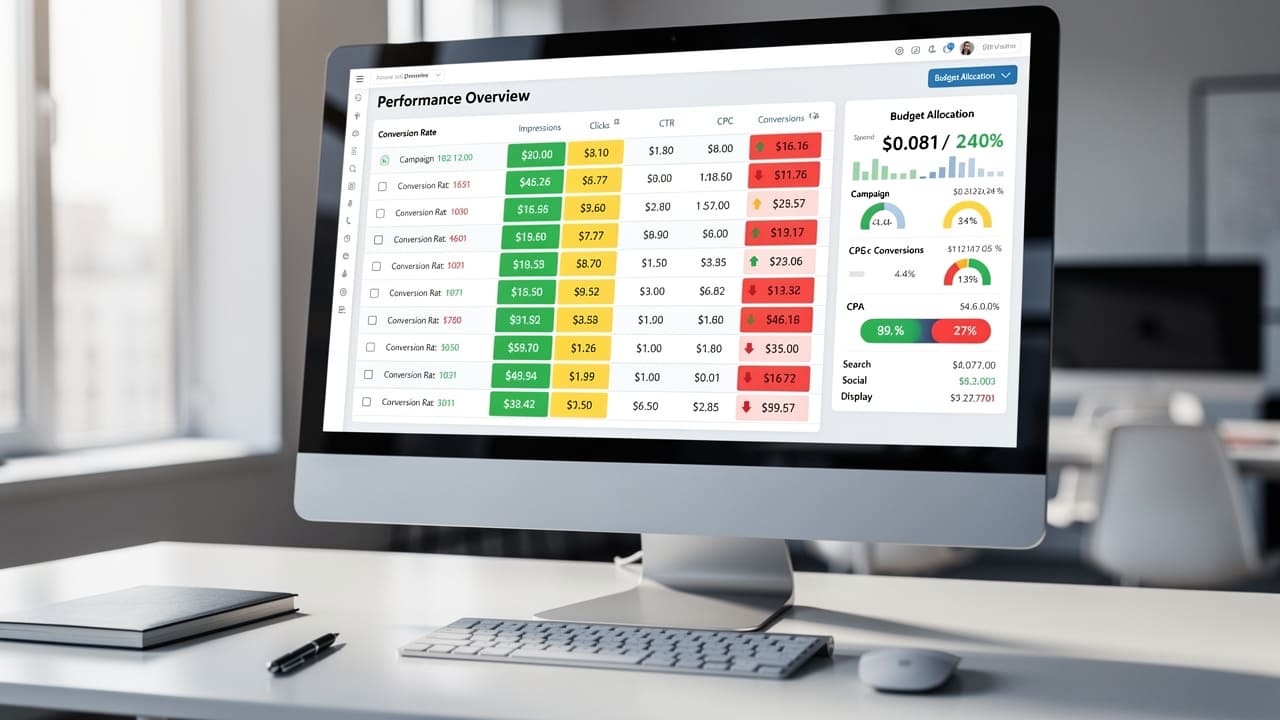
Your conversion tracking is accurate and complete only when every meaningful customer action, phone calls, form submissions, and online bookings, is captured with a correct value attached, because optimization decisions are impossible without this data. A proper Google Ads conversion audit starts by confirming that conversion tracking setup are firing correctly during test transactions, since misconfigured tracking is one of the most common and most costly issues found in accounts that haven’t been reviewed in a while. Different conversion types typically carry different return on ad spend; a phone call from a ready-to-buy customer is often worth more than a general information form, and assigning accurate values lets Google’s bidding algorithms optimize toward the outcomes that matter most rather than toward raw conversion volume alone.
Conversion windows also need review, since a short window can cause Google to miss attribution on longer sales cycles where customers research for several days before calling, while an overly generous window can occasionally overstate attribution. Cross-checking Google Ads conversion data against Google Analytics on a regular basis often reveals discrepancies worth investigating, and any gap between the two data sources should be resolved before trusting either platform’s numbers for budget decisions. Getting this right isn’t a technical afterthought, it’s the foundation every other optimization in the account depends on.
How Should You Evaluate Bid Strategy and Budget Management?
You evaluate bid strategy and budget management by matching your chosen bidding approach to how much conversion data your account actually generates each month, since automated strategies need a meaningful volume of conversions to learn from before they perform reliably. Manual CPC bidding gives full control over individual keyword bids and suits accounts with limited conversion history, while Maximize Conversions and Target CPA rely on machine learning and typically need at least 15 to 20 conversions a month before the algorithm has enough signal to optimize effectively. Target ROAS takes this further, optimizing bids toward a specific return figure, but only delivers reliable results once conversion values are tracked accurately across the account.
Choosing between these approaches becomes easier once you compare them against your monthly understanding Google Ads metrics and business goal, and it’s worth layering in adjustments for device, location, and season once the base strategy is set. Mobile bid adjustments matter when phone-based service businesses see stronger conversion rates from mobile searchers, while geographic bid adjustments concentrate budget in the cities or regions delivering the best cost-per-lead. Construction and trades demand often peaks seasonally, spring and summer for many outdoor services, so budget and bids should flex with these cycles rather than staying fixed year-round.
| Bidding Strategy | Best Suited For | Data Needed |
|---|---|---|
| Manual CPC | Full control over individual keyword bids | Works with any volume of data |
| Maximize Conversions | Growing conversion volume with a fixed budget | Moderate conversion history |
| Target CPA | Hitting a specific cost-per-lead goal | 15-20+ conversions monthly |
| Target ROAS | Maximizing revenue return on spend | Accurate conversion values plus consistent volume |
Who Are You Targeting, and Who Should You Exclude?
You’re targeting the right audience when your Google Ads campaigns reach people who match your actual customer profile, and you’re excluding the right audience when budget stops flowing toward searchers who were never going to convert. Remarketing lists deserve particular attention here, since showing ads to people who already visited your site but didn’t convert typically produces a stronger conversion rate than reaching cold traffic for the first time, and a well-built retargeting campaign setup should address the specific reason a visitor likely didn’t convert on their first visit. In-market audience segments add another layer of value for service businesses, since these groups represent people Google has identified as actively researching services similar to yours, putting your ads in front of demand that already exists rather than demand you’re trying to create.
Exclusions matter just as much as inclusions in this part of a PPC audit. geo-targeting for paid ads prevent budget from being spent in regions outside your actual service area, which is a surprisingly common leak for businesses that expanded their targeting broadly at launch and never revisited it. Audience exclusions work the same way; a residential service business, for example, gains nothing from impressions served to commercial or B2B audience segments, and excluding them frees up budget for searchers who actually fit the customer profile you’re trying to reach.
What Should a Complete Audit Action Plan Look Like?

A complete audit action plan sorts every finding into high, medium, and low priority based on how much revenue impact each fix carries and how much effort it takes to implement, rather than tackling every issue at once. High-priority items are usually the ones actively costing money right now: broken conversion tracking, negative keywords so broad they’re blocking legitimate searches, or keywords that have spent steadily for months without producing a single conversion. Medium-priority items, like adding missing ad extensions or testing new ad copy, typically follow once the highest-impact fixes are implemented and given a few weeks to generate fresh data.
High priority fixes include broken conversion tracking, dangerously broad negative keywords, and consistently zero-conversion keywords, since these actively drain budget every day they go unaddressed and should be corrected before anything else on the list.
Medium priority fixes include missing ad extensions, stale ad copy that hasn’t been tested in months, and underused audience segments, and these typically get implemented over the 4 to 8 weeks following the highest priority corrections.
Low priority fixes include incremental bid adjustments and granular demographic refinements, changes worth making over time once the account’s larger structural and tracking issues are already resolved.
Cutting Edge Digital Marketing approaches this final stage as a strategic partnership rather than a one-time report handed over and forgotten. Because the team works across construction, industrial, oil and gas services, and trades businesses throughout Alberta and Western Canada, recommendations are grounded in how these industries actually buy, not generic Edmonton Google Ads specialist borrowed from unrelated sectors. Every fix is tied back to tracking and reporting so that spend, leads, and revenue stay connected in one system rather than living in separate spreadsheets. If you want a second set of eyes on your account, get started with a conversation about what’s working and what isn’t.
A properly structured audit doesn’t just flag problems, it ties every fix back to tracking and reporting so spend, leads, and revenue stay connected in one system.
The Takeaway
A PPC audit for Google Ads works because it treats every dollar of ad spend as accountable, tracing budget through account structure, keywords, ad copy, landing pages, tracking, and bid strategy until every inefficiency and every missed opportunity is visible. The businesses that benefit most treat this as an ongoing quarterly discipline rather than a single cleanup project, since markets, competitors, and Google’s own algorithm keep shifting underneath even well-built campaigns. If reviewing your account against everything covered here feels like more than your team has time for, Cutting Edge Digital Marketing builds these audits into a broader growth partnership for Alberta service, Google Ads management for trades ready to turn ad spend into consistent revenue.
Frequently Asked Questions
How Often Should I Audit My Google Ads Account?
Active accounts should go through a full audit quarterly, with monthly check-ins for accounts spending $5,000 or more each month. A sudden performance drop or major account change warrants an audit immediately, rather than waiting for the next scheduled review.
What Is a Good Quality Score for Google Ads?
A score of 7 to 10 is strong, 5 to 6 is average, and anything below 5 needs attention. Quality Score doesn’t set your bid directly, but it correlates closely with cost-per-click and ad rank.
How Much Does a Professional PPC Audit Cost?
Pricing depends on account complexity, campaign count, and monthly spend, so no single flat rate applies to every business. A proper audit is best viewed as a ROI in digital advertising it uncovers, not a commodity fee compared on price alone.
Can I Do a PPC Audit Myself, or Do I Need an Agency?
Business owners can run a basic self-audit using Google Ads’ built-in reports to catch obvious issues. An agency adds value through industry-specific benchmarking, advanced tracking setup, and the experience needed to prioritize findings correctly. To learn more about how a partner can help, explore the audit approach outlined throughout this guide.
What Tools Are Used for a Google Ads Audit?
A typical toolset includes Google Ads’ native reporting, Google Analytics, PageSpeed Insights for load speed, and third-party competitor research tools. Tools surface the data, but interpreting it and deciding what to fix first still requires real campaign management experience.
How Long Does It Take to See Results After Implementing Audit Recommendations?
Quick wins like fixing negative keywords or repairing broken tracking often show impact within days to a few weeks. Structural changes and new bidding strategies need 4 to 8 weeks of fresh data before you can fairly judge whether they’ve improved performance.