
A website builder like Wix or Shopify hands you a pre-built template and asks your business to fit inside it, while a web development company Edmonton, such as Cutting Edge Digital Marketing, start from your sales process, your systems, and your growth plan and build the platform around those realities.
Custom web development services build a platform around your sales process and tracking needs, while builders like Wix or Shopify force your business into a fixed template. The result is a site that integrates with your CRM, measures lead sources accurately, and scales as your business grows, rather than hitting a ceiling within a year or two.
This article walks through what custom web development actually involves, how it’s built to maximize return on investment rather than just look polished, and what separates a strategic development partner from a cheap template provider. You’ll see how lead generation mechanisms, industry-specific design decisions, and proper tracking all work together inside a single custom platform. By the end, you’ll know exactly what questions to ask before committing budget to your next web project, and if you’re ready to see what this looks like for your business, contact us to get started.
Key Takeaways
Custom web development outperforms template builders on scalability, system integration, and lead generation because it’s built around your business, not a generic layout.
ROI depends on tracking and analytics being built into the site from day one, not bolted on after launch once you realize you can’t measure results.
Industry-specific experience in trades, construction, and industrial sectors directly affects how well a website converts visitors into qualified leads.
A strategic partner approach, where web development connects to SEO, advertising, and branding, consistently outperforms treating a website as a one-off project.
Cutting Edge Digital Marketing builds custom websites as one component of an integrated growth system designed around measurable revenue outcomes.
Table of Contents
- What Are Custom Web Development Services?
- How Does Custom Web Development Maximize ROI?
- What Core Components Make Up a Custom Website Build?
- How Do Custom Web Development Services Drive Lead Generation?
- Why Does Industry-Specific Experience Matter in Web Development?
- Is Custom Development a Stand-Alone Project or Part of a Larger System?
- What Should You Look for When Choosing a Development Partner?
- Comparing Template Builders and Custom Development
- In Summary
- Frequently Asked Questions
What Are Custom Web Development Services?
Custom web development services involve building a website or web application from the ground up around a specific business’s operations, audience, and growth goals, rather than adapting an existing template to fit. This approach stands opposite to page builders like Wix, Squarespace, or Shopify, which offer speed and low upfront cost but lock your business inside predefined layouts, limited plugin options, and shallow integration capabilities. For established service-based businesses, particularly those in Alberta’s trades, construction, and industrial sectors, a website needs to do far more than display information; it needs to manage multi-stage sales cycles, showcase completed projects persuasively, and funnel visitors into a sales pipeline your team can actually follow up on. Custom development means working with custom web developers who sit down with your team, understand your competitive position, and build a platform around how your business actually generates revenue, not around what a template happened to include. That process typically touches frontend design, backend logic, database structure, and integration with whatever software your team already relies on day to day. The result is a platform that reflects your positioning in the market rather than making you look like every other company using the same pre-built theme.
Why Template-Based Websites Fall Short For Growing Businesses
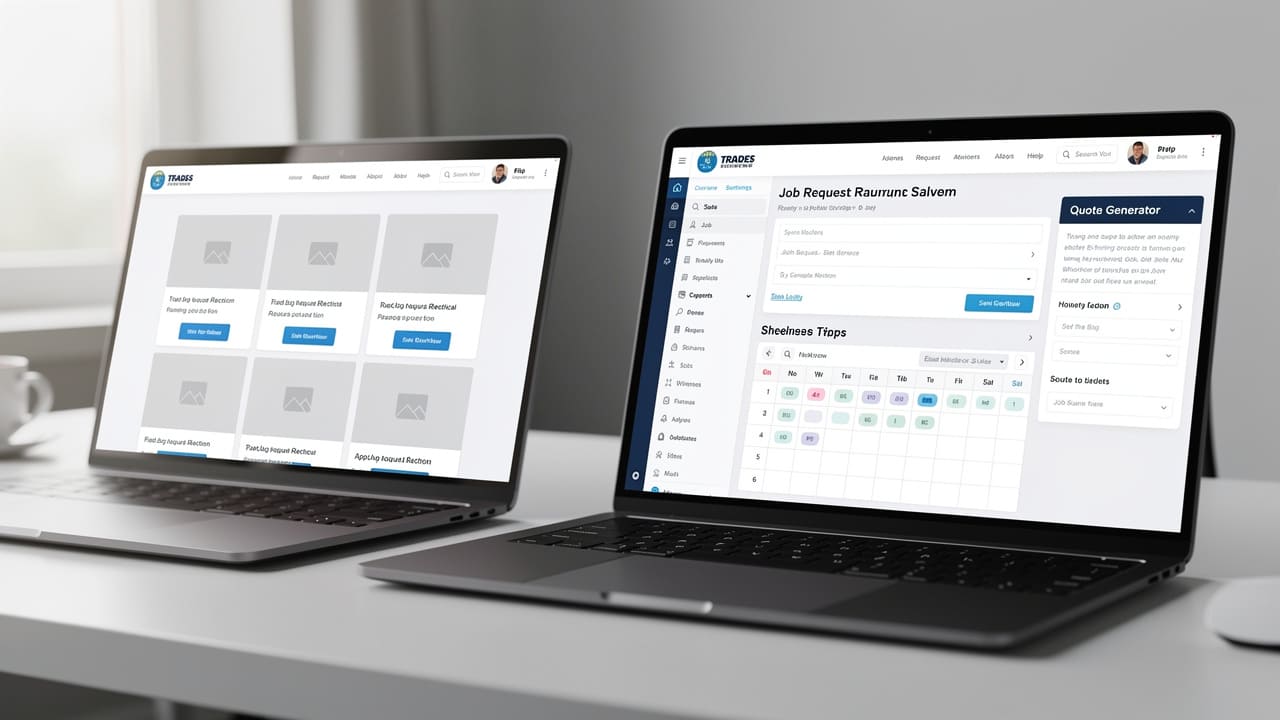
Template-based websites eventually hit a ceiling that custom-built platforms are designed to avoid entirely. Once a business grows past a handful of service pages, template constraints start showing up as real operational friction rather than minor inconveniences. Common limitations include:
Forcing the business to adapt its workflows to the platform’s capabilities instead of the reverse
Poor or nonexistent integration with CRM AI integration, project management, and accounting software
Scalability ceilings that eventually trigger a costly full rebuild
Generic visual design that makes differentiation difficult in competitive trades and industrial markets where several companies may be using the exact same theme
These aren’t theoretical concerns; they show up as lost leads, duplicated data entry, and a site that looks identical to a competitor’s by coincidence.
How Does Custom Web Development Maximize ROI?

Custom web development maximizes return on investment by connecting every design and functionality decision directly to measurable lead generation and revenue outcomes rather than treating the website as a static brochure. This happens through deliberate choices made at the architecture stage, long before launch, that determine whether a business can actually track what’s working. When analytics, call tracking, and form tracking are built into the site’s foundation, every visitor interaction, whether it’s a quote request, a phone call, or a newsletter signup, gets attributed to a specific source and channel. That conversion tracking setup lets an owner or general manager see precisely which pages, campaigns, or keywords are producing qualified leads instead of guessing based on overall traffic numbers. The core metrics worth monitoring include cost per lead calculator, which tells you how efficiently your marketing spend converts into inquiries, conversion rate, which measures the percentage of visitors who take a meaningful action, and lead-to-customer rate, which shows how many of those inquiries actually turn into signed jobs or contracts. For businesses already spending $2,000 to $10,000 monthly on marketing, this level of visibility is what separates a website that justifies its own cost from one that simply exists because every competitor has one.
Building Measurement Into the Foundation, Not as an Afterthought
Many development shops launch a site, hand over the login credentials, and leave tracking as an exercise for the client to figure out later, which almost always means it never gets set up properly at all. Cutting Edge Digital Marketing approaches this differently by building proper tracking and analytics into every site from the earliest planning stages, so performance data exists the moment the site goes live rather than months afterward. This matters enormously for businesses operating in the $2,000 to $10,000 monthly marketing range, because every dollar needs to be traceable to a result for the investment to make sense to ownership. Without that foundation, teams end up making decisions based on impressions rather than actual lead data, which wastes budget on channels that feel productive but aren’t.
What Core Components Make Up a Custom Website Build?
A custom website build is made up of frontend design, backend architecture, database structure, and integration layers, all developed specifically around a company’s operational needs rather than assembled from pre-packaged modules. The frontend is what visitors see and interact with, covering navigation, page layout, and the visual presentation of services, project galleries, and calls to action, and building it properly typically follows a structured web development workflow that coordinates design, staging, and deployment across environments before anything goes live. Behind that visible layer sits the backend, the server-side logic and infrastructure that processes form submissions, manages user permissions, and connects to whatever other systems the business depends on. Database design determines how client records, project details, and service information are stored and retrieved, which becomes increasingly important as a company adds locations, expands its service offerings, or accumulates years of project history that need to stay organized and searchable. Integration capability ties the whole system together, allowing the website to communicate directly with CRM platforms, project management tools, or accounting software so that a lead captured through a quote form automatically populates the right internal system without anyone re-entering the same information twice. Security also belongs in this list, since website security best practices through HTTPS and sound authentication practices protect both client information and the business’s reputation, particularly for companies subject to Canada’s PIPEDA privacy requirements.
Content Management Built Around How Your Team Actually Works
A custom content management system is built around the specific tasks your team needs to perform rather than forcing them to learn a generic platform with far more options than they’ll ever use. For a construction company, that might mean a simplified interface for uploading completed project photos directly from a phone, while a trades business might need an easy way to update service descriptions and pricing without touching a line of code. This kind of tailored CMS reduces the technical burden on internal staff considerably, since team members aren’t navigating a sprawling admin panel designed for blogging or e-commerce when all they need is to post a new project or adjust a service page. It also reduces dependency on external developers for routine content updates, which keeps the website current and accurate without adding to the monthly support bill every time something small needs to change.
How Do Custom Web Development Services Drive Lead Generation?
Custom web development services drive lead generation by building multiple tailored capture points directly into the site rather than relying on a single generic contact form that fails to collect the details a sales team actually needs. For service, trades, and industrial businesses, this typically includes:
A detailed quote request form that gathers project scope information upfront
A consultation booking system for qualified prospects ready to talk
A click-to-call button that’s especially important for mobile visitors searching from a job site
A newsletter signup for prospects who aren’t ready to buy yet but want to stay informed
Beyond the capture mechanisms themselves, conversion rate optimization determines how many visitors actually complete those actions once they land on the page. This involves placing calls to action where visitor attention naturally falls, testing different landing page optimization tips to see what prospects respond to, keeping page load speeds fast since slow pages lose visitors before they ever see an offer, and writing clear value propositions that explain exactly why a prospect should choose this company over a competitor. None of these elements work in isolation; a fast page with a weak call to action converts poorly just as a strong offer buried behind a slow-loading page never gets seen at all, which is why custom development treats lead generation as a system rather than a single feature.
Trust-Building Elements That Convert Industrial and Trades Buyers
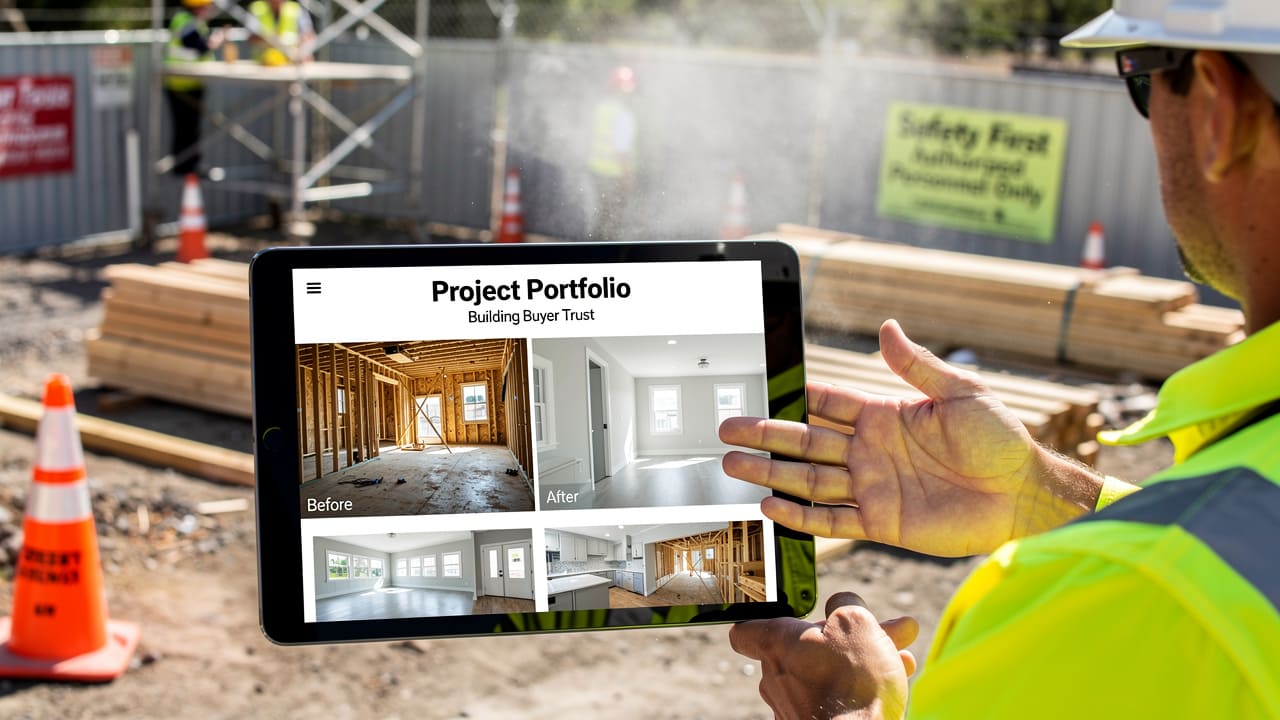
Construction, industrial, and oil and gas purchases typically involve longer sales cycles and multiple decision-makers, which makes trust-building elements far more important than they would be for a simple retail transaction. Project portfolios with high-quality before-and-after photography demonstrate real capability rather than making vague claims about experience. Team credentials and industry certifications reassure buyers who are vetting a vendor before committing significant budget, and client testimonials from recognizable local names carry particular weight in tight-knit regional markets like Alberta’s trades and industrial sectors. These signals matter because a buyer comparing contractors for a six-figure project isn’t making an impulse decision; they’re looking for proof that this company delivers before they’ll pick up the phone.
A buyer comparing contractors for a six-figure project isn’t making an impulse decision, they’re looking for proof that a company delivers before they’ll ever pick up the phone.
Why Does Industry-Specific Experience Matter in Web Development?
Industry-specific experience shapes nearly every structural and messaging decision on a website, from how project portfolios are organized to which trust signals get priority placement on the homepage. A developer who has built sites for construction, electrical, mechanical, or fabrication businesses understands that a general manager evaluating contractors cares about different proof points than a homeowner comparing landscaping quotes, and that difference changes how content gets prioritized, how navigation gets structured, and how technical specifications get presented for an oil and gas or equipment rental audience. This kind of sector fluency can’t be faked convincingly with a stock photo and a generic headline; it shows up in the specificity of the language, the relevance of the case studies, and the accuracy of the terminology used throughout the site.
Cheap website providers and freelance developers working across unrelated industries typically default to templated layouts because building sector-specific functionality takes more discovery time than a low-cost engagement allows for. Cutting Edge Digital Marketing’s experience working specifically with construction, electrical, mechanical, oil and gas services, fabrication, and industrial website development agency across Alberta and Western Canada means the site structure, messaging, and lead capture approach reflect what actually resonates with buyers in those sectors rather than generic best practices borrowed from unrelated industries.
Is Custom Development a Stand-Alone Project or Part of a Larger System?
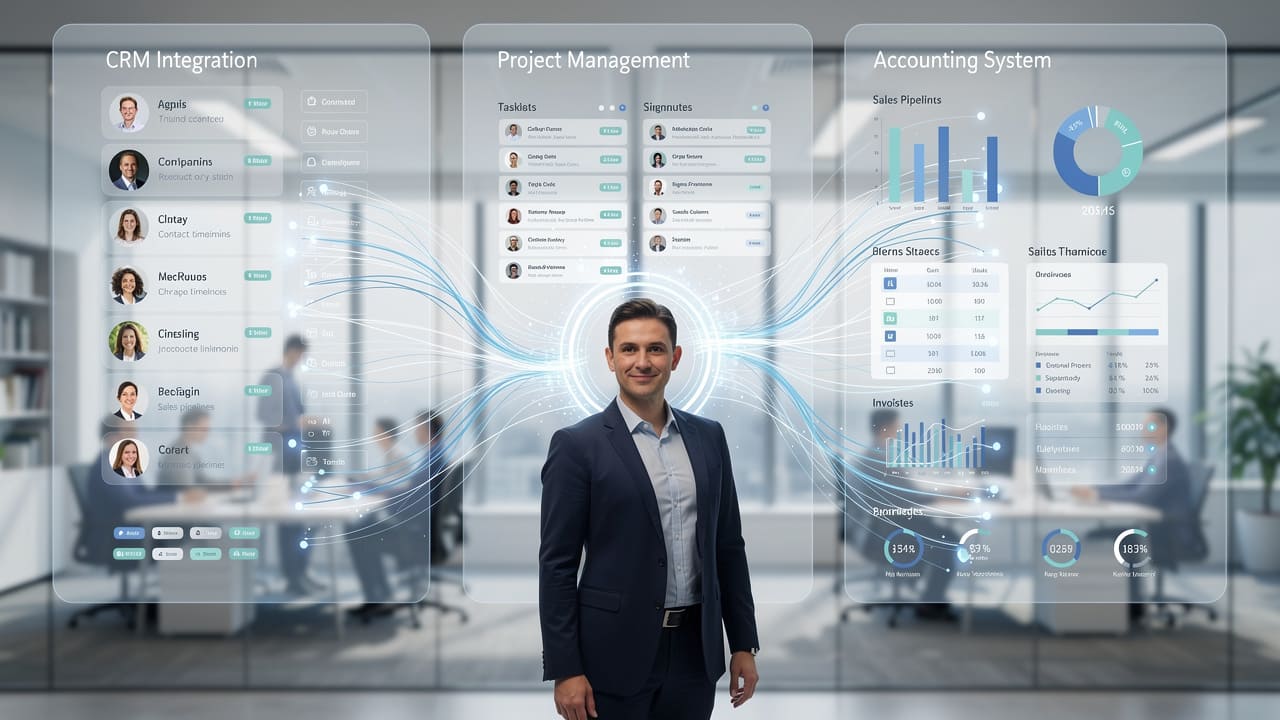
Custom web development functions best as the foundation of a larger, integrated marketing system rather than as an isolated deliverable that gets handed off and forgotten once the site launches. A website built without SEO integration struggles to attract organic traffic, a website disconnected from paid advertising campaigns on Google Ads management for trades, Meta Ads, LinkedIn Ads, or Microsoft Ads wastes click spend sending visitors to pages that weren’t built to convert them, and a website built without consistent branding undermines the trust a company has worked to establish elsewhere. Treating these elements as connected pieces of one system, rather than separate vendors working independently, is what allows a business to actually trace marketing spend through to revenue.
Cutting Edge Digital Marketing positions its custom web development work specifically within this kind of integrated approach, acting as a strategic marketing partner who guides strategy and execution across the website, SEO, advertising, and branding together rather than simply delivering a one-time project and moving on. For an owner or general manager managing a $2,000 to $10,000 monthly marketing budget, having one accountable partner coordinating all of these moving pieces removes the burden of managing multiple disconnected vendors and reduces the risk of campaigns and website infrastructure working against each other instead of together.
What Should You Look for When Choosing a Development Partner?

Choosing the right development partner comes down to evaluating relevant industry experience, communication process, technical capability, and post-launch support rather than simply comparing quoted prices. A development team that has built sites for construction, industrial, or trades businesses understands the sales cycles, trust signals, and content structures those industries need, while a team whose portfolio consists entirely of e-commerce stores or restaurant websites brings none of that contextual knowledge to your project regardless of how skilled they are generally. Communication process matters just as much as technical skill, since a quality partner asks thorough discovery questions, pushes back on vague requirements, and documents a clear process for how the project will unfold rather than jumping straight into design work. Technical capability should extend beyond frontend aesthetics into backend architecture, database design, security practices, and integration experience with the specific systems your business already relies on, because a visually impressive site that can’t connect to your CRM solves only half the problem. Warning signs worth watching for include a portfolio full of near-identical templated sites, no mention of analytics or tracking setup anywhere in the proposal, and a sales process that skips discovery entirely in favour of jumping straight to a quote.
Questions to Ask Before Signing a Contract
Before committing budget to any development partner, it helps to have a short list of direct questions ready that cut through generic sales pitches and reveal how the team actually operates. The following questions apply whether you’re evaluating a large agency or an independent custom web developer, and the quality of the answers you get back tells you almost as much as the answers themselves.
Does your portfolio include relevant projects in construction, trades, or industrial sectors, and can I speak with a past client in a similar industry about their experience?
What tracking and analytics setup is included in the build, and how will I see which pages and campaigns are generating qualified leads once the site launches?
What does post-launch support include, and what specific costs fall outside that agreement once the project is complete?
Can this platform integrate with the CRM, project management, or accounting software my team already uses day to day?
What’s the realistic timeline for this project, and what factors could extend it beyond the initial estimate you’ve provided?
Comparing Template Builders and Custom Development
| Factor | Template Builder (Wix, Shopify, etc.) | Custom Web Development |
|---|---|---|
| Scalability | Limited by platform ceiling | Built to grow with the business |
| CRM/software integration | Minimal or shallow | Direct, purpose-built integration |
| Tracking and analytics | Often an afterthought | Built into the foundation from day one |
| Visual differentiation | Shared themes across competitors | Positioning-driven design |
| Content management | Generic admin panel | Interface built around your team’s workflow |
| Long-term cost | Lower upfront, costly rebuild later | Higher upfront, built to last |
In Summary
Custom web development services succeed when they’re built as part of an integrated, trackable marketing system rather than delivered as an isolated website project with no connection to lead generation, SEO, or advertising performance. The businesses that get the strongest return are the ones that treat their web platform as living infrastructure, measured against cost per lead, conversion rate, and revenue attribution from the day it launches, rather than judging it purely on how it looks. If your current site is running on a template that can’t integrate with your systems or show you where your leads are actually coming from, it’s worth having a direct conversation about what a custom-built alternative could do for your pipeline. Cutting Edge Digital Marketing works with established service, trades, and industrial businesses across Alberta to build custom websites designed from the first planning session to generate measurable, trackable growth. Learn more about what a custom build could do for your business.
Frequently Asked Questions
The following answers address the most common practical questions business owners raise when evaluating custom web development against template alternatives or weighing the investment against expected returns.
How much does custom web development cost for a service-based business?
Most custom builds for established service, trades, or industrial businesses fall between $15,000 and $75,000, depending on functionality complexity, design scope, and how many existing systems need integration. Rather than comparing this figure to a $200 template, weigh it against the leads, conversions, and revenue the site is expected to generate over its working life.
How long does a custom website build take?
Simpler custom builds typically launch within 6 to 8 weeks, while projects involving multiple system integrations or a fully custom content management system often take several months. Timelines extend based on how much integration work is required, how complex the design is, and how quickly content and approvals come back from your team.
What is the difference between custom web development and using WordPress?
WordPress relies on custom plugin development, which introduces performance slowdowns, security vulnerabilities, and compatibility issues as a site grows in complexity. Custom development avoids these layered dependencies entirely, and once a WordPress site needs enough custom plugin work to function properly, the cost gap against full custom development often narrows considerably.
Can a custom website integrate with my existing CRM or project management software?
Yes, integration with existing business systems is one of the core advantages custom development offers over template platforms. A properly built integration means a lead submitted through a quote form on your website flows automatically into your CRM, notifying the right team member without anyone manually re-entering the data.
Do I need a custom website if I already have paid advertising campaigns running?
Paid advertising campaigns on platforms like Google Ads or Meta Ads perform only as well as the landing experience they send traffic toward. A disconnected website that wasn’t built for conversion wastes ad spend by sending qualified clicks to pages that fail to capture them as leads, which undermines the entire campaign’s return.
How do I measure the ROI of a custom web development investment?
Track cost per lead, website conversion rate, lead-to-customer rate, and revenue directly attributed to website-generated leads over time. Establishing these baseline metrics before launch, then comparing them against post-launch performance, is what turns a web development investment from a design decision into a measurable business outcome.