
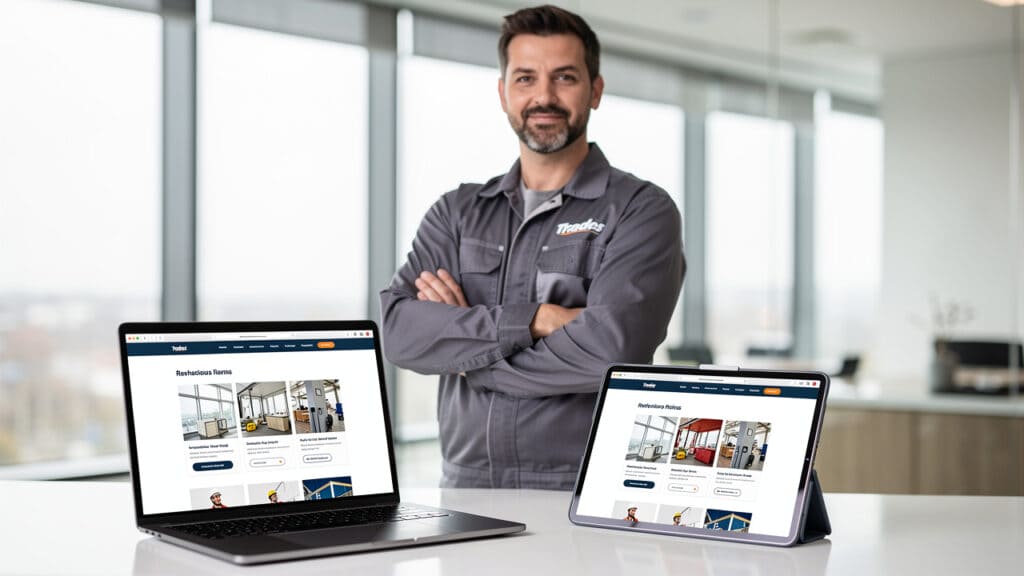
A homeowner or facility manager needing repairs today rarely picks up the phone book. They search online, scan a few websites, and call whoever looks the most trustworthy in under a minute. If your trades business doesn’t show up, or shows up looking unprofessional, that job goes to a competitor before you even know it existed.
That’s the real cost of weak website development for trades businesses. It’s not just a missing “nice to have.” It’s lost revenue, quietly, every single week.
This article breaks down what actually makes a trades website win jobs rather than just sit online looking pretty. We’ll cover the design and functional elements that convert visitors into calls, the trust signals that turn skeptics into customers, the local search tactics that get you found first, and why your website should never operate as a standalone project. By the end, you’ll know exactly what to prioritize whether you’re building a new site or fixing one that isn’t pulling its weight.
Key Takeaways
A trades business website needs to be built for lead generation first, with looks as a supporting factor rather than the main goal.
Mobile responsiveness and fast load times aren’t optional extras, they’re the baseline that determines whether visitors stick around at all.
Trust signals like certifications, reviews, team photos, and project galleries do the heavy lifting of convincing skeptical customers to call.
Local SEO, especially a well-maintained Google Business Profile and geographic keywords, decides whether nearby customers find you before your competitors.
A website performs best when it’s the hub of a broader marketing system, not a one-time project that gets forgotten after launch.
What Makes a Trades Website Different From Other Business Websites?
A trades website works differently from a typical corporate or retail site because its job isn’t to sell a product on the spot, it’s to turn a visitor into a phone call or a quote request. Where an e-commerce store measures success in checkout completions, a plumbing, electrical, or construction site measures success in inquiries, booked estimates, and jobs won. That difference should shape every design decision, from the homepage layout down to the wording on a button.
It also means different trades need different website design and development:
A service-based business like an HVAC or plumbing company needs clear, individual pages for each service with pricing context and urgency built in.
A construction firm needs a strong project portfolio that proves scope and quality.
A specialty contractor needs content that shows deep technical knowledge.
An industrial or oil and gas company needs specification sheets, safety records, and compliance details aimed at other businesses rather than homeowners.
What Website Features Actually Win More Jobs?
The features that win jobs are the ones that remove friction and build confidence at the exact moment a visitor is deciding whether to contact you or click away. Every element on a trades website, from the loading speed to the contact form, either pushes a visitor toward calling or gives them a reason to leave and try a competitor instead. Getting these fundamentals right matters more than any amount of visual polish, because a stunning site that’s slow or confusing still loses the job.
Mobile-Friendly, Fast-Loading Design
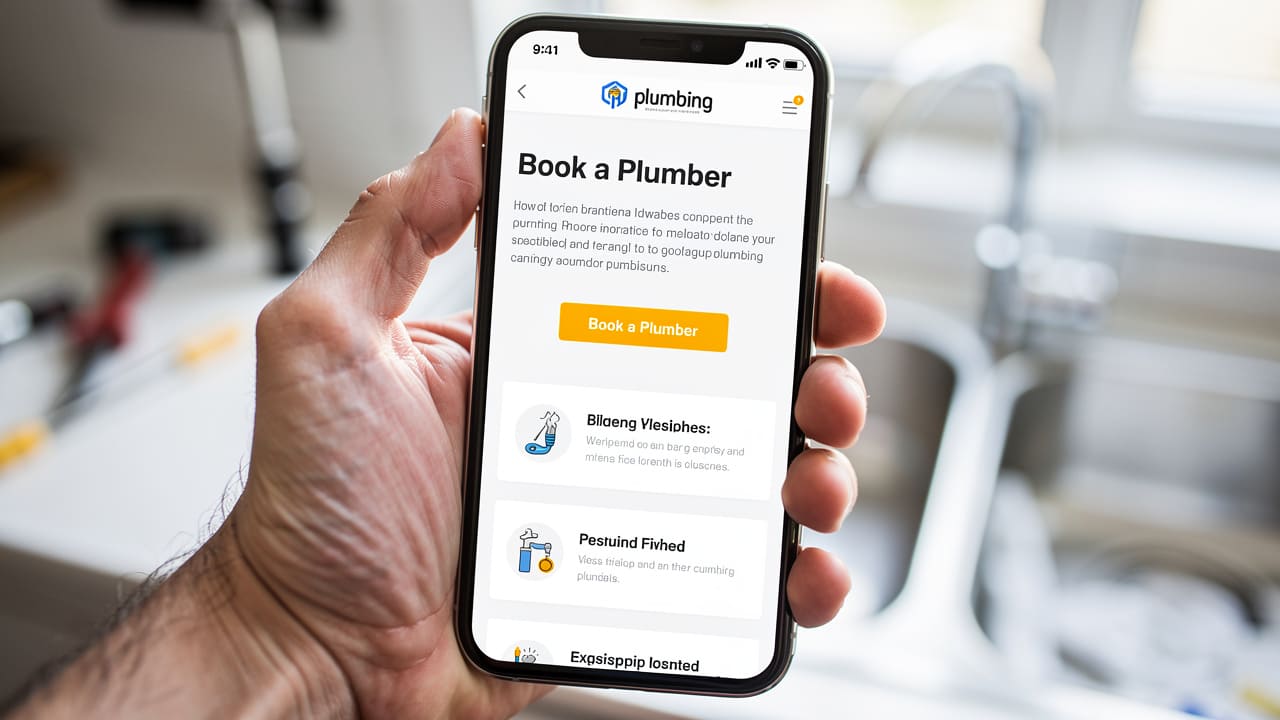
Most searches for local trades happen on a phone, often from someone standing in front of a leaking pipe or a broken furnace who needs help right now. If your site takes more than a few seconds to load or looks broken on a small screen, that visitor won’t wait around. They’ll tap back and call the next name on the list, and you’ll never know you lost the job.
Clear Calls-to-Action and Simple Contact Forms
Every page should make the next step obvious, using direct phrases like “Get a Free Quote” rather than vague ones like “Learn More.” Contact forms should ask for the basics only, meaning name, phone number, email, and a short project description. Long forms with a dozen fields feel like a chore, and most visitors will simply give up before hitting submit.
Service Pages That Answer Customer Questions
Each service you offer deserves its own dedicated page covering typical cost ranges, timelines, and what the process actually looks like. This structure does double duty, since it answers the questions customers have before they call and it gives search engines specific, relevant content to rank. Weaving in the phrases customers actually type, like “furnace repair in Red Deer,” works far better than vague, generic service descriptions.
Project Galleries and Case Studies

Before-and-after photos, organized by service type, let a visitor judge the quality of your work in seconds without reading a word. Case studies take this further by explaining the customer’s original problem, what your team did, and the result they walked away with. That combination of visual proof and a real story is often what tips a hesitant visitor into picking up the phone.
How Do You Build Trust With Website Visitors?

Trust is the deciding factor for most trades decisions, since customers are letting a crew into their home or handing over a serious budget for a project. A website earns that trust by putting proof front and center rather than making customers dig for it or simply take your word for it.
Certifications, licenses, and insurance details should sit somewhere visible, not buried on a page nobody visits, because customers actively look for this reassurance before they’ll even consider calling. Reviews and testimonials add another layer, particularly when they mention a specific problem and how your team solved it, and a business with 50 honest reviews reads as far more credible than one with five. Team photos and short bios round this out by turning your company from a logo into a group of real, identifiable people, which matters enormously to someone deciding who gets to work in their home or on their job site.
Why Does Local SEO Matter for Trades Businesses?

Local SEO decides whether a nearby customer finds your business or finds your competitor first, and for trades companies that almost always determines who gets the call. Since most trades jobs go to a local provider, ranking well in your specific service area matters more than ranking for broad national terms that bring in unqualified traffic.
Google Business Profile management is the foundation here. Keeping it complete with accurate hours, service categories, fresh photos, and a steady stream of reviews sends a strong signal that your business is active and worth trusting. Consistency matters just as much, since your business name, address, and phone number need to match exactly across your website, your profile, and any directories you’re listed in, or search engines start losing confidence in your listing. local SEO software like “electrician in Calgary” instead of just “electrician” also brings in fewer but far more qualified visitors, because those searchers already know roughly what they need and where they need it.
Why Should Your Website Be Part of a Bigger Marketing System?

A website performs best when it’s treated as the hub of an ongoing marketing system rather than a one-off project you launch and forget. On its own, even a great website has a ceiling, but paired with local SEO, paid advertising, and consistent branding, it becomes the place where every other marketing dollar actually converts into a booked job.
This is where working with an digital marketing agency pays off. Cutting Edge Digital Marketing builds websites for construction, electrical, mechanical, and industrial businesses with tracking and conversion pathways built in from day one, rather than handing over a template and moving on. Because the company works specifically with trades and industrial clients across Alberta and Western Canada, it understands the realities of these industries well enough to build a site that speaks directly to the customers a given trade is trying to reach, then keeps optimizing it as part of a long-term growth strategy.
The Bottom Line
Winning more jobs online comes down to blending strong, mobile-first design with credibility signals, sharp local SEO, and a lead capture system that actually works, all pulling in the same direction. None of these pieces work particularly well in isolation, but together they turn a website from a static brochure into a tool that actively brings in qualified inquiries week after week.
The businesses pulling ahead in competitive trades markets are the ones treating their website as a long-term growth asset rather than a box they checked off years ago. If your current site isn’t generating consistent, qualified leads, it’s worth partnering with a team that understands trades and industrial businesses well enough to build something that does. Cutting Edge Digital Marketing works with exactly this kind of company across Alberta and Western Canada, website development services to generate measurable, real job leads.
Frequently Asked Questions
How Much Does A Website For A Trades Business Cost?
Costs vary widely depending on the number of service pages, custom features like project galleries, and the level of tracking and integration required. A generic template site will cost less upfront, but a custom plugin development tied to your marketing goals typically delivers a far stronger return through more qualified leads.
How Long Does It Take To Build A Trades Business Website?
Timelines usually run anywhere from a few weeks to a few months, depending on complexity and how quickly you can supply photos, project details, and content. Strategy, design, and testing phases each add time, but rushing any of them tends to hurt results later.
Do I Need A Blog On My Trades Website?
A blog isn’t mandatory, but it’s genuinely valuable for answering common customer questions and building long-term search visibility. Posts covering maintenance tips or project advice help establish expertise while giving search engines why blogs matter over time.
Should I Show Pricing On My Trades Website?
It depends on your business model, since some trades show price ranges while others prefer to emphasize free estimates. Showing ranges builds trust through transparency, while consultation-based quoting gives you flexibility for jobs where costs vary significantly by scope.
How Often Should I Update My Trades Website?
Aim to refresh your portfolio, testimonials, and service pages every few months at minimum, more often if you’re completing new projects regularly. Fresh content signals to both customers and search engines that your business is active and worth trusting.
Can A Website Really Replace Word-Of-Mouth Referrals?
A website doesn’t replace referrals, it strengthens them. When a referred customer looks you up online, a professional site with reviews, certifications, and real project photos confirms what their friend already told them, making that referral far more likely to turn into a booked job.