

Architectural firm marketing combines a conversion-ready website, local SEO, case studies, and referral networking to shorten long sales cycles and win more commercial projects. Clients often compare several firms over months before signing, so a structured marketing system matters more than scattered social posts. This guide covers the tactics that actually move the needle, from Google Business Profile optimization to ROI tracking.
This guide breaks down what actually works for architectural firm marketing today, from building a website that turns visitors into inquiries to tracking which channels bring in your best clients. You’ll find practical guidance on local search engine optimization, case studies, networking, and measuring return on investment. Cutting Edge Digital Marketing works with established service and industrial businesses across Alberta, and the same principles that help contractors and trades firms win more work apply directly to architecture practices competing for commercial and institutional projects, whether they use Revit, Archicad, or another BIM platform to produce their drawings.
Read on to see how a structured approach to marketing turns your design expertise into a steady pipeline of qualified leads. If you want a faster path to results, contact us to discuss a marketing plan built around your firm’s project mix.
Key Takeaways
A strong website paired with local SEO forms the foundation most architectural firms need for consistent lead generation.
Case studies and thought leadership build client trust faster than traditional advertising, because they show proof instead of promises.
Networking and referral relationships remain one of the top lead sources for architecture practices of any size.
Tracking cost per acquisition and lead sources helps firms invest in the channels that actually produce clients.
A strategic marketing partner can speed up results without requiring a full in-house marketing team.
What Makes Architectural Firm Marketing Different?
Architectural firm marketing works differently than marketing for most service businesses because the sales cycle runs long and trust takes real time to build. A commercial developer or institutional client might spend six months or more comparing firms, checking references, and reviewing past projects before signing a contract. Multiple stakeholders, including boards, project managers, and finance teams, often weigh in on the final decision, so messaging has to speak to several audiences at once.
Because of this, success depends on demonstrated expertise and project proof rather than catchy slogans or discount offers. Clients want to see that a firm has solved problems similar to theirs, delivered projects on budget, and worked well with contractors and engineers. Firms pursuing LEED certification or NCARB-aligned project documentation often highlight that expertise directly in their marketing, since it signals a level of rigor that generic design studios can’t easily match. This is why portfolio quality, case studies, and reputation carry far more weight in architecture than in most other industries.
How Can a Strong Digital Presence Generate More Architectural Leads?
A strong digital presence is essential because most clients now research design firms online long before picking up the phone. A firm’s website and search visibility often decide which names make the shortlist before a single phone call happens. Combining a conversion-focused website, built on a platform like WordPress or a custom CMS, with local SEO and consistent content gives a firm steady visibility among the developers and project managers actively searching for design help. The two sections below break down exactly what that looks like in practice.
Building a Website That Converts Visitors into Inquiries
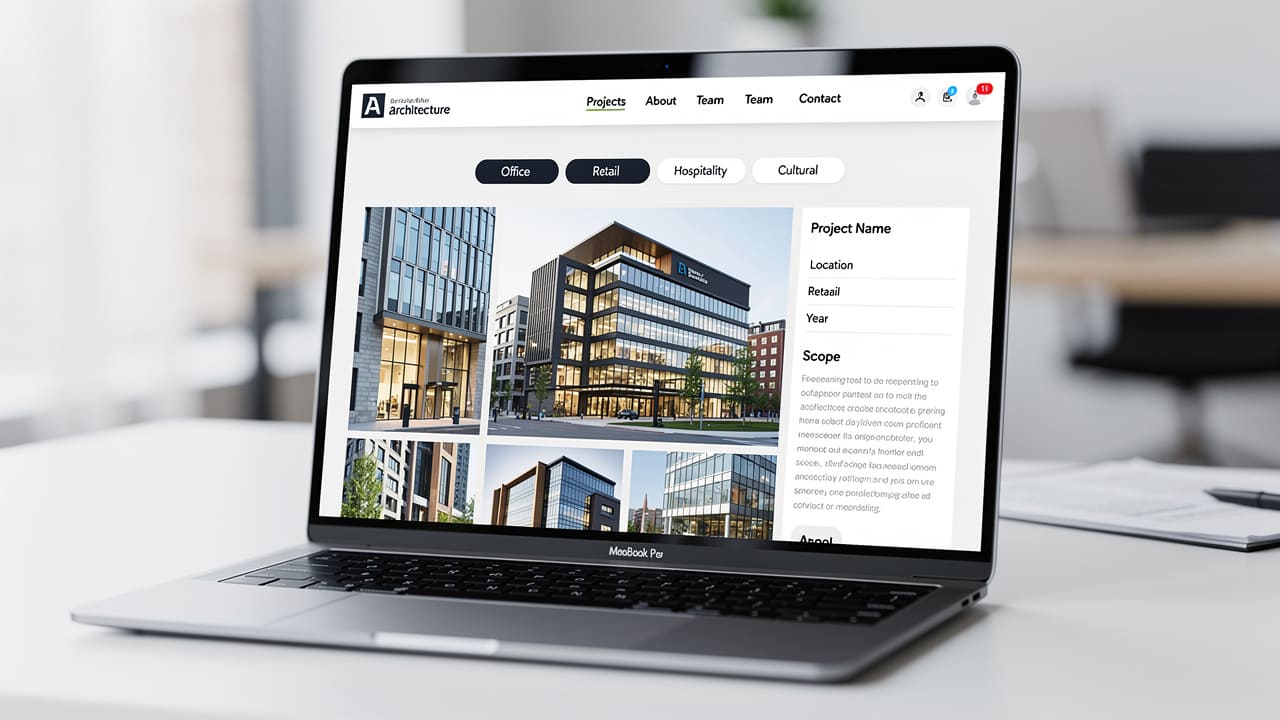
A website that converts visitors into inquiries starts with high-quality project photography organized by sector, whether that’s healthcare, commercial office, or residential work. Visitors should be able to filter a portfolio by project type within a few clicks, because a hospital client wants to see hospital work, not a mix of everything the firm has ever touched. Clear calls-to-action, such as “Request a Consultation” or “View Our Capabilities,” should appear on every page instead of being buried in a menu.
Fast load times and mobile responsiveness matter just as much as design, since many prospects browse portfolios on a phone between meetings. Detailed project pages that outline scope, budget range, design challenges, and outcomes, including any BIM-driven efficiencies from software like Revit or Archicad, give visitors the depth they need to trust a firm’s capabilities before ever reaching out. Firms that track engagement through Adobe Analytics or a similar platform can see exactly which project pages hold attention longest.
Why Local SEO Matters for Architectural Firms
Local SEO matters for architectural firms because most commercial and institutional clients search for design partners within a specific city or region rather than nationally. A fully optimized Google Business Profile, complete with accurate service areas, project photos, and client reviews, helps a firm show up when someone searches for commercial architects in their province. Without this groundwork, even a beautifully designed website can stay invisible to the exact clients it was built to reach.
Targeting specific keywords tied to project type and location, such as healthcare facility design or industrial architecture services, brings in searches with real buying intent. Building dedicated pages around these service areas and project categories gives search engines more reasons to rank a firm for the architectural firm marketing terms that matter most to its business. Explore more on local search strategy in the linked guide above to see how Google Search visibility ties back to qualified project inquiries.
Why Content and Case Studies Build Client Trust Faster

Content and case studies build client trust faster than traditional advertising because they show real proof instead of promises. A single, well-written case study walks a prospective client through an actual design challenge and explains exactly how the firm solved it, which does more to win confidence than any sales pitch. Blog posts on topics such as sustainable design, LEED-certified building practices, zoning changes, or project management lessons also position architects as experts who understand the pressures clients face. Over time, this kind of content keeps a firm visible to prospects who are still researching options months before they are ready to sign a contract.
What Makes a Case Study Effective?
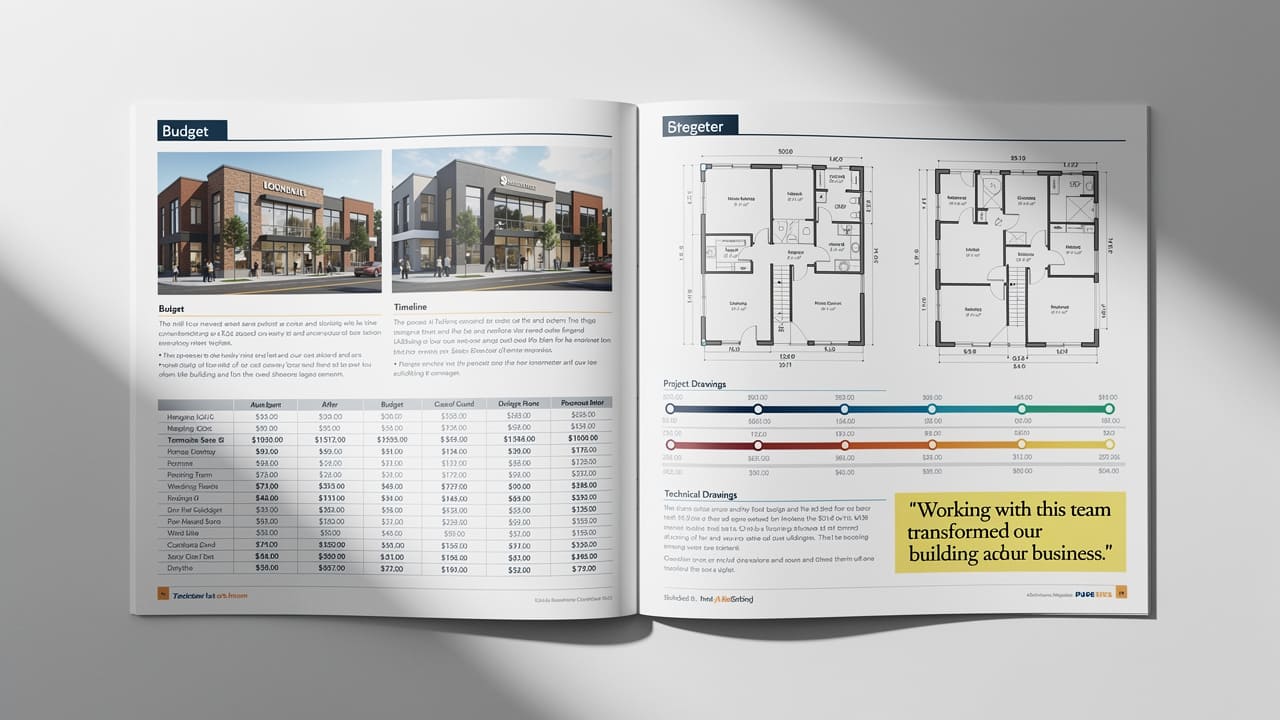
An effective case study includes the client’s original brief, the specific design challenge, and the solution the firm delivered, along with measurable results like cost savings or faster approval timelines. Adding a direct client client testimonial and before-and-after visuals, floor plans, or renderings produced in Revit or Archicad gives prospects concrete proof rather than vague claims about quality and service.
Tip: A case study that pairs hard numbers (budget held, timeline shortened, square footage delivered) with a client’s own words tends to carry far more weight than a polished project photo on its own.
How Do Networking and Referrals Drive Architectural Project Wins?

Networking drives most architectural project wins because much of this industry still runs on trusted relationships built over years, not cold outreach. Contractors, engineers, developers, and project managers who have worked successfully with a firm become natural referral sources, often recommending that firm before a client even starts searching online. Active participation in industry associations, trade shows, and design competitions keeps a firm visible among the people most likely to send work its way. Awards and committee involvement through groups like the Royal Architectural Institute of Canada, the American Institute of Architects (AIA), or a local AIA chapter add third-party credibility no amount of self-promotion can replicate, and NCARB credentials reinforce that same trust for clients evaluating licensed professionals.
Strategic partnerships tend to fall into a few recurring categories, and most established firms benefit from cultivating all of them over time.
Structural and MEP engineers who regularly collaborate on the same project types and can recommend a firm whenever a client needs design support.
General contractors and construction managers who see firsthand how a firm communicates and delivers, making them credible references for future clients.
Real estate developers who repeatedly commission new projects and value a design partner that understands budget and timeline pressure.
Industry associations and local chapters, such as RAIC provincial associations or AIA chapters in the U.S., that offer committee seats, speaking slots, and award programs where a firm’s work gets noticed.
How Should Architectural Firms Measure Marketing ROI?
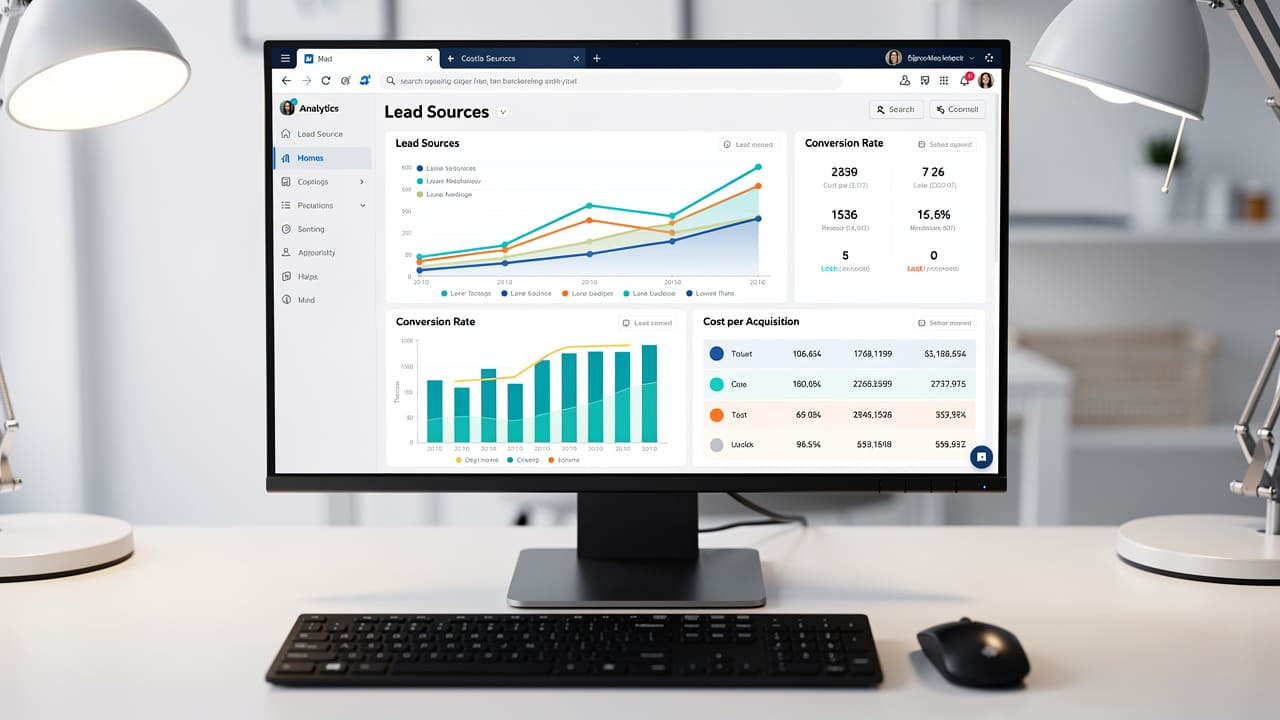
Marketing ROI measurement tracks where each lead comes from and follows it through to a signed contract, not just website visits or social likes. Recording the source of every inquiry, whether it’s organic search, a referral, or a paid ad, shows which channels actually produce qualified leads instead of just traffic. Tools like HubSpot, Marketo, or Adobe Analytics make this tracking far easier than spreadsheets alone, especially once a firm’s lead volume grows. Calculating cost per acquisition, meaning total marketing spend divided by the number of new clients won, reveals which architectural firm marketing activities are worth scaling and which ones quietly drain budget.
| Metric | What It Shows | Why It Matters |
|---|---|---|
| Lead source | Where each inquiry originated (SEO, referral, paid ad) | Identifies which channels actually produce clients |
| Cost per acquisition | Total spend divided by new clients won | Flags which activities are worth scaling |
| Conversion rate | Inquiries that turn into signed contracts | Measures how well a firm closes qualified leads |
| Time to close | Average length of the sales cycle | Helps forecast pipeline and cash flow |
Reviewing these numbers every month or quarter allows a firm to shift budget toward the channels producing the best results and away from the ones that aren’t working. This kind of ongoing measurement turns marketing from a guessing game into a predictable system for winning more projects.
Why Partner with an Experienced Marketing Agency?
Partnering with an experienced marketing agency gives architectural firms access to strategy and execution they likely don’t have time to build in-house. Cutting Edge Digital Marketing, for example, builds custom websites, local SEO strategies, and paid advertising campaigns for established service and industrial businesses rather than selling the same templated package to every client. This matters for architecture firms because generic marketing rarely accounts for long sales cycles, multiple stakeholders, or the visual storytelling that wins design work.
A good agency also acts as a long-term partner rather than a one-off vendor, focusing on measurable ROI tracking, proper lead tracking, and growth tied directly to business goals. For firms spending $2,000 to $10,000 a month on marketing, or planning to reach that level, having an experienced partner helps avoid costly missteps while building a system that keeps generating qualified leads. Get started with a strategy session to see how your firm’s current marketing stacks up against competitors in your market.
The Takeaway
Architectural firm marketing works best when digital presence, content, relationships, and performance tracking all reinforce each other instead of operating as separate, disconnected efforts. A strong website brings in search traffic, case studies turn that traffic into trust, referral relationships add a steady stream of warm leads, and ROI tracking shows which of these activities deserve more investment. None of these pieces works as well on its own as they do together.
Treating marketing as strategic infrastructure, not a line item to cut when projects slow down, is what separates firms that grow steadily from those stuck in an unpredictable feast-or-famine cycle. If building and managing this system in-house feels like more than your team can take on, working with a partner like Cutting Edge Digital Marketing can help turn your design expertise into consistent, qualified project leads.
Frequently Asked Questions
How often should an architectural firm update its portfolio?
An architectural firm should update its portfolio after every major project completion, or at least once per quarter. Fresh content signals an active practice and gives search engines new material to index, supporting stronger local SEO rankings over time.
What is a realistic marketing budget for a growing architectural firm?
A realistic marketing budget for a growing architectural firm typically falls between $2,000 and $10,000 a month, depending on firm size and growth goals. Budget should scale with the size of target projects and how competitive the local market is.
Should architectural firms use paid advertising or focus only on organic marketing?
Architectural firms get the best results from a blended approach rather than choosing just one. paid ads on Google and LinkedIn generate quick visibility with decision-makers, while organic SEO and content build a sustainable flow of leads over the long term.
How long does it take to see results from architectural firm marketing?
SEO and content marketing typically take 3 to 6 months to show measurable traction, since search rankings build gradually. Paid advertising can generate leads faster, often within weeks, but requires ongoing investment to keep delivering results.
Can small architectural firms compete with larger firms through marketing?
Small architectural firms can compete effectively by specializing in a niche, such as healthcare or sustainable design, rather than trying to be generalists. Strong local SEO and targeted content often outperform a bigger competitor’s broad, unfocused marketing budget within that specific niche. Learn more about building a marketing system suited to your firm’s size and project goals.