

Generic marketing campaigns waste budget on leads that were never going to buy from you in the first place. If you run a construction, trades, or industrial business in Alberta, you already know the frustration of spending thousands each month on ads that attract tire-kickers instead of qualified prospects. This happens because most marketing speaks to everyone and therefore resonates with no one.
Market segmentation techniques solve this problem by dividing your broader market into smaller groups of customers who share similar needs, budgets, or buying habits. Once you understand who these groups are, you can build messaging, pricing, and service packages that speak directly to each one. This article walks through the core segmentation techniques Canadian service businesses use, how frameworks like the STP model (segmentation, targeting, positioning) popularized by marketing researcher Philip Kotler guide the process, how to choose the right combination for your company, and how a strategic marketing partner like Cutting Edge Digital Marketing turns that insight into measurable lead generation.
By the end, you will have a practical framework for deciding which customer groups deserve your marketing dollars and why. If you want hands-on help applying these techniques to your own business, contact us to talk through your segments with a strategist.
Key Takeaways
Segmentation improves lead quality and marketing return on investment by directing budget toward the customers most likely to buy, rather than spreading spend thin across an undefined audience.
There are 5 core techniques worth mastering: demographic, psychographic and behavioural, firmographic, geographic, and value-based segmentation.
Combining multiple approaches, rather than relying on a single variable, produces sharper targeting and better campaign results.
Before committing resources to a segment, check that it is measurable, substantial, accessible, and responsive.
A strategic marketing partner can turn raw segmentation data into an integrated campaign that actually generates qualified leads.
What Is Market Segmentation and Why Does It Matter?
Market segmentation is the practice of dividing a larger customer base into smaller groups that share common needs, traits, or buying behaviours. For a service-based business, this means separating your audience by factors like company size, location, budget, or the specific problem they need solved, rather than marketing to “everyone who might need our services.” This matters enormously for businesses spending $2,000 to $10,000 a month on marketing, because every dollar aimed at the wrong audience is a dollar that produces no return.
When you apply market segmentation techniques correctly, three things improve almost immediately:
Lead quality rises because your messaging speaks to a specific group’s actual pain points instead of generic benefits.
Budget efficiency improves because ad spend and content creation focus on segments most likely to convert.
Brand positioning sharpens, since your company becomes known as the expert choice for a defined type of client rather than a generalist competing on price alone.
What Are the Core Market Segmentation Techniques?
Most Canadian service, trades and industrial businesses rely on five proven market segmentation techniques, often used together rather than in isolation. Each one answers a different question about your customer base, and together they build a complete picture of who to target, what they value, and how much they are worth to your business. Retailers like Canadian Tire, automotive brands, and SaaS companies such as HubSpot rely on the same core principles, even though the variables they track differ by industry.
Demographic Segmentation

Demographic segmentation divides your market using measurable traits such as age, income, household or company size, and education level. It is usually the starting point because the data is easy to collect and apply. A residential construction company, for example, might segment clients by age group, recognizing that younger homeowners often prioritize energy efficiency and smart home features, while older clients tend to value proven reliability and warranty coverage.
Psychographic and Behavioural Segmentation

Psychographic and behavioural segmentation looks past surface traits to explain why customers buy and how they act once they are in your pipeline. Psychographic factors include values like sustainability, craftsmanship, or pure cost minimization, and they help you choose language that resonates on a deeper level than a simple feature list. A fabrication shop, for instance, might find that one group of clients cares most about using premium materials, while another is strictly focused on the lowest price per unit.
Behavioural segmentation tracks what customers actually do, including purchase frequency, loyalty, and repeat business. Many established companies discover that a small share of clients generates a disproportionate share of revenue, a pattern often called the Pareto principle, or the 80/20 rule. A related method called RFM analysis, which scores customers on recency, frequency, and monetary value, helps quantify this pattern instead of relying on a general sense of who your best clients are. Spotting this group early lets you build retention programs and account management specifically around your highest-value relationships instead of treating every client the same.
Firmographic Segmentation (B2B)

Firmographic segmentation is one of the five core market segmentation techniques, and it groups business customers by company-level traits rather than individual consumer characteristics. This makes it the natural fit for companies selling to other companies, including oil and gas services, equipment rental, and industrial suppliers. Instead of asking about age or household income, you look at company size, industry vertical, years in operation, and how far along a client is in adopting new technology. These variables shape everything from decision-making speed to the size of a typical contract, and businesses typically track them inside a CRM platform like HubSpot, Salesforce, or Pipedrive.
A good example is an industrial equipment company that segments clients by employee count or annual revenue, creating separate service tiers for small contractors, mid-sized operators, and large enterprise accounts. Each tier usually needs a different pricing structure, support level, and sales approach, since a five-person crew and a two-hundred-person operation rarely buy the same way. Mapping these firmographic differences up front prevents you from pitching an enterprise solution to a client who only needs a basic service agreement, and vice versa.
Geographic Segmentation
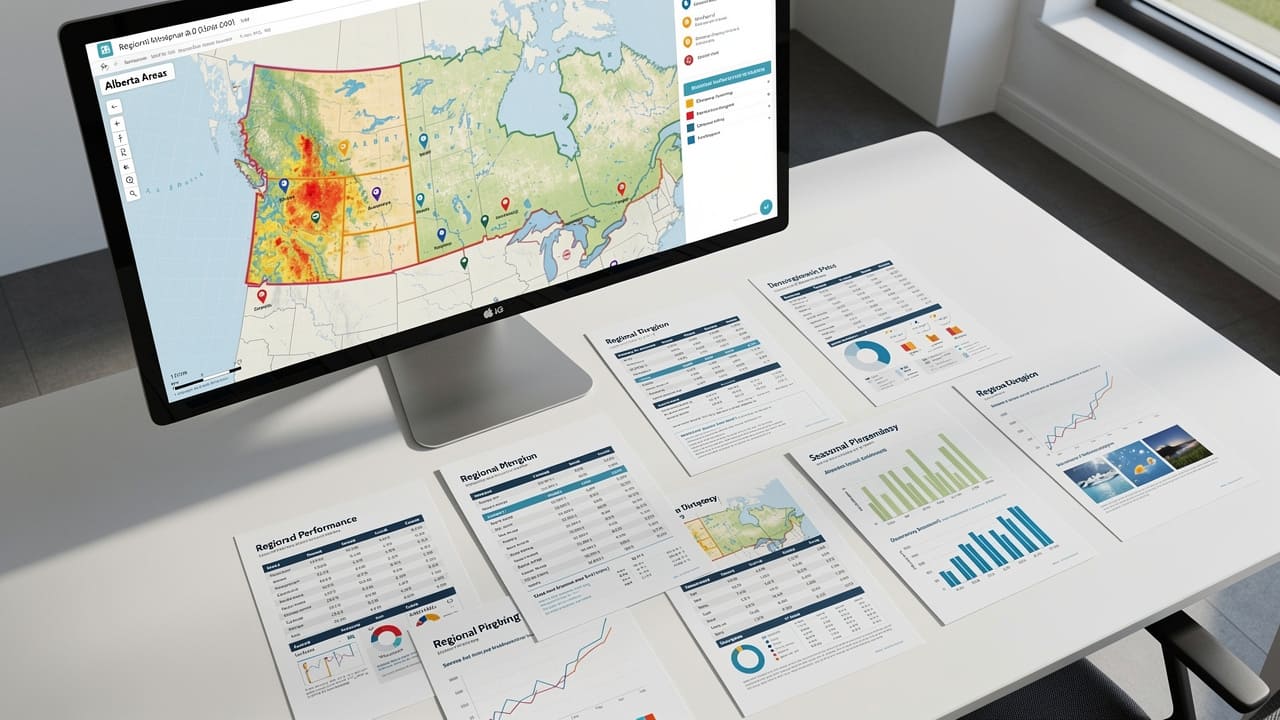
Geographic segmentation groups customers by physical location, accounting for regional economic conditions, climate, and population density. In Alberta specifically, this often means separating geo-targeting for paid ads, where density is high but competition is fierce, from rural clients spread across the province, where service delivery costs more but competition is thinner. Seasonal weather patterns add another layer, since construction and trades activity in many regions slows dramatically through the winter months, requiring different marketing timing for each zone.
Value-Based Segmentation

Value-based segmentation shifts the focus from who your customers are to how profitable they are, using measures like customer lifetime value, profit margin, and payment reliability. Not every customer who generates high revenue is equally valuable once you factor in service complexity and collection effort. A contracting firm might discover that commercial maintenance contracts carry thinner margins than smaller residential jobs, which should directly inform how much acquisition spend each segment can justify. SaaS companies and automotive dealerships apply the same customer lifetime value logic when deciding which accounts deserve premium support.
How Do You Choose and Apply the Right Segmentation Strategy?
Choosing the right segmentation strategy means testing each candidate segment against a simple four-part checklist before committing marketing dollars to it. A segment only deserves dedicated campaigns, content, and sales effort if it passes all four tests, since failing even one usually signals wasted resources ahead.
| Test | What to Check | Example Data Source |
|---|---|---|
| Measurable | Reliable data defining the segment’s size and characteristics | CRM, Statistics Canada, industry reports |
| Substantial | Large enough in revenue potential or customer count | Sales history, market size estimates |
| Accessible | Reachable through channels you actually control | Local SEO, LinkedIn ads, trade publications |
| Responsive | Realistic likelihood of reacting to a tailored offer | Past campaign performance, surveys |
Businesses that pass this checklist almost always benefit from combining more than one segmentation layer rather than relying on a single variable. For example, a strategy targeting “eco-conscious homeowners aged 45 to 65 in established Calgary neighbourhoods who plan renovations well in advance” blends demographic, psychographic, geographic, and behavioural data into one precise, actionable profile, which outperforms any single-variable approach on its own. Many teams track these profiles inside analytics platforms like Google Analytics or Mixpanel to confirm the segment behaves as expected before scaling up spend.
Why Work With a Marketing Partner on Segmentation?
Market segmentation techniques only pay off once the insight gets turned into an actual campaign, and that execution step is where most in-house teams run short on time. Building and running a true segmentation strategy takes data analysis and marketing execution that most owners and general managers simply cannot fit around daily operations. This is the exact gap a strategic partner like Cutting Edge Digital Marketing is built to fill, turning raw segmentation insight into a coordinated marketing system rather than a stack of disconnected tactics.
Cutting Edge Digital Marketing works specifically with Alberta and Western Canadian service, trades, and industrial website development agency to build customized strategies around each client’s actual customer segments, not a generic template. That typically means aligning several pieces into one system built around your priority segments.
Website design and SEO structured around the language and search behaviour of your highest-value segments, so the right prospects find you first.
Paid advertising on Google, Meta, and LinkedIn ads for B2B targeted to the specific demographic, firmographic, or geographic profiles identified during segmentation work.
Branding and positioning that speaks directly to the values of your priority segment, whether that is reliability, technical expertise, or cost efficiency.
return on ad spend that measures which segments actually convert and spend, so budget keeps shifting toward what performs.
A segmentation strategy is only as useful as the campaign built on top of it, the data identifies the opportunity, but website, SEO, and advertising work is what actually captures it.
Want to see how this works for a business like yours? Learn more about our approach or get started with a segmentation review built around your actual customer data.
The Takeaway
Market segmentation techniques give service, trades, and industrial businesses a practical way to stop guessing and start targeting the customers most likely to buy. Demographic, psychographic and behavioural, firmographic, geographic, and value-based approaches each reveal a different layer of your market, and combining them, often guided by frameworks like STP and RFM analysis, produces sharper, more profitable targeting than any single method alone.
If your business is already investing $2,000 to $10,000 a month in marketing, or planning to, segmentation is what separates campaigns that generate real revenue from campaigns that simply generate activity. Reach out to a strategic marketing partner who can map your segments, validate them against real data, and build the website, SEO, and advertising strategy to reach them consistently.
Frequently Asked Questions
How Often Should A Business Update Its Market Segments?
Review your segments at least once a year, or sooner if you notice major shifts in customer behaviour, new competitors entering your market, or changes in the local economy. Alberta’s industrial and trades sectors can shift quickly with commodity prices and construction cycles, so segments that worked two years ago may no longer reflect your actual customer base.
What Is The Difference Between Market Segmentation And Targeting?
Segmentation is the process of identifying distinct groups within your market based on shared traits or needs. Targeting comes next, it is the decision about which of those identified segments you will actually pursue, and how you will position your offer, pricing, and messaging to win their business. Together with positioning, these three steps make up the STP model used across industries from retail to SaaS.
Can A Small Business With A Limited Budget Still Use Segmentation Effectively?
Yes, small businesses can start with just one or two high-impact variables, such as geographic location combined with company size, rather than attempting full multi-variable segmentation right away. This focused approach still sharpens targeting significantly without requiring the data resources larger companies use for complex, multi-layered segmentation models.
What Tools Help Collect Data For Segmentation?
Customer relationship management systems such as HubSpot, Salesforce, and Pipedrive, along with website analytics platforms like Google Analytics and Mixpanel, customer surveys, and social media insights, all provide practical, low-cost data for building segments. Many service businesses already have this data sitting in their customer lifetime value calculation or Google Analytics account and simply need to analyze it with segmentation in mind. Explore your existing CRM data first, since it often holds enough detail to build your first one or two segments without any new software.
How Many Market Segments Should A Business Target At Once?
Most service and trades businesses see the best results focusing on one to three priority segments at a time. Spreading marketing budget and messaging across too many segments dilutes your resources and makes it harder to build the consistent, specialized positioning that actually earns trust within each group.