
Every time a web page loads and an ad appears, a tiny auction has just finished behind the scenes. If someone asks what is programmatic advertising, that silent auction is the answer in action. Software, data, and algorithms decide which ad shows up, how much it costs, and who sees it, all in less than a blink.
Not long ago, buying online ads meant phone calls, emails, and signed paperwork for every placement. The very first banner ad in 1994 came from a direct deal between an advertiser and a single publisher. Since the early 2010s, that slow process has been replaced by automated auctions powered by artificial intelligence and real-time bidding (RTB). The result is massive growth, with global spend around programmatic methods estimated near six hundred billion dollars and projected to move toward eight hundred billion over the next few years, according to Programmatic Advertising Statistics 2025: comprehensive industry insights.
For businesses that rely on steady leads and clear return on ad spend, this shift matters a lot. Whether a company is a local contractor in Alberta or an established industrial firm with multiple locations, programmatic-style buying offers more precise targeting, better control over spend, and faster learning from campaign data. It is no longer something only global brands use; it is becoming the standard way to buy display, video, connected TV, and more.
In this guide, we walk through what programmatic advertising really means, how the real-time auctions work, who the main players are, and what benefits and challenges to expect. We also connect these ideas to practical steps small and mid-sized companies can use, including those working with platforms like Google Ads and Meta Ads. The natural next question is simple yet important, and it sets up everything that follows: What exactly is programmatic advertising, and how does it differ from traditional digital ad buying?
Key Takeaways
Programmatic advertising is automated media buying. It uses software and data to buy and place digital ads in real time, replacing slow manual buying with fast auctions that happen while a page loads. This gives advertisers far more control, precision, and speed than old-style media buys, so even smaller companies can access targeting that once belonged only to global brands.
Multiple platforms work together behind every impression. Demand-side platforms, supply-side platforms, ad exchanges, and data platforms each have a clear role in deciding which ad is served and at what price, based on the goals that the advertiser sets. Understanding these roles makes the whole process feel less mysterious and far more manageable.
Smaller businesses can benefit just as much as large brands. When used well, programmatic advertising can improve efficiency, reduce wasted spend, and increase return on ad investment for local and regional businesses. Companies that lean into strong tracking, clear goals, and smart partners such as Cutting Edge Digital Marketing are in a strong position to turn data-driven advertising into real revenue growth rather than just more clicks.
What Is Programmatic Advertising?
When we talk about what is programmatic advertising, we are talking about a method of buying digital ads that runs on software rather than on phone calls and spreadsheets. Programmatic advertising uses algorithms, artificial intelligence, and real-time data to buy and sell ad space automatically. Instead of a person deciding where every single ad appears, the system makes those decisions based on rules and targets that the advertiser sets.
In traditional digital buying, a marketer might email a publisher, request rates, negotiate, and sign an insertion order for a set number of impressions. With programmatic methods, there is no need for back and forth like that. The buying systems plug into large pools of ad inventory and bid for each impression in real time, similar to a high-speed stock market where every ad view is its own tiny trade.
It also helps to separate the format from the buying method. A banner on a website, a video before a streaming show, and a sponsored story in a news feed are all formats. Programmatic describes how the ad space is purchased, not the shape of the creative. Even platforms such as Google Ads and Meta Ads run automated auctions that follow the same basic ideas, though they run them inside their own closed networks instead of across many publishers at once.
The strength of programmatic advertising comes from data. Each time an impression becomes available, the system can look at information about the user, such as location, device, and browsing behavior, and compare it to campaign goals. That means ads are far more likely to appear in front of the right people, at the right moment, and in the right context for a business goal such as a lead, a call, or an online sale.
The Evolution Of Programmatic Advertising
To understand why programmatic advertising is so effective, it helps to look at how fast it has developed, with academic research such as Programmatic advertising: An exegesis examining its theoretical foundations and practical evolution. In 1994, that first display banner ad required direct contact between advertiser and publisher, with every detail agreed by people rather than software. For years, online media buying looked a lot like buying a print ad or a billboard, just with pixels instead of paper.
In the early 2010s, advances in data processing and machine learning opened the door for real-time bidding. Instead of buying bundles of impressions in advance, advertisers could bid on each impression as it became available. Spending tied to this style of buying moved from just a few billion dollars in its early days to well over one hundred billion in the United States alone by the mid‑2020s.
Programmatic methods now touch most channels of online advertising, from mobile display and video to streaming TV and digital out-of-home screens. As more inventory shifts into these automated auctions and global spending trends toward eight hundred billion dollars, this is no side trend. For modern businesses that want to compete for attention and leads, understanding programmatic concepts is now part of staying ahead, not a nice extra.
How Programmatic Advertising Works In The Real Time Auction Process

The inner workings of programmatic advertising can feel like a magic trick at first. An ad appears almost instantly, yet in the background, multiple platforms have just made decisions, placed bids, and settled an auction. All of that happens in the short pause between clicking a link and seeing a page or an app fully load.
A user visits a website or opens an app that has ad space available. As the content begins to load, the site or app checks with its ad server to see which placements are open. Every open space is a chance for an advertiser to show a message. This is where the real-time process starts.
The publisher uses software called a supply-side platform (SSP) to mark that impression as available for purchase. That system gathers details about the opportunity, such as the size of the ad slot and the type of content on the page. It may also attach anonymous data about the user, such as location, device type, and recent browsing behavior based on cookies or other signals.
The SSP sends this information in a bid request to an ad exchange, which acts as a central marketplace. The request carries all the key details an advertiser might care about when deciding how much the impression is worth. No names or direct personal data are shared, but there is enough context to match against audience rules and campaign goals.
The ad exchange forwards that bid request to many demand-side platforms (DSPs) that represent different advertisers and agencies. Each DSP may be running hundreds of campaigns at once. When it receives a request, it quickly checks those campaigns to see which ones are interested in an impression like this one.
Inside each DSP, algorithms compare the bid request to targeting rules such as location, interests, or past site visits. If the user looks like a good match, the system decides how much to bid based on budget, bidding strategy, and expected results. This decision process happens in a few milliseconds and does not require a person to step in.
Any DSP that wants the impression sends back a bid to the ad exchange. Each bid includes the amount it is willing to pay for that single impression and a link to the creative it wants to serve. Dozens of bids might arrive for one impression, all processed almost instantly.
The ad exchange reviews the bids and selects a winner, usually the highest bid that meets the publisher rules. Some auctions use a second‑price model, while others use a first‑price model, but in every case the goal is to give the space to the most interested and relevant advertiser at that moment. This keeps pricing tied to real demand rather than guesswork.
The winning creative is then passed back through the SSP to the publisher’s site or app. The ad loads into the open slot while the rest of the page finishes loading, so the user sees a complete page without any noticeable delay. From the user’s point of view, nothing special happened, even though a full auction just took place.
After the impression, performance data starts flowing back to the advertiser through the DSP. Metrics such as impressions, clicks, viewability, and conversions feed into reports and optimization tools. Over time, the system learns which placements and audiences drive real results and shifts spend toward the best performers.
To make this more concrete, imagine an industrial services company in Alberta that wants more local project leads. We can set up a campaign that tells the system to bid more aggressively when the user is in Alberta, visits construction‑related sites, and has recently searched for relevant services. The auction then works in our favor because the algorithm knows which impressions match that profile and values them accordingly. Speed matters here, since the whole process needs to finish before the page feels slow, and fairness matters because every impression is priced based on real competition at that instant.
The Programmatic System, Key Players And Technology Platforms
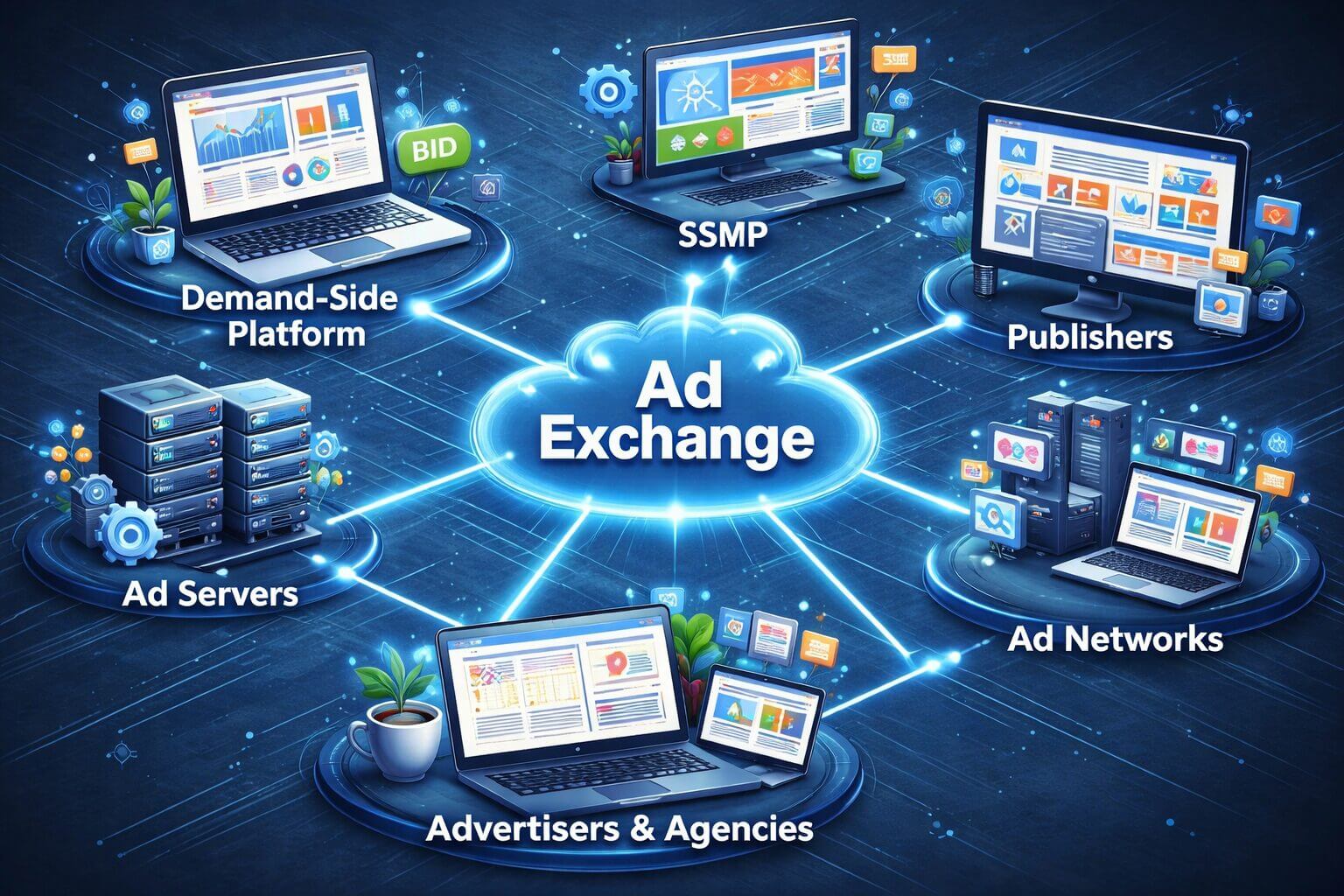
Behind the scenes, programmatic advertising runs on a set of connected tools, each with a different job. Learning who does what removes a lot of the confusion and makes it easier to ask good questions when planning campaigns or choosing partners.
Demand-Side Platform (DSP)
A demand-side platform is the main control panel for advertisers and agencies who want to buy programmatic media. Through one interface, we can reach ad inventory from thousands of sites and apps rather than setting up deals one by one. The DSP uses campaign settings such as budget, targeting, and bidding rules to decide which impressions to buy and at what price. Well-known examples include Display & Video 360, The Trade Desk, and Amazon DSP, which connect brands to the wider open internet beyond closed ad networks.
Supply-Side Platform (SSP)
A supply-side platform is the publisher’s version of the buying tool. Instead of buying ad space, it helps them manage and sell it. The SSP connects a publisher’s available placements to many ad exchanges, networks, and DSPs at the same time. Its main goal is to bring in as many qualified bids as possible for each impression so the publisher can increase revenue and keep fill rates high across their sites or apps.
Ad Exchange
An ad exchange acts like a neutral trading floor for ad impressions. It sits between the supply-side and demand-side tools, taking in bid requests from publishers and bids from advertisers. The exchange handles real-time auctions, selects winners, and passes winning creatives back to the right places. Across the open web, these exchanges process billions of transactions every day, which is why programmatic campaigns can scale so fast when they are set up correctly.
Data Management Platform (DMP)
A data management platform brings audience data from many sources into one place, then turns that raw information into useful segments. It can hold first‑party data such as website visitor behavior or customer records and mix that with third‑party data such as demographics or interests from trusted providers. Advertisers then send these segments into DSPs for precise targeting, retargeting, and lookalike models. As privacy rules tighten, the smart use of first‑party data inside tools like this becomes even more important for long‑term success.
“Data is the new oil.” — Clive Humby, data scientist
That line sums up why strong data foundations are so valuable in programmatic advertising.
Types Of Programmatic Deals And Buying Methods
Not all programmatic media is bought the same way. Advertisers can choose from several deal types that change how much control they have, how inventory is accessed, and how prices are set. Each method has strengths depending on the goal, budget, and need for premium placements.
Open marketplace deals are the classic real-time bidding model. Any qualified advertiser connected to the exchange can bid on impressions as they appear, and the highest bidder who meets the rules wins. This path gives huge reach and the chance for lower prices, but control over exact placements and environments is more limited, so brand safety settings and monitoring matter a lot.
Private marketplace arrangements introduce more control. In these cases, a publisher invites a select group of advertisers to compete for premium placements on their sites or apps. Prices are often higher than in the open market, but in exchange advertisers get better quality inventory, more transparency, and stronger brand protection. This approach suits brands that care more about context and content quality than raw reach.
Preferred deals sit between open and private approaches. Advertisers and publishers agree on a fixed price for certain inventory, and the advertiser gets the first chance to buy impressions at that rate before they enter any auction. If the advertiser passes on a given impression, it flows into private or open auctions. This gives brands more predictable pricing while still keeping some flexibility.
Programmatic guaranteed deals look most like old-school direct buys, only handled through software instead of paperwork. The advertiser and publisher agree on a set number of impressions, a fixed price, and a time window, and the platforms automate delivery. This route works well for campaigns that need guaranteed reach or specific high-value placements, such as a major product launch or a seasonal push.
Channels And Ad Formats In Programmatic Advertising
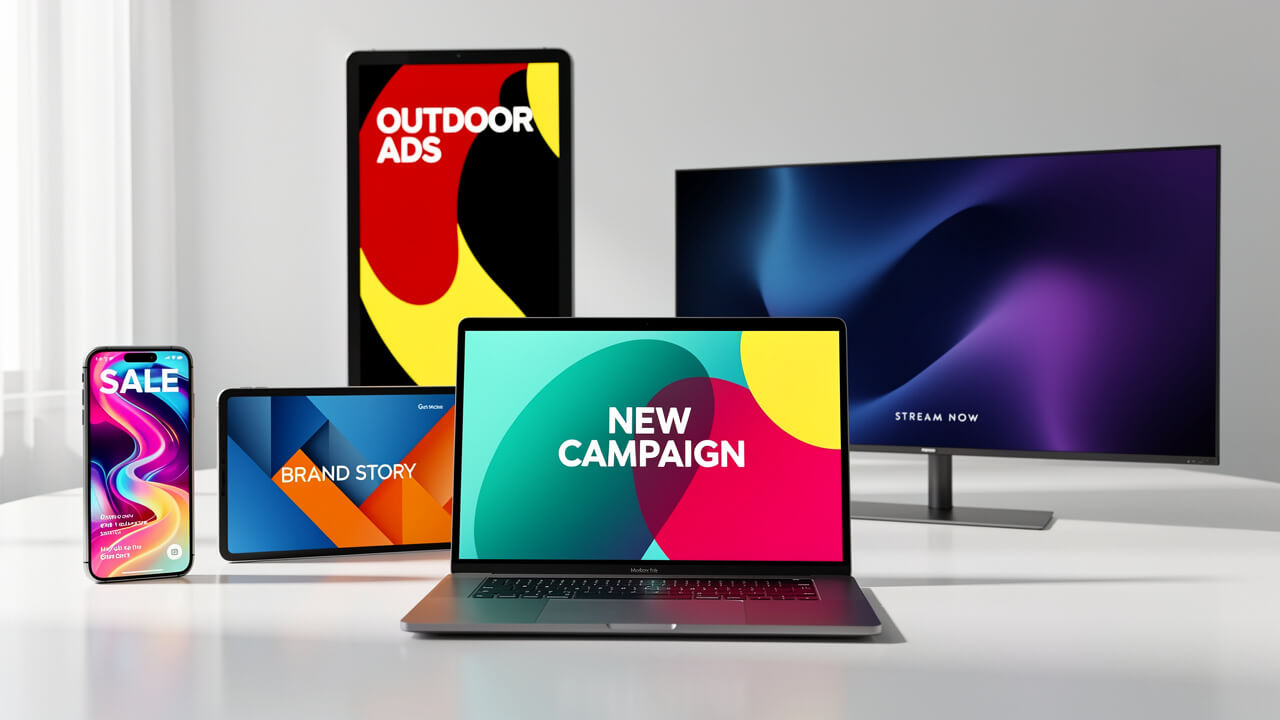
Programmatic buying started with simple banner ads, but it now reaches across almost every digital channel. That range gives advertisers many ways to reach the same audience in different moments with creative that suits the medium. Mixing channels can drive stronger results than relying on a single format.
Display advertising remains the base layer. These are the visual banners and image units that appear across websites and apps in different sizes and positions. They are effective for broad reach, retargeting past visitors, and keeping a brand in front of decision makers during long sales cycles.
Native advertising blends into the content around it, which can lead to higher engagement. These placements might appear as sponsored articles, recommended stories at the end of an article, or in‑feed units on news and content sites. Because they match the look and feel of the site, they can share deeper messages without feeling like a hard sell.
Video advertising through programmatic platforms covers pre‑roll, mid‑roll, and post‑roll spots around online video content. It also includes out‑stream units that play within articles or as standalone ad experiences. Connected TV (CTV) takes video a step further by placing ads on smart TVs and streaming devices, which gives brands the emotional impact of television with far better targeting and reporting.
Digital out-of-home (DOOH) brings programmatic methods to screens in the physical world, such as billboards, mall displays, and airport screens. Advertisers can adjust messages based on time of day, weather, or events, then combine that reach with mobile or desktop retargeting. Audio and in‑game ads add more touchpoints, from podcast ad breaks to virtual billboards inside games, which helps brands stay present wherever their audience spends time.
Key Benefits Of Programmatic Advertising
When we use programmatic methods well, the benefits reach far beyond simple convenience. They shape how we plan, buy, and optimize campaigns, which can have a direct impact on lead flow and revenue for small and mid‑sized companies.
Key benefits include:
Automation And Efficiency
Instead of spending hours on manual placements and negotiations, we set clear goals, budgets, and targeting rules, then let the systems handle the heavy lifting. That frees teams to focus on strategy, creative testing, and sales follow‑up rather than constant ad operations.Reach And Scale
A single campaign can tap into inventory from thousands of sites, apps, and channels, from local news outlets to national streaming platforms. Brands can start with a smaller footprint, such as a single province, then expand to new regions once they see steady results.Precise Targeting
Programmatic tools allow us to combine demographic data, interests, online behavior, device type, and location into clear audience segments. We can also use first‑party data such as customer lists or website visitors to build retargeting and lookalike groups that mirror a company’s best clients.Real-Time Optimization
Instead of waiting for a campaign to end before judging performance, we watch results as they arrive and make adjustments while the campaign is live. That can mean shifting budget to higher‑performing audiences, pausing weak placements, or testing new creative messages.Cost Effectiveness And Transparency
Because every impression is priced in an auction, advertisers pay a fair market rate instead of flat prices that may not reflect real value. Detailed reporting shows where money is going, which sites are delivering, and which tactics bring conversions, giving business leaders far greater confidence in their ad spend.
Challenges And Considerations In Programmatic Advertising
As helpful as programmatic advertising can be, it is not free of challenges. The systems can look intimidating from the outside, and poor setup can waste budget or create brand safety issues. Being aware of these concerns makes it easier to manage them and pick the right partners.
The first hurdle is often the learning curve. There are many acronyms, platforms, and settings to understand, from demand‑side tools and supply‑side tools to data platforms and auction types. Many owners and managers simply do not have time to master all of this, which is why working with an experienced team such as Cutting Edge Digital Marketing can be so valuable.
Brand safety is another key concern. Without the right controls, ads might appear next to content that does not align with a company’s values or industry standards. Strong inclusion and exclusion lists, topic filters, and regular placement reviews are essential steps, and reputable platforms give us the tools to keep ads in suitable environments.
Ad fraud and invalid traffic can also be a problem. Automated systems can attract bad actors who use bots or fake sites to generate impressions and clicks that do not come from real people. To reduce this risk, we use DSPs that invest heavily in fraud detection and partner with third‑party verification tools that specialize in spotting suspicious activity.
Transparency issues still exist in some corners of programmatic buying. Certain vendors operate like black boxes, giving limited insight into where ads run or how fees are structured. We avoid that by insisting on clear reporting and choosing technology that shows site lists, costs, and performance metrics in detail.
The privacy environment is shifting as browsers phase out third‑party cookies and regulators tighten data rules. Old retargeting methods that rely heavily on third‑party data are becoming less effective. This change pushes advertisers to focus more on first‑party data, contextual targeting, and consent‑based tracking, which can actually favor the companies that start building strong data practices now.
Key Metrics For Measuring Programmatic Campaign Success
A programmatic campaign is only as strong as the way it is measured. Clear goals and the right metrics make it possible to judge whether the spend is driving real business results rather than just more traffic. Different objectives call for different key performance indicators, and smart campaigns keep those links tight.
“Half the money I spend on advertising is wasted; the trouble is I don’t know which half.” — often attributed to John Wanamaker
Programmatic advertising helps reduce that waste by tying spend to measurable outcomes.
You can think about metrics by campaign goal:
Awareness And Branding
Focus on how many people saw the ads and in what context.Impressions count the total times an ad was served.
Reach tells us how many individual users saw it.
Cost per thousand impressions (CPM) shows how much we paid for exposure.
Viewability rate helps confirm whether people likely had a chance to notice the message.
For video, completion rate shows how often viewers watched the full creative.
Consideration And Engagement
When the goal is interaction, click‑based metrics matter more.Clicks show response volume.
Click‑through rate (CTR) shows the percentage of impressions that led to a click.
Cost per click (CPC) shows how much each visit cost.
For video, cost per completed view (CPCV) ties budget to full views rather than partial plays.
Conversions And Revenue
For conversion‑focused campaigns, on‑site actions matter most.Conversions might include form fills, quote requests, online purchases, or phone calls.
Cost per acquisition (CPA) shows how much each of those actions cost.
Conversion rate shows what percentage of ad clicks lead to a desired action.
Return on ad spend (ROAS) connects revenue back to every advertising dollar.
Goal alignment ties everything together. Before launching, we decide whether awareness, engagement, or conversions are the top priority, then pick metrics that match. As data comes in, we use it to refine targeting, creative, and bidding strategies so that each campaign round becomes more effective than the last.
Programmatic Advertising For Small And Mid Sized Businesses

For years, many smaller companies assumed programmatic advertising was only for global brands with giant budgets. That may have been somewhat true in the early days when access to DSPs was limited and minimum spends were high. Today, self‑serve platforms, managed service options, and smarter agency support have opened the door for small and mid‑sized businesses to benefit from the same methods.
This shift is especially important for service‑based, industrial, and trades businesses that sell into narrow markets. These companies rarely need millions of impressions; they need the right decision makers in specific regions to notice them at the right moment. Programmatic‑style targeting makes that possible by combining location, industry interests, and behavior into focused audience sets that match real buyer profiles.
Local and regional firms can also take advantage of geo‑targeting to compete with larger rivals. A construction company in Alberta, for example, can concentrate spend on prospects within its service area instead of paying for views from other provinces or countries. Because pricing is based on auctions, a well‑targeted campaign with strong creative can perform well even with more modest budgets.
At Cutting Edge Digital Marketing, we apply programmatic principles every day through platforms such as Google Ads and Meta Ads for our clients across Alberta and Western Canada. We set up tight tracking, clear audience structures, and ongoing optimization routines so that every campaign ties back to leads, quotes, or sales. For owners and managers who do not want to manage this complexity themselves, we act as a long‑term strategic partner, turning data and automation into steady, measurable growth.
Conclusion
Programmatic advertising marks a major shift in how digital media is bought and sold, moving from manual deals and guesswork to automated auctions and data‑driven decisions. Instead of hoping the right people see an ad, we can now tell the system who matters, how much each impression is worth, and what actions we care about. That puts far more control in the hands of business leaders who need their marketing budgets to work hard.
The strengths are clear. Automation cuts down busywork, precise targeting reduces wasted spend, real‑time reporting speeds up learning, and broad access to inventory allows campaigns to scale from local to national when the time is right. While challenges such as complexity, brand safety, fraud, and changing privacy rules are real, they can be managed with careful planning and the right tools.
For industrial, construction, and service‑based companies, programmatic concepts now sit at the heart of effective campaigns on platforms like Google Ads and Meta Ads. Success comes from understanding the basics, setting sharp goals, and partnering with experts who can connect the technical side to real business outcomes. If it is time to turn online advertising into a consistent source of qualified leads and revenue, Cutting Edge Digital Marketing is ready to help design and manage a paid media plan that makes every dollar earn its keep.
FAQs
Is Programmatic Advertising Only For Large Enterprises?
Programmatic advertising is no longer limited to global brands with massive budgets. Modern platforms and agency models support companies of many sizes, including local and regional firms. Small and mid‑sized businesses can start with modest monthly spend, gain insight from the data, and increase investment as results prove out. Careful targeting and smart strategy often matter more than raw budget size.
How Much Does Programmatic Advertising Cost?
Costs for programmatic campaigns depend on factors such as industry, audience size, ad format, and how much competition exists for the same users. Many display and video placements fall in a range of well under a dollar to several dollars per thousand impressions, with premium inventory costing more. Most platforms do not require a strict minimum spend, though committing at least a few thousand dollars per month helps generate enough data to make solid decisions. Because pricing is auction‑based, advertisers generally pay market value rather than fixed, inflexible rates.
What Is The Difference Between Programmatic Advertising And Google Ads?
Google Ads uses automation and auctions, so in that sense it follows programmatic principles, but it does so inside its own closed network. A traditional DSP reaches across the broader open internet, tapping into inventory from many publishers, video services, and connected TV providers. Google Ads focuses on search, YouTube, and properties within its own network, while classic programmatic tools focus more on display, online video, audio, and digital out‑of‑home across external sites. Many brands use both approaches together so they can cover search intent and wider awareness at the same time.
How Can I Ensure My Ads Don’t Appear Next To Inappropriate Content?
Reducing the risk of bad placements starts with choosing DSPs that take brand safety seriously. Within those tools, we set strict site and category exclusions, apply keyword filters, and use whitelists for trusted publishers when needed. Private marketplace and programmatic guaranteed deals with respected media owners add another layer of protection. Third‑party verification services such as Integral Ad Science or DoubleVerify watch for unsafe or low‑quality inventory and flag issues quickly. Working with an attentive agency that reviews reports and refines settings on an ongoing basis is one of the best ways to keep ads in suitable environments.