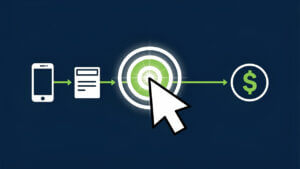

Picture watching $3,000… then $5,000… then $10,000 go out the door every month on Google Ads, while a dashboard full of numbers stares back. Impressions. Clicks. Costs. But the real question is still sitting there: Are these ads bringing in profitable work or just burning cash? That is where understanding Google Ads metrics stops being “nice to have” and starts protecting hard-earned budget.
Many Alberta service, trades, and industrial companies run into the same wall. Reports from an agency or in-house marketer list every number under the sun, but no one can clearly explain which jobs came from which campaigns, or whether the cost per lead makes sense for the business. Some only look at clicks. Others do not track conversions at all. In both cases, it is almost impossible to make smart decisions.
This guide is written to fix that. By the end, understanding Google Ads metrics will feel far less mysterious. You will know which numbers matter most, how to read them, and how they connect back to real leads, real jobs, and real profit. We will walk through the core performance metrics, the conversion and cost metrics that drive ROI, the visibility and quality metrics that show how you stack up, and how Cutting Edge Digital Marketing turns all of this into a clear plan for growth.
“Without data, you’re just another person with an opinion.” — W. Edwards Deming
H2 1: Core Performance Metrics: What Your Ads Are Actually Doing

Before talking about profit, you need to know whether your ads are even getting in front of the right people and attracting attention. Core performance metrics show how often your ads appear and how often people choose to click.
Impressions count the number of times your ad shows on Google. If someone in Calgary searches “commercial electrician near me” and your ad appears, that is one impression. High impression numbers mean your ads are showing often, which helps with brand recognition in busy Alberta markets. On their own, though, impressions are only a surface indicator. If no one clicks, the ad is just taking up space.
Clicks show how many people saw your ad and decided to learn more by visiting your website or landing page. For a mechanical contractor, a click from “24 hour boiler repair Edmonton” is a strong sign of intent. That person is not browsing; they have a problem they want solved. Each click is a potential lead entering your sales funnel, so these numbers matter far more than impressions.
Click-through rate (CTR) connects those two metrics. It is calculated as clicks divided by impressions, then multiplied by 100. If you have 100 impressions and 5 clicks, your CTR is 5%. A higher CTR tells you your ad is relevant and compelling for the searches you are targeting. Google also uses CTR as a key part of Quality Score, which affects how often your ads show and what you pay per click.
Average cost-per-click (Avg. CPC) is the average amount you pay each time someone clicks. It is calculated by dividing total cost by total clicks. For example, if you spend $5,000 in a month and receive 1,000 clicks, your Avg. CPC is $5. That single number tells you how much traffic your budget can buy. It is shaped by your bids, your Quality Score, and how competitive your keywords are in Alberta and Western Canada.
The real value of these metrics shows up when you read them together:
High impressions with low CTR suggest your keywords or ad copy need work.
Strong CTR but rising Avg. CPC hints that Quality Score or competition is driving costs up.
Good CTR and reasonable Avg. CPC, but few leads, point to issues after the click (your website or landing page).
At this stage you are not yet looking directly at profit, but you are learning whether your ads are visible and interesting enough to earn a click from the right people.
H2 2: Conversion And Cost Metrics: Where ROI Gets Real

Clicks are only helpful if they turn into leads. Conversion and cost metrics are where Google Ads performance connects to booked jobs, service calls, and long-term clients. This is where owners and general managers should spend most of their attention.
A conversion is any valuable action someone takes after clicking your ad. For trades, construction, and industrial companies, that usually means:
A quote request form submission
A “request service” or booking form
A phone call from a mobile device or call-only ad
A live chat start or conversation
A download of a technical spec sheet or brochure
You choose what counts as a conversion based on your business model. For most Alberta service businesses, phone calls are the prize, because they often turn into work quickly.
Conversion rate (CVR) shows how many of those clicks become conversions. It is calculated as conversions divided by clicks, multiplied by 100. If you receive 200 clicks and 20 conversions, your CVR is 10%. A strong CVR means your ad message, landing page, and offer are lined up properly. A good CTR but weak conversion rate usually points to:
A mismatch between what the ad promises and what the page delivers
A page that is slow or not mobile-friendly
Confusing layout or forms
Not enough trust signals, such as reviews, certifications, or project photos
Cost per acquisition (CPA), also called cost per conversion, is the average amount you pay for each lead. It is total cost divided by total conversions. This is one of the most important numbers in lead generation. If a typical project brings $3,000 in profit and you close one in ten leads, you can afford to pay up to $300 per lead just to break even. Anything above that and Google Ads is hurting your margins. Anything meaningfully below that and you have room to scale with confidence.
Return on ad spend (ROAS) goes one step further by comparing revenue (or estimated revenue) against your ad spend. It is total conversion value divided by total cost. If you spend $2,000 and the leads you win from those ads bring in $10,000 in revenue, your ROAS is 5. That is a 5 to 1 return. To use ROAS well, you need to assign a dollar value to each conversion based on your average deal size and close rate.
None of this works without proper conversion tracking. If phone calls, forms, and chats are not tracked inside Google Ads (and, ideally, in Google Analytics as well), you are guessing. Many companies in Alberta are surprised when the first thing Cutting Edge Digital Marketing does is clean up tracking. Without clean data, it is impossible to know which campaigns pull their weight and which ones quietly waste budget.
CPA and ROAS are the numbers that answer the only question that really matters: Is this profitable? If you cannot see those two metrics, it is time to treat tracking and measurement as a top priority.
“Half the money I spend on advertising is wasted; the trouble is, I don’t know which half.” — John Wanamaker
Strong tracking, solid CVR, and a realistic CPA target are how you avoid becoming that quote.
H2 3: Visibility And Quality Metrics: Understanding Your Competitive Position

Once conversions are tracked, the next step is to understand how strongly you are competing in the Google Ads auction. Visibility and quality metrics show how often you show up, and how Google rates the experience you provide.
Impression share (IS) compares how many impressions you received to how many you were eligible to receive. A 70% impression share means your ad showed 7 times out of every 10 searches where it could have appeared. A low impression share highlights missed chances to reach people searching for services you already provide.
Search Lost IS (Budget) and Search Lost IS (Rank) explain why you are missing those chances:
Lost IS (Budget): Your daily budget is capping out, so your ads stop showing even though people are still searching.
Lost IS (Rank): Your bids or Quality Score are not strong enough compared with other advertisers, so you lose auctions.
When you are losing impression share because of budget and your CPA or ROAS look healthy, there is a simple growth lever: you can safely increase spend and pick up more qualified traffic. When you are losing share because of rank, you need to improve bids, Quality Score, or both.
Quality Score (QS) is Google’s rating, from 1 to 10, of how relevant and helpful your ad experience is. It looks at three things:
Expected CTR – how likely people are to click your ad based on past performance
Ad relevance – how closely your ad text matches the search terms and keywords
Landing page experience – speed, clarity, relevance, and ease of use on the page you send visitors to
Landing page experience is where many service businesses trip up. Sending all traffic to a busy homepage instead of a focused “Concrete Cutting Calgary” or “Industrial Insulation Edmonton” page makes it harder for visitors to find what they need. It also hurts Quality Score, which means you can pay more per click than a competitor with a sharper landing page.
These visibility and quality metrics matter because they affect both volume and cost:
Higher Quality Score can lower your CPC and improve your average position.
Better impression share means more chances for qualified prospects to see your ads.
Strong rank reduces the risk of losing out on high-intent searches to competitors.
For Alberta companies in construction, trades, and industrial fields, that difference can mean winning a steady flow of qualified leads instead of fighting over leftovers.
H2 4: How Cutting Edge Digital Marketing Helps You Turn Metrics Into Results

Knowing what all these metrics mean is one thing. Building a system that tracks them cleanly, reports them clearly, and turns them into smart decisions is another. That is where many busy owners and general managers need a strategic partner rather than one more “set and forget” ad vendor.
Cutting Edge Digital Marketing works as that partner for service-based, trades, and industrial companies across Alberta and Western Canada. Every Google Ads engagement starts with foundations. That means:
Proper conversion tracking for forms, phone calls, and chats
Clean account structure with logical campaigns and ad groups
Landing pages that match the way real clients search for your services
Without that base, any talk of ROI is guesswork.
From there, campaigns are designed around the numbers that drive real business results. We pay close attention to CTR and Quality Score to keep clicks cost-effective. We focus on conversion rate, CPA, and ROAS to make sure those clicks bring in the right leads at the right cost.
For example:
A construction contractor might focus on higher-value project terms rather than chasing every general keyword.
An equipment rental company might structure campaigns around the categories that deliver the best profit per booking, instead of giving equal weight to everything they rent.
Because Cutting Edge Digital Marketing also manages websites, SEO, and other paid channels, Google Ads never sits in isolation. Phone call tracking, analytics, and reporting line up across all channels, so owners can see exactly how a $2,000–$10,000 monthly marketing budget turns into quote requests, site visits, and closed work.
If you are spending on Google Ads and cannot clearly see your CPA or ROAS, that is a strong sign you would benefit from this kind of structured, metrics-driven support.
Conclusion

Understanding Google Ads metrics is not about staring at every number in the platform. It is about focusing on the few that tell you whether your money is turning into profitable work. CTR, Avg. CPC, conversion rate, CPA, ROAS, impression share, and Quality Score together tell the story of how your campaigns are performing and where to improve.
When tracking is set up well and reports tie back to real revenue, Google Ads moves from a gamble to a controlled growth tool. You can see which keywords and campaigns generate the best leads, which landing pages help or hurt, and how changes in bids or budgets affect the bottom line.
The next best step is simple. Take a hard look at your current Google Ads reporting and ask one question: Can you clearly see your cost per lead and your return on ad spend? If the answer is no, it might be time for a structured review. Cutting Edge Digital Marketing works with Alberta service, trades, and industrial businesses to build that kind of clarity and use it to drive growth. With the right metrics in place, you stop guessing and start growing with confidence.
FAQs
What Is A Good CTR For Google Ads?
There is no single “right” CTR, because it varies by industry and keyword intent. For most search campaigns, a CTR in the range of 3% to 6% is a solid starting point. More important than any benchmark is whether your CTR improves over time and whether those clicks lead to qualified inquiries. Higher CTR also feeds into Quality Score, which can lower your costs.
What Is A Good CPA For Google Ads?
A good CPA depends completely on your numbers. Start by estimating the average profit from a new customer and your close rate from lead to sale. If a customer brings $4,000 in profit and you close one in ten leads, you can spend up to $400 per lead just to break even. That maximum acceptable CPA becomes your benchmark. At Cutting Edge Digital Marketing, this kind of calculation is part of our onboarding process so campaigns are built around realistic targets.
How Do I Track Phone Call Conversions In Google Ads?
Google Ads can track phone calls in two main ways:
Calls from ads – Calls made directly from your ads through call extensions or call-only ads, where people tap to call without visiting your site.
Calls from your website – Calls made after someone clicks your ad and lands on your site, using a forwarding number that shows only to visitors who arrived from ads.
For trades and service businesses, setting this up correctly is vital, because phone calls often represent the highest-value leads.
What Is The Difference Between Impression Share And Click Share?
Impression share measures how often your ad showed compared with how often it could have shown based on your targeting, bids, and Quality Score. Click share measures the share of all possible clicks on your targeted terms that you actually received.
High impression share with low click share usually means people see your ads but choose competitors more often. That is a signal to improve ad copy, offers, or positions so you win more of those clicks and turn more of that search demand into leads for your business.