
Imagine pouring thousands into Google Ads or Meta campaigns and realising that up to four out of ten people never even see your message. That is the ad blocking impact on marketing right now. Recent ad blocker usage statistics suggest that close to forty percent of internet users run some form of blocker on at least one device.
Ad blocker browser extensions strip out banner ads, pop‑ups, auto‑play video, and many tracking scripts. People install them because they are tired of slow pages, noisy layouts, and feeling watched. From their point of view, blockers fix user experience and advertising problems with a single click.
For Alberta and Western Canadian businesses that rely on paid traffic, this creates very real digital marketing challenges. Google Ads, Meta ads, and display campaigns may never load on the screens of high‑value prospects. That means silent ad blocker revenue loss and misleading campaign reports.
This article is not a doom story. It is a practical roadmap that shows how to reach ad blocker users through SEO, content marketing, influencer partnerships, email, and first‑party data. Along the way, you will see how Cutting Edge Digital Marketing builds resilient, diversified marketing that keeps working even as blocking grows.
Key Takeaways
About forty percent of internet users now block ads. That slices a large chunk out of paid reach. Any plan that depends on display only is on shaky ground.
SEO, content marketing, and email marketing are not delivered through ad networks. They cannot be stopped by ad blocker browser extensions. These channels build steady, compounding traffic and grow trust over time.
Influencer marketing, strong websites, and first‑party data give businesses direct access to their audience. A mixed, data‑guided strategy is far safer than any single channel. It keeps results steady while digital advertising trends keep shifting.
Why Ad Blocking Has Become A Major Digital Marketing Challenge

Ad blocking is the practice of stopping ads and some scripts from loading in a browser or app. The most common tools are browser extensions such as Adblock Plus, uBlock Origin, and many Adblock Plus alternatives. On mobile, Apple Safari and many Android browsers now include built‑in blocking features.
Recent ad blocker usage statistics — explored in depth in The State of Adblockers — suggest that around forty percent of internet users use these tools. For advertisers, that means a large share of impressions and clicks never even have a chance to occur. This silent ad blocker revenue loss is hard to see in dashboards, but it is very real at the campaign level.
People install blockers for three main reasons:
They are tired of intrusive formats like pop‑ups, auto‑play video, and full‑screen interstitials that interrupt reading or watching.
Many sites load slowly because of heavy ad scripts, which hurts the basic browsing experience.
More people care about privacy, cookie tracking, and how much data advertisers collect, which pushes interest in cookieless marketing strategies.
Big tech firms add fuel to this change. Apple has strong tracking limits in iOS. Google Chrome filters what it calls abusive ads. While they still sell ads in their own systems, the net effect is lower ad inventory and more filtered impressions for everyone else. On top of that, many users now show banner blindness and scroll past anything that looks like a display unit. For Alberta firms running geo‑targeted campaigns, that means some of the most precise ads never render on a shopper’s screen.
Ad blocking is also moving beyond browsers into some smart TV and gaming experiences, shrinking available impressions even further.
How Ad Blocking Directly Impacts Your Paid Advertising Campaigns
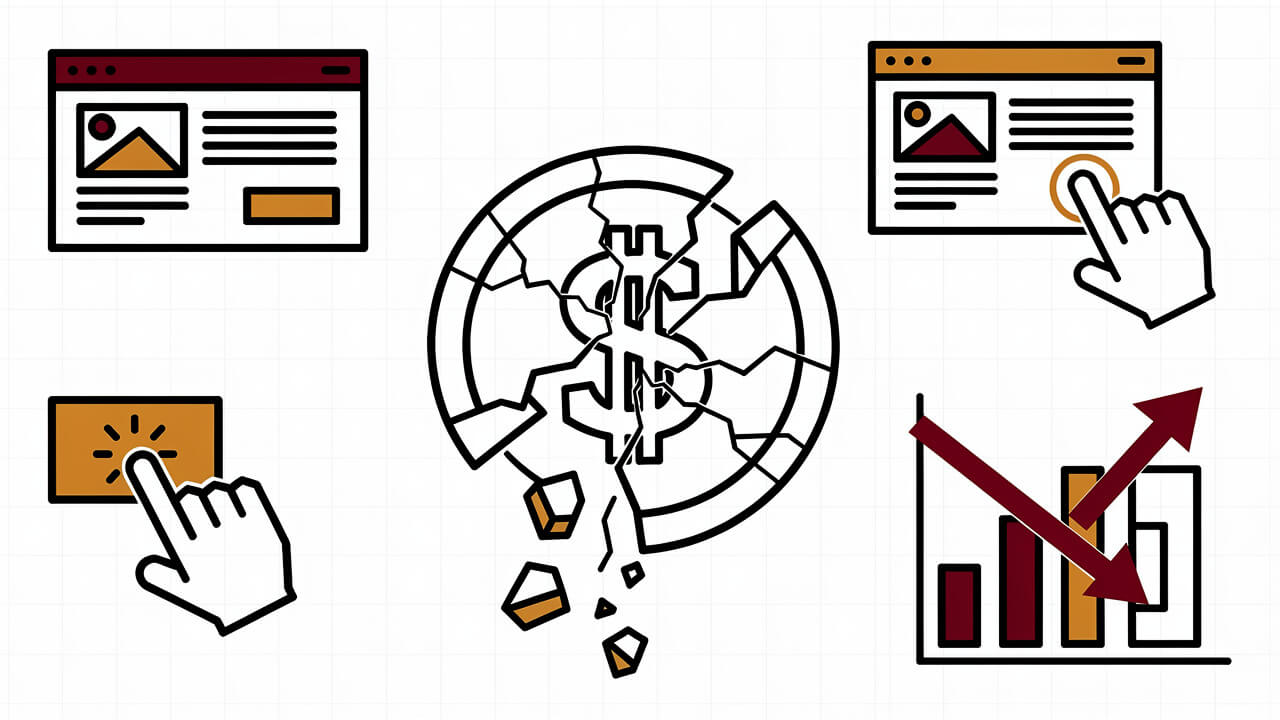
For many small and mid‑sized Canadian companies, paid media is the fastest way to get leads. When blockers enter the picture, the ad blocking impact on marketing budgets appears in subtle but serious ways, as outlined in this MSI research report on the financial consequences for advertisers.
Display ads take the biggest hit. Banner ads, pop‑ups, retargeting units, and many programmatic placements are blocked by default. Part of every display budget is spent on impressions that never display, which drags down return on ad spend (ROAS). This is why more owners now look for programmatic advertising alternatives such as SEO and content instead of pouring more money into banners.
Paid search is not fully safe either. Some blockers hide sponsored listings above search results, which reduces visibility for Google Ads even on high‑intent keywords. For an Alberta contractor trying to show on “HVAC repair near me,” a blocked ad can mean a lost service call. It also skews the paid search vs display advertising comparison, because both channels now lose pieces of their audience.
Reporting grows less reliable over time. Ad servers can count an impression once an ad is sent to the page, even if a blocker strips it out before the user sees it. Device‑level usage makes this worse, since someone may block ads on their phone but not on their work computer. This mix of blocked and unblocked traffic across devices makes it harder to trust impression‑based metrics or quick ad blocker bypass techniques.
As Apple and Google keep building more controls into their products, the share of unreachable users is likely to increase, not fall. That means any plan that leans only on paid campaigns is fragile. Businesses need channels that sidestep blockers completely and reduce the ad blocking impact on marketing spend.
The Shift From Interruption To Invitation Inbound Marketing Strategies That Work

Traditional outbound tactics interrupt people with messages they did not ask for. Think of flashing banners, mid‑video ads, or retargeting that follows someone from site to site. These patterns pushed many users to install blockers in the first place.
Inbound marketing flips that script. Instead of forcing a message into the scroll, inbound methods give helpful content at the exact moment someone is searching. Articles, guides, videos, and tools appear in organic search results or social feeds because people want them. That makes them immune to most blocking and changes the content marketing vs display ads debate in favour of value‑first content.
“Stop interrupting what people are interested in and be what people are interested in.” — Craig Davis, former Chief Creative Officer at J. Walter Thompson
Search Engine Optimization (SEO) Your Most Reliable Ad Free Channel
When paid placements disappear, strong organic rankings decide whether a brand is visible or invisible. SEO improves a website so that search engines can crawl, understand, and rank pages for the right terms. That includes technical site health, fast load times, clear structure, and mobile‑friendly layouts. Quality content, descriptive title tags, internal links, and structured data all help search engines match your pages with the questions buyers ask.
Mobile SEO is especially important as iOS and Android browsers tighten blocking and privacy rules. If a local service company in Alberta ranks well in organic results and on Google Maps, it can win calls and quote requests even when every paid unit on the page is hidden.
Local SEO supports this even more. Work on Google Business Profile, local citations, and on‑page location signals helps a company appear in “near me” searches across Western Canada. Cutting Edge Digital Marketing focuses on this kind of SEO for industrial, construction, and service‑based firms, building steady traffic that is not affected by ad blocker browser extensions.
The best part is that SEO behaves like a long‑term asset. Once key pages rank well, they can keep sending leads for months or years with only light upkeep, while paid ads stop the moment spend is paused.
Content Marketing And Blogging Become The Destination Not The Interruption
If SEO is the engine, content is the fuel. The most effective way to counter the ad blocking impact on marketing is to become the resource people actively search for, not the ad they scroll past.
A well‑planned blog answers real questions buyers ask before they phone, click, or request a quote. For example, an Edmonton fabrication shop might publish:
How‑to guides on choosing the right material for common projects
Case studies that show past projects, photos, and outcomes
FAQ posts about lead times, pricing factors, or quality checks
These pieces are indexed by Google, shared by readers, and never blocked, because they are standard web pages, not ad units.
This is where the content marketing vs display ads argument becomes clear. Display relies on interruption and gets filtered out. Content lives on your own site and keeps working. Cutting Edge Digital Marketing helps businesses plan topics, write articles, and align content with branding and sales goals, turning the company website into an always‑on sales assistant.
Content also fits well with cookieless marketing strategies. Traffic comes in through search and direct visits instead of heavy third‑party tracking. From there, visitors can choose to join an email list, download a guide, or request a call, feeding into first‑party data marketing that no blocker can touch.
“Content is fire, social media is gasoline.” — Jay Baer, marketing author and consultant
Influencer Marketing And Authentic Connections Reaching Ad Blocker Users Where They Actually Are

Another powerful way to reach ad blocker users is to meet them inside the content they already enjoy. Influencer posts on TikTok, Instagram, YouTube, and LinkedIn show up as regular feed content, not ad units. Traditional blockers cannot remove them, which is one of the key influencer marketing benefits.
People follow creators because they like their style, trust their opinions, and value their tips. When a creator they respect recommends a product or service, it feels more like advice from a friend than a banner ad. Gymshark is a well‑known example of a brand that grew through long‑term work with fitness influencers rather than standard display campaigns.
For Canadian small and mid‑sized firms, micro‑influencers often make the most sense. A local tradesperson with ten thousand engaged followers in Alberta can be far more valuable than a celebrity with millions of distant fans. Their audience is often in the right region and industry, which fits service‑based or B2B offers. This kind of work also fits with consent‑based marketing, because people choose to follow and hear from these voices.
“People do not buy goods and services. They buy relations, stories and magic.” — Seth Godin, author and marketer
Ethics matter here. Paid partnerships must be clear, with proper tags and disclosures so that trust is not broken. The rise of AI‑driven virtual influencers, such as Aitana Lopez, adds fresh questions about authenticity. A brand needs to think carefully before it ties itself to a character that is not a real person.
To keep this channel accountable, businesses can give each influencer a unique affiliate link or discount code. That makes clicks, email sign‑ups, and sales easy to track, turning influencer campaigns from vague “branding” into a measurable part of the marketing mix. When choosing partners, look closely at:
Engagement rate, not just follower count
Audience location, age, and interests
The quality of past collaborations and how audiences reacted
Building A Resilient Marketing Strategy With Cutting Edge Digital Marketing

The ad blocking impact on marketing shows why no single channel should carry all the weight. A resilient plan uses several strong paths to reach the same ideal buyer, so that if one weakens, the others carry more of the load.
Cutting Edge Digital Marketing builds that kind of mix for Alberta and Western Canadian firms. SEO and content marketing form the unblockable foundation, sending steady organic traffic to a fast, mobile‑ready site. Paid campaigns on Google Ads, Meta, LinkedIn, and Microsoft Ads still play a role, but with careful targeting and realistic expectations about blocked impressions. When possible, we favour cleaner placements and a contextual advertising strategy over heavy tracking, so ads match page content and are less likely to be flagged.
A well‑built website sits at the centre of this plan. Our web design work focuses on speed, clarity, and a smooth path from first click to contact form. That gives every visitor a strong experience, whether or not they run an ad blocker. It also supports publisher ad blocker approaches such as gentle messages that ask visitors to whitelist the site, because the core experience already feels respectful.
From there, we focus on first‑party data marketing. Clear forms, quote requests, and newsletter sign‑ups feed an email list that supports high email marketing effectiveness. This consent‑based marketing moves conversations into the inbox, away from third‑party networks and cookie rules.
Everything ties back to data. Cutting Edge Digital Marketing tracks leads and revenue by channel, then shifts budget toward what works best. If ad blocking starts to hurt one area more, we move that spend into stronger programmatic advertising alternatives such as SEO, content, or influencer partnerships. Clients gain an experienced external marketing leader who stays on top of digital advertising trends while they stay focused on running the business.
Conclusion
Ad blockers are not a passing fad. They reflect a lasting shift in how people want to experience the web, and they have a clear ad blocking impact on marketing for companies of every size.
The good news is that businesses are not stuck. By investing in SEO and content marketing, brands can build organic visibility that no blocker can touch. By leaning on influencer partnerships and strong email, they add trust‑based channels that people welcome. By combining these with smart, well‑tracked paid campaigns and a strong website, they create a marketing system that can handle change.
Companies that see this shift as a chance to improve how they communicate will build stronger, longer‑lasting relationships with customers. If it feels like your current plan leans too heavily on ads that may never be seen, Cutting Edge Digital Marketing can help. Our team can review your current setup and design an ad blocker‑resilient strategy that fits your goals, industry, and growth plans.
FAQs
How Much Revenue Do Businesses Lose Due To Ad Blockers?
Global reports put ad blocker revenue loss in the billions of dollars each year, and research from NYU Tandon has found that ad blockers may be replacing removed ads with even more problematic content, compounding the challenge for legitimate advertisers. For individual companies, the impact shows up as wasted impressions, higher CPMs, and fewer conversions than expected. The real cost is often hidden, because ad servers count impressions that users with blockers never see in the first place. Running controlled tests or comparing logged impressions with analytics sessions can give a rough sense of the gap.
Can I Tell If My Ads Are Being Blocked?
Most ad platforms, including Google Ads and Meta, do not report blocked impressions directly. Some analytics tools and publisher‑side scripts can estimate ad blocker usage among visitors. A simple way to spot problems is to compare reported impressions and clicks with real traffic and behaviour in Google Analytics and look for gaps or mismatches.
Is Email Marketing Effective For Reaching Users Who Block Ads?
Yes. Ad blockers do not touch permission‑based emails, so inbox delivery is not affected. This makes email marketing a high‑ROI, consent‑based channel under Canadian CASL rules. A strong first‑party email list lets you share offers, updates, and education without relying on third‑party ad networks or cookies.
What Is The Best Alternative To Display Advertising For Small Businesses?
For most small firms, SEO and helpful content are the strongest programmatic advertising alternatives. They attract people who are already searching for what you offer. Well‑targeted search campaigns can still work, but they should sit beside organic work, not replace it. A thoughtful contextual advertising strategy, where ads match page topics instead of user profiles, can also reduce blocking and improve relevance.